

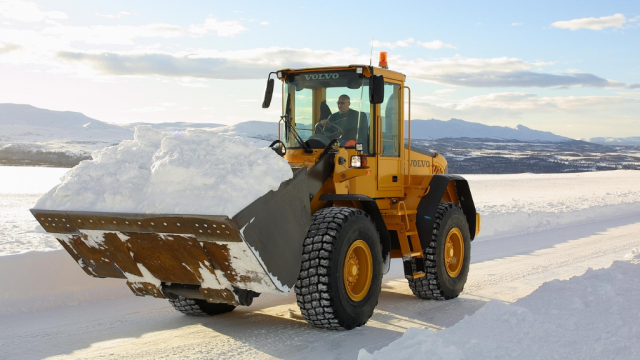
A cold-weather service routine can prevent costly damage and help maintain efficiency
- By
- Eric Yeomans
Engine & fluids
Fuel management: Switch to seasonally correct fuel (e.g., No. 1 diesel). Top off fuel tanks after every shift to minimize condensation or gelling.
DEF storage and use: Diesel exhaust fluid freezes at -11 degrees C (12 degrees F), so be sure to store it at a safe temperature and regularly monitor it for clarity. Consider using insulated dispensing systems to avoid line blockages.
Other fluids: Standard hydraulic oil can thicken like molasses, preventing proper movement. Check your wheel loader’s manual or consult your dealer or OEM to determine whether your machine comes with the appropriate engine oils, greases, and hydraulic fluids, or whether you should swap to arctic-grade or low-temperature viscosities. You’ll also want to switch to a windshield washing fluid that can hold up to colder temperatures.
Regeneration: Reduce excessive idling and work your loader hard enough to generate the heat required for proper engine regeneration.
Machine storage: Regardless of where you store your loader, be sure it has proper protection against extreme conditions. If it’s indoors, plug in the engine and transmission heaters to help the machine start and warm up faster. If it’s outdoors, a diesel-fired heater is essential — preferably one that can be set to start at a certain time.
Chassis & operator environment
Machine cleanliness: Clean your loader thoroughly after every shift — especially the axles, driveline, and articulation joints — so mud and moisture don’t freeze things up.
Traction and safety: If you can, switch to winter tires for enhanced safety and reduced stopping distances. Check all LED lights and confirm that heated mirrors are functional.
Grease systems: Prime them with low-temp grease, as standard grease may not push through the lines well in freezing conditions.
Attachment tips
Wheel loaders rely on powerful attachments, which must also be winter-ready.
Attachment width: Verify that any blade or pusher is as wide as (or wider than) the loader itself to prevent the wheels from compacting uncleared material.
Wear items: Inspect all cutting edges on blades and check the auger/fan components on snow blowers for wear or misalignment to maintain maximum throwing distance.
Quick coupler: Take good care of your hydraulic quick coupler. Being able to quickly and easily swap attachments in frigid temperatures is a critical advantage.
Prepare now, stay on top of things, and you’ll be thanking yourself when that first big storm hits.
This article originally appeared in the 2025 November/December issue of Heavy Equipment Guide.
Comments
This site uses User Verification plugin to reduce spam. See how your comment data is processed.