Tag: Nigeria’s

  • ANALYSIS: Nigeria’s Military Court Martial, Coups and Consequences

    ANALYSIS: Nigeria’s Military Court Martial, Coups and Consequences

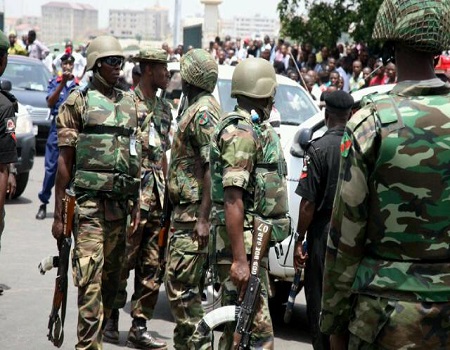
    Military Troops

    ANALYSIS: Nigeria’s Military Court Martial, Coups and Consequences

    By Kabir Abdulsalam,

    Nigeria’s military justice system has been profoundly shaped by the country’s long and turbulent history of coups and attempted coups. From independence through the late 20th century, courts martial and special military tribunals became central instruments for enforcing discipline and preserving command authority within the armed forces.

    The recent court martial of 16 military personnel by Defence Headquarters (DHQ) fits squarely within this long-established framework. The officers were tried over offences bordering on mutiny and serious acts of indiscipline following their arrest in October 2025 for breaches of service regulations.

    The Director of Defence Information, Major General Samaila Uba, confirmed that investigations were conducted in line with established military procedures and that the findings had been forwarded to the appropriate superior authority for necessary action. DHQ further stated that the trials were conducted strictly in accordance with the provisions of the Armed Forces Act, underscoring the military’s position that internal discipline remains non-negotiable, particularly in matters touching on loyalty to constituted authority.

    While details of the proceedings were not fully disclosed for security reasons, the decision to subject the accused personnel to court martial rather than administrative sanctions reflects the gravity with which such offences are treated. Within military doctrine, acts suggesting organised disobedience or political subversion are viewed not merely as individual misconduct but as threats to unit cohesion, command integrity and democratic stability.

    One persistent misconception about military justice in Nigeria is the belief that court martial decisions are final and immune from civilian judicial review. Nigerian law provides otherwise.

    What exactly is a court martial? Why does the military try its own personnel outside the regular civilian courts? And how has Nigeria’s long history of coups, counter-coups and mutinies shaped the rigidity of military justice?

    A court martial is a judicial mechanism established under military law to try serving personnel accused of breaches of military discipline, operational codes or criminal conduct as defined under the Armed Forces Act (AFA). Unlike civilian courts, which derive jurisdiction from the Constitution and common law, courts martial are specialised tribunals designed to preserve order, obedience and command integrity within the armed forces.

    Globally, militaries operate separate justice systems because the profession of arms depends on instant obedience, hierarchy and trust, especially under combat conditions. Offences such as mutiny, desertion, insubordination or conspiracy to overthrow constituted authority strike at the heart of military cohesion. Subjecting such matters to the slower and more public civilian judicial process is widely considered incompatible with operational effectiveness and national security.

    In Nigeria, the court martial system is firmly rooted in the Armed Forces Act, Cap A20, Laws of the Federation of Nigeria, which governs offences, procedures, punishments and appeal rights for military personnel.

    According to DHQ, the offences for which the 16 personnel were tried related to mutiny, insubordination and conspiracy capable of undermining national security and constitutional order. Such allegations rank among the gravest under military law. Given Nigeria’s history of six successful coups and several failed attempts between 1966 and 1993, even perceived efforts to destabilise a civilian government attract maximum institutional response.

    Courts martial in Nigeria are not monolithic. There are distinct categories with defined powers. A General Court Martial (GCM) is the highest form of military tribunal. It is convened by the Chief of Defence Staff, Service Chiefs or General Officers Commanding and typically consists of a president usually a senior officer and not fewer than five members. A GCM can try all offences under the Armed Forces Act, including those carrying the death penalty.

    A Special Court Martial (SCM) on the other hand handles less grave but still serious breaches of discipline. It usually comprises not fewer than three officers and has more limited sentencing powers. For minor infractions, commanding officers may conduct summary trials, which are administrative in nature and attract limited punishments such as reprimands, fines or short detention.

    Read Also:

    Contrary to popular belief, a court martial is not an arbitrary process. Allegations are first investigated by military police or intelligence units, after which charges are framed under relevant provisions of the Armed Forces Act. A competent military authority then convenes the court martial and appoints its members.

    Accused personnel are entitled to defence counsel either military or civilian and the right to call witnesses, cross-examine prosecution witnesses and present a defence. The principle of fair hearing applies throughout. Evidence is presented, proceedings recorded and legal arguments made before the court reaches a verdict by majority decision. Any sentence imposed does not take effect until confirmed by the appropriate confirming authority, usually a Service Chief or the Chief of Defence Staff.

    Nigeria’s court martial tradition cannot be separated from its coup history. The January 15, 1966 coup, led by a group of young army majors including Chukwuma Kaduna Nzeogwu, marked the Nigeria’s first violent rupture of constitutional order. Although the coup failed to establish full nationwide control, it eliminated key political and military leaders and triggered counter-coups and civil war. Formal court martial proceedings against the plotters were limited, largely because the coup ushered in military rule and the ensuing conflict overshadowed judicial processes. Nevertheless, the episode entrenched within the armed forces a deep institutional fear of internal rebellion.

    A decade later, the February 13, 1976 coup attempt led by Lieutenant Colonel Bukar Suka Dimka tested military discipline more directly. The plot resulted in the assassination of Head of State, General Murtala Ramat Mohammed. After the coup collapsed within hours, Dimka was arrested on March 6, 1976, following a nationwide manhunt. A military tribunal tried Dimka and his accomplices, and on May 15, 1976, Dimka and six other officers were executed by firing squad after conviction for treason.

    The most extensive use of military tribunals occurred after the April 22, 1990 attempted coup led by Major Gideon Gwaza Orkar. Orkar and his co-conspirators briefly seized the Federal Radio Corporation of Nigeria and announced the overthrow of the Babangida regime before loyalist forces regained control. Following tribunal proceedings chaired by senior officers, Orkar and 41 others were convicted of treason and executed on July 27, 1990. Several others received prison sentences, while some were acquitted. Further executions followed later that year after supplementary trials.

    These trials, conducted under military regimes, differed markedly from courts martial under democratic governance. While tribunals during military rule operated under decrees with limited judicial oversight, post-1999 courts martial function strictly within the Armed Forces Act and are subject to civilian appellate review.

    Under military law, mutiny involves collective disobedience or revolt against lawful authority, while insubordination refers to refusal to obey lawful orders. Sedition or conspiracy includes planning or encouraging actions aimed at overthrowing constituted authority. The Armed Forces Act prescribes punishments ranging from dismissal or reduction in rank to imprisonment and, historically, the death penalty.

    Under civilian rule, sentencing practice has evolved. While courts martial retain severe powers, executions have not been carried out in recent decades, reflecting Nigeria’s broader human rights posture.

    A key safeguard is the right of appeal. Court martial decisions are not final. Under the Armed Forces Act, a convicted person may appeal to the Court of Appeal and, on questions of law or constitutional interpretation, to the Supreme Court of Nigeria. Section 183 of the Act provides that appeals lie with the leave of the Court of Appeal, except where a death sentence is imposed, in which case the right of appeal is automatic. Appeals must be filed within 40 days of the promulgation of the court martial’s findings.

    Convicted personnel may also approach the Federal High Court on grounds of jurisdiction, fair hearing or constitutional violations, with further recourse to appellate courts where applicable.

    In the case of the 16 personnel recently court martialed by DHQ, the same legal principles apply. Subject to confirmation of sentences by the appropriate military authority, affected officers retain the right—where applicable—to challenge the outcome through legally prescribed appellate channels. Any such appeal would hinge on compliance with statutory timelines, jurisdictional competence and adherence to fair hearing requirements, rather than a re-litigation of military policy or command decisions.

    Kabir Abdulsalam writes from Abuja.

    Shout Out!!!
  • Nigeria’s ₦149trn debt crisis: Speaker Abbas warns of a mortgaged future

    Nigeria’s ₦149trn debt crisis: Speaker Abbas warns of a mortgaged future

    Nigerias spiraling debt profile has crossed a dangerous line, with Speaker of the House of Representatives, Rep. Abbas Tajudeen, sounding a dire warning that the nation is on the brink of mortgaging its future through reckless borrowing and weak oversight.

    Speaking at the opening of the 11th Annual Conference and General Assembly of the West Africa Association of Public Accounts Committees (WAAPAC) in Abuja, Abbas revealed that Nigerias public debt ballooned to 149.39 trillion (about US$97 billion) in the first quarter of 2025a staggering jump from 121.7 trillion the previous year.

    Even more concerning is the debt-to-GDP ratio, which now stands at roughly 52 per cent, well above the statutory ceiling of 40 per cent set by our own laws. This breach of our debt limit signals the strain on fiscal sustainability, Abbas declared.

    The Speaker warned that Nigerias fiscal recklessness is not just a budgetary challenge but a generational betrayal. Oversight of public debt is a democratic duty and a moral responsibility of the legislature, he stressed. Our parliaments must ensure that every borrowing decision reflects prudence, transparency, and the collective interest of our citizens.

    Abbas painted a grim picture of the continents debt trap, recalling that Africas total public debt hit $1.8 trillion by 2022, with external debt alone projected to surpass $1 trillion by 2023. He cited countries already drowning in debt, such as Sudan at 344 percent debt-to-GDP, Angola at 136.8 percent, Ghana at 84 percent, Kenya at nearly 70 percent, and South Africa above 77 percent.

    Read also:Tinubu dismisses special assistant on digital and creative economy, Fegho Umunubo

    For Nigeria, the Speaker warned, the red flags are already flying. In many cases, governments are spending more on servicing debt than on healthcare and other essential services, he lamented. This is not just a budgetary concern, but a structural crisis that demands urgent parliamentary attention and coordinated reform.

    He revealed that domestic borrowing makes up 53 percent of Nigerias debt while external borrowing accounts for 47 percent, a balance that leaves the country dangerously exposed to shocks from volatile foreign markets.

    The Speaker was unsparing in his criticism of Africas borrowing patterns. He noted that Western private lenders now control 35 percent of Africas government debt, with multilateral institutions like the World Bank and IMF holding another 39 percent, while Chinese creditorsoften scapegoated in public debatesaccount for just 12 percent.

    A significant share of our national revenues is tied to debt servicing rather than being invested in the things our people need most: roads, schools, hospitals, and innovation, Abbas said. The high cost of commercial loans, coupled with the burden of repayment in foreign currencies, leaves many African economies vulnerable to market shocks.

    He urged a complete rethink of borrowing habits: If Africa is to grow stronger, we must not only negotiate fairer terms of borrowing but also rethink our dependence on external finance. We must channel more energy into mobilising domestic resources, fostering intra-African trade, and creating financial instruments that serve the continents own development priorities.

    While Abbas raised the alarm, government officials attempted to downplay the crisis. Finance Minister Wale Edun insisted Nigeria is turning the corner, claiming that economic reforms are expanding fiscal space and investor confidence. He argued that the debt-to-GDP ratio stands at 38.8 percent, describing it as a comfortable level compared to global benchmarks.

    But the Speakers message was blunt: without drastic reforms and strict oversight, Nigeria risks sliding into a debt trap that could cripple its economy and sacrifice the wellbeing of future generations. Citizens have the right to know, and we have the duty to inform, Abbas declared.

    Shout Out!!!
  • Nigeria’s cultural ambassador, Palmer makes history in Philippines

    Nigeria’s cultural ambassador, Palmer makes history in Philippines

    A Nigerian, Palmer Emmanuel Michael has made history as the first Nigerian to be crowned ‘Great Man of the Universe – Culture and Arts Ambassador, at the prestigious international competition held in the Philippines.

    Representing Nigeria, Palmer’s victory marks a watershed moment for the country’s art, culture, and creative talent on the global stage.

    His emergence as a cultural icon is no accident. With a background deeply rooted in the vibrant traditions of Nigeria and an unshakable commitment to promoting African heritage, Palmer brought not only his artistry but his cultural identity to the forefront of the competition. He stood tall among contestants from across the globe, showcasing the rich diversity and beauty of Nigerian culture through music, fashion, and personal expression.

    A Triple Crown Victory

    Palmer’s impact in the competition was nothing short of extraordinary, as he secured three major titles. His cultural presentation was a stunning blend of traditional and contemporary expressions of Nigerian heritage. From attire to storytelling, Palmer captivated judges and audiences with his authenticity and depth of cultural knowledge, earning him the esteemed title of Ambassador for Culture and Art.

    Talent Round Winner – Saxophone Performance

    A gifted saxophonist, Palmer wowed the audience during the talent segment with a soul-stirring performance. His rendition blended Afrobeat rhythms with jazz inflections, delivering a powerful musical experience that highlighted both his technical skill and emotional depth. His win in the talent round set him apart as not just a cultural ambassador but a true artist.

    People’s Choice Award

    Related News

    Perhaps the most heartfelt recognition came from the audience itself. Through charisma, humility, and an engaging presence both on and off stage, Palmer captured the hearts of many, securing the People’s Choice Award. This honor speaks volumes about his ability to connect with people across cultures and backgrounds.

    A Symbol of Cultural Unity

    Palmer’s achievements are more than personal milestones; they are symbolic victories for Nigeria and Africa at large. In an era where cultural narratives are being rewritten and global platforms are becoming more inclusive, his recognition is a powerful testament to the relevance and richness of African identity in the global arts and culture scene.

    Inspiring the Next Generation
    Beyond his accolades, Palmer Emmanuel Michael is quickly becoming a role model for young creatives across Africa. His journey, from a passionate artist in Nigeria to an internationally celebrated cultural figure, demonstrates that dreams powered by purpose, dedication, and cultural pride can transcend borders.

    Looking Ahead

    As Palmer returns home to Nigeria, his mission is far from over. He has expressed a strong commitment to using his platform to promote cultural education, empower young talents, and foster international collaborations that elevate African art. With global recognition now in hand, his voice is set to carry even greater influence in reshaping perceptions of Nigeria and Africa through creativity.

    Palmer Emmanuel Michael’s historic win in the Philippines is not just a personal triumph, it’s a victory for culture, talent, and the African spirit. As Nigeria celebrates its first “Great Man of the Universe” cultural ambassador, the world watches a star rise—one note at a time, one heart at a time.

    Shout Out!!!
  • The problem with Nigeria’s political system is that moneybags own the parties – Tapgun

    The problem with Nigeria’s political system is that moneybags own the parties – Tapgun

    Ambassador Fidelis Naanmiap Tapgun, a former Plateau State governor, Nigeria’s Ambassador to Kenya and Director General of Obasanjo/Atiku Presidential Campaign Organisation, in this interview with LEO SOBECHI, traces the genesis of failure of political parties. He said he does not see any future for the coalition, regretting that those leaving the People’s Democratic Party (PDP) worked for its destruction.

    ‘I Don’t Subscribe To Coalition’

    As somebody who has been close to the crucible of politics, how would you trace the progression, or retrogression, so to say, of Nigeria’s democracy in the last 26 years?
    Well, I don’t know how to describe this one. This democracy came back immediately after (General Sani) Abacha died, right? General Abdulsalami Abubakar said we should start politics.

    And the G34, the agitators from all sides, all parts of the country, which had been meeting, in fact, they pressured Abacha for return of democracy. Something happened and Abacha died.

    Now, this group regrouped as soon as Abdulsalami said politics should start. And this G34 has representation of all parts of this country. And they all went back to their states and decided that a very formidable political party should be formed. So, the PDP was formed as a result of that, and other parties also came up.

    The difficulty I have seen so far with our political system is the formation of the parties, because it appears there is no ideology in the parties themselves. And, they are not focused on particular issues. The general thing is that every party believes in the welfare of Nigerians.

    So, if you go to APC or PDP, well, APC came later, but there was APP (All Peoples Party), there was AD (Alliance for Democracy), and so on and so forth. PDP stood out from the beginning. Now, people just jump from one party to another.

    Now, the reason I’m saying this is because if the parties were really formed on what parties should be, people should belong to a political party, and it will not be easy for them to be moving around. The difficulty I’ve seen with this, in our democracy, is that the parties are not structured in such a way that you remain a member of the party for as long as possible because the people do not own the party. It is the moneybags that own the party. And if the people do not own the party, then the structure of the party is weak. That’s what I’ve seen in all the parties since we started this thing. So, that’s why you see people jump from one party to another. We cannot build democracy on that basis.

    The parties were then formed, and there was no regulation as to how candidates should emerge. Then, so many things went wrong. Now, if the people do not own the party, and there is no method of leadership selection, then you find all sorts of people coming in.

    What we have noticed in this country, you will find crooks, everybody just finding his way. Once you have money, you find your way and get elected. That’s the major issue we have. And so, people just jump from one party to the other. We cannot build democracy that way. That is what we have experienced since this democracy came back.

    So, it’s just fluid as far as I’m concerned. People move from one party to the other any time they like. You are elected on one platform, then in the middle of your tenure, you jump to another party without sanction, without any qualms. And with no sanctions, you don’t bother. We cannot move like that.

    So, I think this is the major problem we have. The parties themselves were not formed on very solid grounds, meaning that the ownership of the parties was left in the hands of moneybags. And there was no leadership selection process so that you can eliminate unqualified persons, eliminate people that are crooks so that they do not come in and pollute the whole system.

    So you find that we are just jumping from one place to the other, as far as I can see. I’ve not changed party since we started because I don’t think it is nice for people to just jump ship just because your party failed. We can’t build democracy like that.

    Some other people made a similar observation in 2015 after the National Conference. Will you suggest a moratorium on elections till Nigeria is able to set a specific template for political progression?
    Now, how do you go about that because of the National Assembly? This is the difficulty we have about implementing the 2014 National Conference recommendations. If the resolutions arrived at that conference were implemented, or let’s say three quarters of it were implemented, we would have stabilised the system. Certain things would have been happening now.

    But the problems we had at that time was the National Assembly itself not accepting that there should be another body that will look at all these things by insisting that they should be the ones doing it. They scuttled the whole idea. We had thought that once that conference ended, (Dr Goodluck) Jonathan was going to take decisions on what he was able to do himself, and the rest of it would be thrown up for a referendum, so that Nigerians would decide. But the National Assembly scuttled it, and nothing was done.

    Now, you find that the 1999 Constitution we’re using is not a Nigerian, but a military constitution, as far as everybody knows. Changing things inside has been very, very difficult. And unless you change the constitution itself, you cannot do a lot of essential things you need for the country to move forward.

    Now, the National Assembly is embarking on constitution review, how many times have they been doing this? It would take them the whole century to get these things amended.

    So, I think until something drastic is done somewhere to change this hold by the National Assembly, I don’t see how we can move forward.

    Now, this lack of creative leadership, because after the National Conference, or so to say, some people were saying that there were certain issues which the President should have settled through Executive Orders; that did not come. Based on what is currently going on, a lot of people expect that Tinubu would have set the pedestal for this kind of conversation…
    Since he (President Tinubu) came in, I know there have been speculations about changing a lot of things. And kites were flown for comments from people. I saw those ones like kites.

    But I think there is, I don’t want to preempt him, but for me, I think he is one person that will change this thing from what I can see going on.

    Last week, the Patriots met under Emeka Anyaoku and their major take on this thing is to look at the constitution and rewrite the constitution to Nigerians’ constitution, not the military constitution. And like I said from the beginning, it is the 1999 constitution that has been the bane of our country. And until the constitution is drawn up by Nigerians, by us Nigerians, we’ll still be running into problems.

    Now, the Patriots have been looking at the whole thing so that they will make recommendations to the President or to the National Assembly for there to be a referendum so that the constitution that will be drawn up will be by Nigerians. I think there’s something in the offing from what I can see from last week. I just suspect there’s something cooking somewhere.

    But in the current efforts, some schools of thought are calling for a return to the 1963 Republican constitution, as a baseline to do the review of the constitution. How do you think that will address some of the critical issues?
    The military came into power in 1966. It was suspended. And that was the constitution that we had the three or four regions. And the four regions were almost semi-autonomous, so to say.

    But they were relating to the Federal Government harmoniously. Everybody knew their boundaries. And it helped in development, because there was healthy competition among the states, among the regions, so to say.

    So, for me, I believe in that constitution. And I think the majority of people that want this country to survive and exist and develop the potential we have prefer that constitution instead of what we have now.

    I think the Patriots are looking at that sort of thing, from what I gathered, because their secretary, Prof. Fapohunda, said something like that in the interview he granted. And if this is what the Patriots have for this country, I think people should support it.

    But a lot of people were talking also about restructuring. And the question about restructuring is: Is it about political restructuring or economic?
    No, it’s restructuring in all aspects, not just political. If you restructure, then you will be going back to what we had in the regions before. Do you understand?

    The regions would be responsible for certain things, which was defined in the constitution at that time and the federal was responsible for other things. Every region had their areas of focus and the federal had its own. So, this restructuring is not just about political; it is going to be everything, all encompassing, so we can develop at our pace.

    On the flip side, some people are also questioning this issue of presidential democracy. Would you rather that we return to the parliamentary system?
    I have been an advocate of the parliamentary system right from the beginning, because this system we are running today is alien to Nigeria, and it is part of the reason we are not moving forward at all.

    And I remember in the National Conference, particularly in the committee where I served, I remember that was one of our major recommendations. That we should go back to the parliamentary system, so that we eliminate the one bad thing about the presidential system we are practicing now, where the president is so powerful. Once the president wins the election, he controls everything. He appoints people. It will not help us at all.

    The parliamentary system is what we stood for, because you cannot be a minister until you are a member of parliament. And if you are a member of parliament and you become a minister, then you have to be accountable to parliament every day of the week, so that people know.

    Now, with this our presidential system and appointment, the president, the governors, the local government, it is the same thing. When they come to power, they just appoint their friends, people who didn’t work for the party. People who have no grassroots support, and they cannot help the government to progress.

    They are just there because they need money. They will just appoint them, because the governor or the president wants to favour a friend or a relation; so it’s not helping us at all.

    For me, I have been an advocate of the parliamentary system right from the start, and I stand by it. It is what is going to help us; look at what is happening in the National Assembly.

    We have 109 senators, nearly 400 House of Representatives members, and the resources they are draining from this country as allowances, you cannot quantify it, and they don’t want anybody to know. It’s not helping us at all. So, we should go back to the parliamentary system.

    In the National Assembly, the president or the prime minister faces the opposition every day of the week to give an account of what the government is doing, because you cannot be a minister unless you are elected from your constituency into the House, before you are appointed a minister. So, you should be accountable to the people.

    Next to that is that a lot of people have associated this presidential democracy with the indiscipline and the ineptitude of political parties. Do you think that this current coalition offers any hope for a stable two-party system?
    I cannot see anything in that. For me, I don’t subscribe to it at all, at all. This coalition thing I don’t know. People that say that they are in the coalition, in ADC, and some are still in APC, some are still in PDP, what sort of system are we running?

    So if, for me, PDP lost an election, another party won. PDP should go back now and sit down and assess themselves, say what made them lose, what caused this failure, what was the reason, and try to rectify it against the next election.

    But since we failed, nobody has sat down to look at why things went wrong. I don’t think coalition is the solution. As far as I’m concerned, it’s not the solution. I don’t know about you, but this coalition, I don’t know where it is going. For me, I can’t see it taking off. People are talking about it all over, but for me, I’m not convinced that it can do anything to upstage government now.

    PDP people should go back to PDP, look at the problem that caused us to lose elections and rectify it. APC, go back, SDP, go back. Try and build your own party and fight government for the next election.

    But this one they are doing is just, from what I hear, everybody is talking, ‘oh, we want to sack or remove the person that is in power’. I think people should sit down, look at what he is doing wrong, criticise it; look at what is going right, praise it; let it move and finish the term and go away. Then people that have failed the election should sit down and look at why they failed and rectify their mistakes and move forward in the next election. That’s how we’ll build over time. But left for me, I don’t subscribe to it at all. I’m not part of it anyway.

    There was a half-hearted attempt to review why PDP lost the 2015 election, but somewhere along the line, it floundered. I think the failure of that analysis was part of the reason former governor of Sokoto State, Attahiru Bafarawa, decided to opt out of partisan politics.  Some people in PDP say that the issue of zoning or power rotation has been the problem. Do you think the party has power to address that?
    You see, it is just a few people that are causing this thing. When Obasanjo was leaving office, when we were leaving office, Yar’Adua came to power. I’m just giving an insight from PDP now.

    When Yar’Adua was elected, the first thing he said was that the party that brought him to power, the PDP, is not the PDP he knew. You understand? So, he said PDP has deteriorated to such a level that he is not going to accept it. That he’s going to set up a committee to find out why the PDP went down so low?
    So, he set up the Ekwueme Committee, if you remember, headed by the late Ekwueme. He said we should find out -those of us were in that committee – why the PDP went down so low.
    Now, we went round this country. We visited the six geographical zones of this country and took evidence from people who left the party. Some were dormant members of the party. So, we dug them all out, got messages from them, and we documented all these things.

    Part of the major reason was because the party had been hijacked by people with money. It was only people who had money that dictated what happens in the party. And in all the six geopolitical zones we went, the accusations were against the domineering tendencies of governors, because the governors hijacked the party.

    The party had no strength in their states. It was the governors that dictated what happens, because they were funding the parties. Do you understand me?
    President Yar’Adua was briefed. He said we should make the final report and bring it immediately, because he was going to implement every recommendation. The major points we raised was that the party had been hijacked and that we should go back to membership registration. That PDP must register its members, and members must subscribe to it, so that they can run the parties in their local governments, in the state, and at the federal level. So, that way, we can remove the hands of the governors, the local government chairmen, and the Presidency in party affairs. This was what we did in SDP, if you remember. This was what happened during that period.

    So, we came back, did all that, and we just made a little calculation. We said even because of the membership we had all over the country, even if people are paying 50 kobo per month, what we realised was enormous. It was in millions.

    From that, we saw that the party will operate efficiently at the national, to the states, to the local governments, and leave the governors out. So, people will now own the party. They will decide who will become chairman or who will stand election; it is membership that will decide not the governors.

    So, we brought this back, and it was approved that we should start membership registration immediately. Okwesilieze Nwodo wanted to implement it. The governors ganged-up and removed him from office, because their powers were to be cut short. And that is the problem we have faced all that time till today.

    You go to the state, the parties are not active; they depend on the governor. It is the governor who gives them money to run their offices. This was not what happened when we were operating SDP in those days.

    All the parties are like that, so how do you function? How do you progress? The governor sits in his office or lodge and funds the party. If you go for election, it is the person he appoints to contest that will contest the election. The person he appoints, they force him on people. That is why nothing is moving all over the country, nothing. And if we continue like that, we are not going to progress anywhere.

    So, that’s why I spoke about the structuring of the parties from the beginning. If the parties are not structured in such a way that it is owned by the people themselves, so that the people can decide, then our democracy will continue to be in trouble.

    When PDP started and when Abdulsalami lifted the ban on politics, the first local government elections we had that year was funded by the people, the local people themselves. So, you go to the wards or the local government, they funded, nominated people and campaigned for them. They paid for the canopies; they entertained people; they paid for everything themselves. That’s how we expected that the people should own the party, because they will decide who contests an election and who doesn’t contest. They know who is who in the local government and who is to be appointed.

    But the governors hijacked it and took it all over and that’s what you have all over the country today. We cannot progress like that, we cannot.

    Shout Out!!!
  • As Bettering Nigeria’s Oil And Gas Industry Lies At The Core Of PENGASSAN’s PEALS Summit

    As Bettering Nigeria’s Oil And Gas Industry Lies At The Core Of PENGASSAN’s PEALS Summit

    Nigeria’s oil and gas industry has long been a cornerstone of the country’s economy, generating substantial revenue and supporting millions of jobs.

    However, the sector is also riddled with challenges, from fluctuating global oil prices and environmental concerns to regulatory pressures and internal inefficiencies.

    In the midst of these challenges, the Petroleum and Natural Gas Senior Staff Association of Nigeria (PENGASSAN), has emerged as a vital force in pushing for reforms and innovations that could reshape the industry’s future.

    A key component of the association’s strategy is its Energy and Labour Summit (PEALS).

    Against the foregoing backdrop, it is expedient to recall that PENGASSAN has positioned its Energy and Labour Summit (PEALS) as a key event for stakeholders in Nigeria’s petroleum sector. Since its inception three years ago, the summit has become a platform; where both public and private actors converge to exchange ideas and promote the advancement of the oil and gas industry.

    Thus, the 2024 edition, held recently at Transcorp hotels plc in Abuja, Federal Capital Territory (FCT), followed this tradition. Themed “The Future of Nigeria’s Oil and Gas Industry: Energy Mix, Energy Security, Artificial Intelligence, Divestment, and Crude Oil Theft,” the summit drew experts, government officials, policymakers, labor leaders, and other key stakeholders to discuss the pressing issues facing the sector.

    Comrade Festus Osifo, the president of the association, in his welcome address, reflected on the purpose of the Summit.

    He explained that the idea behind PEALS was to fill a gap in existing conferences and seminars within the oil and gas sector that often overlook the impact of industry policies on workers, the individuals, who he described as “the goose that lays the golden eggs.”

    “It is the shortcomings of those conferences, which focus solely on policy, technology, and profit-making, that PEALS was designed to address,” Osifo said.

    He emphasised that resolutions from past summits have been implemented to improve the lives of PENGASSAN members and protect their jobs.

    The 2024 summit theme was specifically selected to examine how energy security, artificial intelligence (AI), divestments, and crude oil theft impact not only the workforce in the industry but also the general public and the nation’s economy.

    According to Osifo, Nigeria’s oil and gas sector is at a pivotal moment, facing both significant opportunities and challenges as the country transitions toward sustainable energy.

    As president of the association, he expressed his commitment to shaping a resilient, adaptive, and forward-looking strategy for the sector’s future.

    He highlighted several critical areas that cut across energy mix, energy security, Artificial Intelligence (AI) and divestment

    As gathered from the speech, and other notable comments at the event, the transformation of Nigeria’s energy sector requires a diversified approach, integrating renewable energy sources, natural gas, and innovative technologies. Such a strategy is essential for environmental sustainability and will position Nigeria as a leader in creating a balanced energy portfolio that meets both domestic and global demands.

    In a similar vein, the need for energy security was highly emphasised as there was unanimity among virtually all the stakeholders that it is vital for Nigeria’s stability and progress.

    They also concurred that investments in infrastructure, partnerships with international players, and the development of local capacity will be necessary to secure the country’s energy future and reduce its vulnerabilities to global energy dynamics.

    Also, the relevance of AI in the industry was not underplayed as voices resonated over its capacity of offering enormous potential for increasing efficiency, optimization, and predictive capabilities in the oil and gas industry.

    It was gathered in the speech that by adopting AI-driven solutions in exploration, production, and operations, Nigeria can significantly enhance its competitiveness and sustainability.

    Regarding divestment, the trend of international oil companies (IOCs) divesting from Nigeria requires a shift in strategy. Osifo posed the question: “Does this represent an opportunity for local innovation and empowerment, or does it signal a downturn for the industry?”

    He reaffirmed PENGASSAN’s commitment to using this transition as a catalyst for domestic growth, self-reliance, and job security.

    Osifo expressed concern about the wave of divestments by companies such as ExxonMobil, Nigeria Agip Company, and Shell Petroleum Development Company (SPDC), among others. These divestments, he noted, are reshaping Nigeria’s energy sector and necessitate a collective reflection on the future of the industry and its workforce.

    In addition to the issue of divestment, he addressed the growing threat of crude oil theft, describing it as a major risk to Nigeria’s economy and national security. PENGASSAN, he said, has been at the forefront of efforts to combat this menace, both through public advocacy and behind closed doors.

    The association remains committed to working with other industry stakeholders, law enforcement agencies, and local communities to strengthen security and curb theft through technological innovations and enhanced collaboration.

    Looking ahead, Osifo stressed that the decisions made during the summit would shape government policy and determine the economic trajectory of the country.

    He condemned recent government policies that have worsened the hardship experienced by ordinary Nigerians, particularly the floating and devaluation of the naira.

    On the fast depreciation of the naira currency, he said, it has led to skyrocketing prices of fuel and other essential commodities, with devastating effects on the cost of living.

    He noted that while oil and gas companies in Nigeria have benefitted from devaluation of the naira, workers in the industry have suffered financial losses.

    To address this imbalance, Osifo called for a salary benchmark for oil and gas workers, modeled after the system in Angola, where workers’ salaries are pegged to the U.S. dollar to protect them from currency fluctuations.

    “The floating of the naira has compounded the financial challenges faced by our members. We must seek innovative solutions to protect workers’ wages and ensure fair and equitable treatment across the sector.”

    PENGASSAN, he concluded, will continue to advocate for policies that safeguard the rights and interests of oil and gas workers, pushing for a more just and equitable distribution of wealth within the industry.

    The 2024 PENGASSAN Energy and Labour Summit ended with a clarion call to the government, industry stakeholders, and regulators to take decisive action.

    The future of Nigeria’s oil and gas industry rests on the country’s ability to navigate a rapidly changing energy landscape, where technological advancements, security challenges, and the global push for renewable energy are reshaping the sector. By adopting the summit’s recommendations, Nigeria has the potential to not only secure its energy future but also drive long-term economic prosperity for its citizens.

    Shout Out!!!
  • Breaking News: “Nigeria’s Only Hope In Boxing, Adam Olaore, Defeated In Olympic Round of 16

    Breaking News: “Nigeria’s Only Hope In Boxing, Adam Olaore, Defeated In Olympic Round of 16

    Aibek Oralbay of Kazakhstan and Adam Olaore of Nigeria stepped into the ring, each ready to give their all in the Men’s Heavyweight Preliminaries – Round of 16.>>>CONTINUE FULL READING HERE

    The vibrant atmosphere of the Olympic boxing arena crackled with anticipation as fans from around the world gathered to witness this clash of titans.

    The crowd buzzed with excitement, knowing that each bout would be a display of skill, strength, and heart.

    Adam Olaore carried the weight of his nation’s hopes on his shoulders. He was Nigeria’s only hope in boxing, the last boxer standing after his teammates had been eliminated in earlier rounds. The pressure was immense, but Adam was no stranger to adversity.

    His journey to the Olympics had been paved with countless hours of grueling training and a relentless drive to succeed.

    The first bell rang, and the bout began. Aibek moved forward confidently, his stance steady and eyes focused. Adam, lighter on his feet, danced around the ring, looking for an opening. The initial moments were tense, both fighters testing the waters with quick jabs and cautious movements.

    As the round progressed, Aibek’s experience shone through. He began to dominate the center of the ring, landing a series of precise blows that forced Adam on the defensive. Despite his agility, Adam found it increasingly difficult to evade Aibek’s relentless attacks.

    The Kazakh boxer’s punches were powerful and well-placed, each one landing with a resounding impact that echoed through the arena.>>>CONTINUE FULL READING HERE

    By the end of the first round, it was clear that Aibek had the upper hand. Adam’s corner worked frantically to devise a strategy that could turn the tide, but Aibek’s dominance continued into the second and third rounds. His technique was impeccable, and his determination unyielding.

    The final bell rang, signaling the end of the bout. The judges tallied their scores, and the result was a decisive victory for Aibek Oralbay, with a score of 5-0. Adam Olaore, despite his valiant effort, could not overcome the sheer skill and power of his opponent.

    As Aibek raised his fists in triumph, the crowd erupted in applause. He had earned his place in the next round, one step closer to Olympic glory. Adam, though defeated, held his head high, knowing he had given his all against a formidable adversary.

    In a post-match interview, Adam expressed his feelings: “I gave it my all, and I hope I made my country proud.”

    Nigeria’s hope in boxing had been extinguished, but Adam Olaore’s journey was far from over. He had inspired countless young athletes in his homeland, showing them that with hard work and determination, anything was possible. As he left the ring, he carried with him the pride of a nation and the knowledge that he had fought bravely on the world’s biggest stage.

    In the world of boxing, every match is a testament to the strength, skill, and spirit of the athletes. On this day, Aibek Oralbay of Kazakhstan had shown that he possessed these qualities in abundance, moving forward in his quest for gold. And Adam Olaore, Nigeria’s only hope, had shown the heart of a champion, leaving a lasting legacy for future generations.>>>CONTINUE FULL READING HERE

    Shout Out!!!
  • Nigeria’s burgeoning kidnapping industry: Whither state governors?

    Nigeria’s burgeoning kidnapping industry: Whither state governors?

    IT is no news that the already emaciated industrial and other productive capacity, for production and availing limited number of people legitimate jobs, are declining in Nigeria; that is businesses, companies, factories and other economic ventures that have had positive impacts on economy are crashing almost irretrievably; but this is not the whole story. With the increasing intensity of the economic doom (or is it downturn?) being experienced, the country has been ‘blessed’ (or burdened?) with another thriving industry, the crime industry. This seemingly new industry is neither really new nor original to Nigeria but it is booming here and now. Although, it assumes different forms and shapes, it is not limited to any region of the country. One of such criminalities is kidnapping for ransom. Sincerely, it is increasingly becoming difficult to describe this ‘lucrative’ venture as a criminal enterprise. This is because names of big men directly and indirectly involved in kidnappings are mentioned in the print and electronic media but nothing seems to be happening to them. A lot has been said about this societal challenge, however, the more the people cry, the more they are left unprotected, by the state, from the whims and caprices of kidnappers. As at today, no one is sure who the next victim(s) will be. The responses of national and sub-national governments to criminalities are still the same old predictable ineffectual pronouncements.

    Nigerian governments always claim to be on top of the situation! Marching orders are always given to the country’s security personnel to get to the root of the matter. Have they ever been able to get to the root of the matter? We do not know. We also do not know if politicians are behind the massive criminalities enveloping Nigeria! What we know is that those holding political power including others in the corridors and bedrooms of power have been using the captured failing state to extract public resources and protect only themselves and theirs while others are expected to go to hell! Once you are not in government or not close to those in it, be rest assured that you are on your own; you are ‘technically’ excluded from the selective protection by the state. This is not a new story. It is not a new reality. It has not been unique to a particular group in power. Only that those who criticised people-in-power yesterday are today, in power, contributing to the entrenchment of what they criticised yesterday. So, it has been deception all the way! We have always argued that a chunk of the possible solutions to a societal problem lies on the ability and willingness to recruit the ‘right’ political leadership that is ready to confront such problem. When we talk of political leadership, it is not limited to those at the federal level. In fact, more is expected from those at the state and sub-state levels. To say it as it is, many Nigerian state governors are terribly irresponsible!

    Yes, state governors do not have the powers of the Commander-in-Chief of the Nigerian armed forces but for what do they use the security vote they strictly keep secret? What is this security vote”? It is an unknown large amount not legally appropriated! This is another means by which public funds are stolen! Since 1999, no state governor has denied the existence of the vote or given account of how it was expended! It should not be only about the federal government, Nigerians should also ask state governors questions! A lot of nonsense also pervades the states. The federal government may be a major beneficiary of the warped federal system of government practiced in Nigeria but the state governments cannot exempt themselves from the rot being experienced everywhere. Concerning the kidnapping we were talking about earlier, we had asked in an intervention in the past: who would have imagined that kidnappers will, one day, take more than a hundred students (as hostages), from a boarding school, and ask relatives (of the hostages) to provide rice, beans, palm oil, salt and stock cubes to feed them (in captivity)? Recent events make that question we asked in 2021 sound outdated. For instance, on the 28th of February, 2024, bandits killed two residents of Anguwan Auta in Gonin Gora, Chikun Local Government Area (LGA), Kaduna state, kidnapping and escaping with others into the bushes bothering the community.

    Four days earlier, in this Chikun LGA, 287 schoolchildren were reportedly abducted in Kuriga whereas on the 24th of March, 2024, it was reported that the number of these Kuriga schoolchildren that were actually abducted but eventually rescued by the military in Zamfara state is only 137. Kidnappings in many states, Kaduna inclusive, appear to be progressively more normalised and less newsworthy! The ease with which these kidnappings are carried out is a thing to be seriously worried about! A very simple explanation to give is that Nigeria’s intelligence network has broken down while the job of securing the country has become overwhelming. So, whoever is careless to allow himself/herself get kidnapped should arrange for resources to get him/her out of kidnappers’ den! That is today’s Nigerian reality! That is the common people’s reality. As earlier said, you are on your own! Or, what are we to say when what we complained about in 2021 is now less in negative intensity in comparison with this 2024 Kaduna kidnapping? Here, the abductors were alleged to have demanded N40 Trillion, 11 Toyota Hilux vans and 150 motorcycles as ransom for the release of 16 kidnapped victims in captivity. This sounds preposterous but nothing is unbelievable in today’s Nigeria. Pretence and deceit are mostly unhelpful where things are fast falling apart. No one expects to be kidnapped but not being a victim of kidnapping should not be a reason for keeping quiet about it. Sadly, this crime does not respect religion, clan, ethnicity or region.

    Kidnapping does not differentiate one political party member from another. It has a life of its own. Although it is difficult to pointedly state, with certainty, the first school that was attacked by criminal elements in the northern part of the country.

    Nevertheless, since the 14th of April, 2014 when 276 students of Government Girls Secondary School, Chibok, Borno state were successfully kidnapped by Boko Haram insurgents, it has been harvests of successful kidnappings by different criminal groups! Kidnappers have continued to do well; they have been operating unhindered in ways that suggest an absence of law and order in those states. We sometimes ask this question: are there executive governors in those states? This question emanates from the fact that state governors swore an oath of allegiance to the people, promising to protect them against harm from criminal elements. Thus, how does one explain the current reality in which criminalities are perpetrated freely in those states? The state governors and local government administrations are the closest to the people; therefore, more is expected from them concerning the quest for solution(s) to Nigeria’s insecurity challenges. They should not sit in their offices, embezzle security votes and give Nigerians the impression that the Federal Government is the only problem.

    IT is no news that the already emaciated industrial and other productive capacity, for production and availing limited number of people legitimate jobs, are declining in Nigeria; that is businesses, companies, factories and other economic ventures that have had positive impacts on economy are crashing almost irretrievably; but this is not the whole story. With the increasing intensity of the economic doom (or is it downturn?) being experienced, the country has been ‘blessed’ (or burdened?) with another thriving industry, the crime industry. This seemingly new industry is neither really new nor original to Nigeria but it is booming here and now. Although, it assumes different forms and shapes, it is not limited to any region of the country. One of such criminalities is kidnapping for ransom. Sincerely, it is increasingly becoming difficult to describe this ‘lucrative’ venture as a criminal enterprise. This is because names of big men directly and indirectly involved in kidnappings are mentioned in the print and electronic media but nothing seems to be happening to them. A lot has been said about this societal challenge, however, the more the people cry, the more they are left unprotected, by the state, from the whims and caprices of kidnappers. As at today, no one is sure who the next victim(s) will be. The responses of national and sub-national governments to criminalities are still the same old predictable ineffectual pronouncements.

    Nigerian governments always claim to be on top of the situation! Marching orders are always given to the country’s security personnel to get to the root of the matter. Have they ever been able to get to the root of the matter? We do not know. We also do not know if politicians are behind the massive criminalities enveloping Nigeria! What we know is that those holding political power including others in the corridors and bedrooms of power have been using the captured failing state to extract public resources and protect only themselves and theirs while others are expected to go to hell! Once you are not in government or not close to those in it, be rest assured that you are on your own; you are ‘technically’ excluded from the selective protection by the state. This is not a new story. It is not a new reality. It has not been unique to a particular group in power. Only that those who criticised people-in-power yesterday are today, in power, contributing to the entrenchment of what they criticised yesterday. So, it has been deception all the way! We have always argued that a chunk of the possible solutions to a societal problem lies on the ability and willingness to recruit the ‘right’ political leadership that is ready to confront such problem. When we talk of political leadership, it is not limited to those at the federal level. In fact, more is expected from those at the state and sub-state levels. To say it as it is, many Nigerian state governors are terribly irresponsible!

    Yes, state governors do not have the powers of the Commander-in-Chief of the Nigerian armed forces but for what do they use the security vote they strictly keep secret? What is this security vote”? It is an unknown large amount not legally appropriated! This is another means by which public funds are stolen! Since 1999, no state governor has denied the existence of the vote or given account of how it was expended! It should not be only about the federal government, Nigerians should also ask state governors questions! A lot of nonsense also pervades the states. The federal government may be a major beneficiary of the warped federal system of government practiced in Nigeria but the state governments cannot exempt themselves from the rot being experienced everywhere. Concerning the kidnapping we were talking about earlier, we had asked in an intervention in the past: who would have imagined that kidnappers will, one day, take more than a hundred students (as hostages), from a boarding school, and ask relatives (of the hostages) to provide rice, beans, palm oil, salt and stock cubes to feed them (in captivity)? Recent events make that question we asked in 2021 sound outdated. For instance, on the 28th of February, 2024, bandits killed two residents of Anguwan Auta in Gonin Gora, Chikun Local Government Area (LGA), Kaduna state, kidnapping and escaping with others into the bushes bothering the community.

    Four days earlier, in this Chikun LGA, 287 schoolchildren were reportedly abducted in Kuriga whereas on the 24th of March, 2024, it was reported that the number of these Kuriga schoolchildren that were actually abducted but eventually rescued by the military in Zamfara state is only 137. Kidnappings in many states, Kaduna inclusive, appear to be progressively more normalised and less newsworthy! The ease with which these kidnappings are carried out is a thing to be seriously worried about! A very simple explanation to give is that Nigeria’s intelligence network has broken down while the job of securing the country has become overwhelming. So, whoever is careless to allow himself/herself get kidnapped should arrange for resources to get him/her out of kidnappers’ den! That is today’s Nigerian reality! That is the common people’s reality. As earlier said, you are on your own! Or, what are we to say when what we complained about in 2021 is now less in negative intensity in comparison with this 2024 Kaduna kidnapping? Here, the abductors were alleged to have demanded N40 Trillion, 11 Toyota Hilux vans and 150 motorcycles as ransom for the release of 16 kidnapped victims in captivity. This sounds preposterous but nothing is unbelievable in today’s Nigeria. Pretence and deceit are mostly unhelpful where things are fast falling apart. No one expects to be kidnapped but not being a victim of kidnapping should not be a reason for keeping quiet about it. Sadly, this crime does not respect religion, clan, ethnicity or region.

    Kidnapping does not differentiate one political party member from another. It has a life of its own. Although it is difficult to pointedly state, with certainty, the first school that was attacked by criminal elements in the northern part of the country.

    Nevertheless, since the 14th of April, 2014 when 276 students of Government Girls Secondary School, Chibok, Borno state were successfully kidnapped by Boko Haram insurgents, it has been harvests of successful kidnappings by different criminal groups! Kidnappers have continued to do well; they have been operating unhindered in ways that suggest an absence of law and order in those states. We sometimes ask this question: are there executive governors in those states? This question emanates from the fact that state governors swore an oath of allegiance to the people, promising to protect them against harm from criminal elements. Thus, how does one explain the current reality in which criminalities are perpetrated freely in those states? The state governors and local government administrations are the closest to the people; therefore, more is expected from them concerning the quest for solution(s) to Nigeria’s insecurity challenges. They should not sit in their offices, embezzle security votes and give Nigerians the impression that the Federal Government is the only problem.

    • Erakhrumen teaches at the Department of Forest Resources and Wildlife Management, University of Benin.
    Shout Out!!!