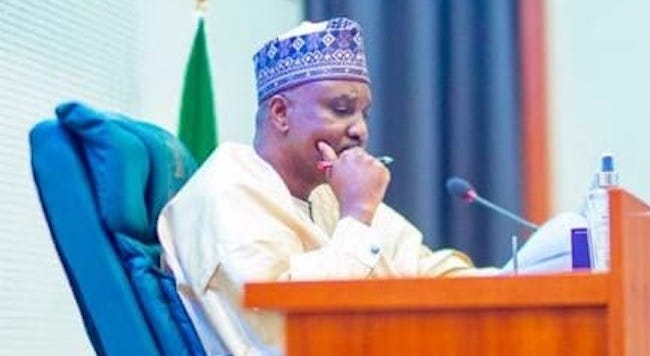

Nigeria, Africa’s largest economy, is grappling with a mounting debt crisis that threatens its fiscal stability and socio-economic progress. As of the first quarter of 2025, the country’s public debt has ballooned to an alarming ₦149.39 trillion (approximately US$97 billion), a sharp increase from the previous year’s ₦121.7 trillion. This surge has pushed the debt-to-GDP ratio to around 52%, far surpassing the 40% statutory ceiling enshrined in Nigerian law. At the forefront of this concern is Speaker of the House of Representatives, Abbas Tajudeen, who has issued a stern warning about the consequences of Nigeria’s borrowing habits. His message underscores the urgent need for prudent fiscal management, transparent oversight, and a strategic rethink of borrowing patterns to safeguard Nigeria’s future.
The Alarming Surge in Nigeria’s Public Debt
Nigeria’s public debt has escalated rapidly in recent years, reflecting a combination of rising domestic and external borrowings. By early 2025, the debt profile had reached ₦149.39 trillion, marking a significant jump from ₦121.7 trillion the previous year. This increase is symptomatic of persistent budget deficits, fiscal pressures, and a heavy reliance on borrowing to finance government expenditures.
The debt-to-GDP ratio, a critical indicator of fiscal health, now stands at approximately 52%, well above the 40% limit set by Nigerian law. This breach signals a precarious position for the country’s economic sustainability, as surpassing the statutory ceiling indicates that debt obligations are growing faster than the country’s economic output.
Such an unsustainable trajectory raises concerns about Nigeria’s ability to meet its debt obligations without compromising essential public services or economic growth. The rapid accumulation of debt, without commensurate revenue growth or effective debt management strategies, risks pushing the country closer to a debt crisis.
Speaker Abbas Tajudeen’s Stark Warning
At the 11th Annual Conference and General Assembly of the West Africa Association of Public Accounts Committees (WAAPAC) in Abuja, Speaker Abbas Tajudeen delivered a sobering message about Nigeria’s fiscal trajectory. He described the current borrowing patterns as reckless and warned that the nation risks mortgaging its future if decisive actions are not taken.
Abbas emphasized that managing public debt is not merely a budgetary challenge but a moral responsibility of the legislature. He urged lawmakers to exercise rigorous oversight to ensure that borrowing decisions are transparent, prudent, and aligned with the collective interests of Nigerian citizens.
The Speaker’s warning highlighted the broader implications of unchecked borrowing—beyond immediate budget concerns, it threatens generational equity by diverting resources away from critical sectors such as healthcare, education, and infrastructure development.
Understanding the Debt Composition: Domestic vs. External Borrowing
Nigeria’s debt portfolio is roughly split between domestic and external borrowings, with domestic debt constituting about 53% and external debt making up 47%. This balance has significant implications for the country’s economic vulnerability and fiscal management strategies.
Domestic borrowing, while offering more control and flexibility, can crowd out private sector investment by absorbing significant portions of the financial market’s liquidity. On the other hand, external debt exposes Nigeria to exchange rate risks and global market volatility, especially when debts are denominated in foreign currencies.
The combination of these factors means Nigeria must navigate a complex debt landscape, balancing the benefits and risks of each borrowing source. Failure to manage this balance prudently could exacerbate fiscal pressures and increase the cost of debt servicing.
Africa’s Debt Landscape and Nigeria’s Position
Speaker Abbas placed Nigeria’s debt crisis within the broader context of Africa’s growing debt burden. The continent’s public debt reached $1.8 trillion by 2022, with external debts projected to surpass $1 trillion by 2023. Many African countries are grappling with debt-to-GDP ratios that far exceed Nigeria’s, such as Sudan at 344%, Angola at 136.8%, and Ghana at 84%.
Despite these alarming figures, Nigeria’s situation is particularly concerning due to its economic size and regional influence. The country’s debt dynamics reflect a microcosm of broader continental challenges, including dependency on external financing, high borrowing costs, and limited fiscal space.
Abbas also highlighted the composition of Africa’s debt ownership, noting that Western private lenders hold 35%, multilateral institutions 39%, and Chinese creditors only 12%. This distribution challenges common narratives and underscores the complexity of Africa’s debt relationships.
The Economic and Social Impact of Rising Debt Servicing Costs
One of the most pressing consequences of Nigeria’s escalating debt is the increasing proportion of national revenue dedicated to debt servicing. This trend diverts funds away from vital public services including healthcare, education, infrastructure, and social welfare programs.
Speaker Abbas lamented that in many cases, governments are spending more on interest payments than on essential services, a situation that undermines social development and exacerbates inequality. This dynamic risks eroding public trust and weakening the state’s capacity to meet citizens’ needs.
Moreover, the reliance on expensive commercial loans, often denominated in foreign currencies, exposes Nigeria to exchange rate fluctuations and global financial shocks. These vulnerabilities can lead to sudden increases in debt servicing costs, further straining fiscal resources.
Calls for Reform: Rethinking Borrowing and Fiscal Oversight
In response to the crisis, Speaker Abbas called for a comprehensive rethink of Nigeria’s borrowing strategies. He advocated for stricter legislative oversight, emphasizing that parliaments must hold governments accountable to ensure borrowing decisions are transparent, justified, and sustainable.
He also urged a shift away from overreliance on external debt toward mobilizing domestic resources, fostering intra-African trade, and developing financial instruments tailored to Africa’s unique development needs. This approach could reduce vulnerability to external shocks and promote economic self-reliance.
The Speaker’s recommendations highlight the need for coordinated reforms involving fiscal policy, debt management, and economic diversification to create a resilient financial environment conducive to sustainable growth.
Government’s Perspective and Contrasting Views
While Speaker Abbas raised alarms, government officials have attempted to project optimism. Finance Minister Wale Edun asserted that Nigeria is making progress, citing economic reforms that purportedly expand fiscal space and boost investor confidence.
The Minister also contested the debt-to-GDP ratio figures, claiming a more comfortable ratio of 38.8%, which he described as manageable relative to global standards. This divergence in perspectives underscores the complexity and politicization of debt discourse in Nigeria.
Nonetheless, the Speaker’s blunt message remains clear: without urgent reforms and stringent oversight, Nigeria risks entrenching a debt trap that could stifle economic growth and imperil future generations’ wellbeing.
Conclusion
Nigeria’s escalating ₦149 trillion debt crisis is a wake-up call that demands immediate and sustained attention from policymakers, lawmakers, and stakeholders. The warnings issued by Speaker Abbas Tajudeen highlight the perilous path the nation is on—one that risks mortgaging the future of millions through unsustainable borrowing and insufficient oversight. Tackling this crisis requires a multi-faceted approach: strengthening legislative oversight, reforming borrowing practices, enhancing domestic resource mobilization, and fostering economic resilience. Without these measures, Nigeria faces the real danger of falling into a debt trap that could undermine decades of progress and sacrifice the wellbeing of future generations. The time to act is now, with transparency, prudence, and collective responsibility at the forefront of the nation’s fiscal governance.