

Silent Sackings: Tinubu’s Peculiar Ways of Easing out Bad Eggs
Byk Ind
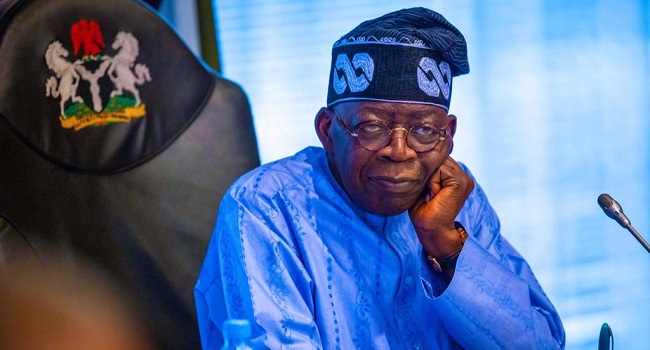
Since assuming office on May 29, 2023, President Bola Ahmed Tinubu has gradually carved out a leadership style that places a premium on institutional discipline and personal accountability, especially among those entrusted with public office. Unlike loud public sackings or prolonged political drama, the President’s approach has largely been swift, clinical and decisive: once allegations of corruption, financial recklessness or integrity breaches attain a certain threshold, the affected official is quietly eased out.
This pattern has become increasingly noticeable within the Tinubu administration. Appointees who found themselves under the intense beam of corruption allegations did not linger long in office. In most cases, suspensions, resignations or outright replacements followed shortly after investigations were commenced. To many observers, this approach marks a clear departure from the culture of tolerance that characterised previous administrations.
Under former Presidents Goodluck Jonathan and Muhammadu Buhari, several officials accused of corruption or gross misconduct remained in office for extended periods, sometimes even completing their tenures despite evidence or active investigations. Tinubu, by contrast, appears unwilling to absorb the political cost of shielding any appointee whose conduct threatens public trust or undermines the credibility of his government.
PRNigeria examines key appointees who exited the Tinubu administration under a cloud of corruption, financial recklessness, and certificate forgery that led to their unceremonious departures.
Betta Edu: Humanitarian Ministry Scandal
The case of Dr. Betta Edu was the first major integrity test the Tinubu administration was subjected to. Appointed as Minister of Humanitarian Affairs and Poverty Alleviation, Edu was suspended in January 2024 after reports emerged that she authorised the transfer of approximately ₦585 million of public funds into a private bank account.
The funds, earmarked for vulnerable groups and social intervention programs, were allegedly paid in clear violation of established financial regulations. The revelations triggered widespread public outrage and raised serious concerns about transparency in a ministry already tainted by controversies from previous administrations.
President Tinubu acted swiftly, ordering her immediate suspension and directing anti-corruption agencies to investigate the matter. By doing so, the President sent a strong signal that even politically visible ministers would not be shielded once financial misconduct enters the public domain. Edu was subsequently replaced, reinforcing the administration’s zero-tolerance posture.
Halima Shehu: NSIPA Under Fire
Almost simultaneously with the Betta Edu saga, another storm broke within the social intervention ecosystem. Halima Shehu, head of the National Social Investment Programme Agency (NSIPA), was suspended over allegations of massive financial irregularities linked to the management of conditional cash transfers and other welfare schemes.
Reports indicated that billions of naira passed through accounts without proper documentation, raising red flags among auditors and oversight institutions. President Tinubu approved her suspension pending a full investigation, once again demonstrating a reluctance to accommodate officials whose stewardship of public funds appears questionable.
The suspension of Shehu further reinforced the perception that Tinubu was determined to clean up agencies responsible for poverty alleviation and social welfare sectors, historically prone to abuse.
Prof. Uche Geoffrey Nnaji: Certificate Forgery Allegations
Read Also:
Integrity issues are not limited to financial misconduct alone. In October 2025, Professor Uche Geoffrey Nnaji resigned as Minister of Innovation, Science and Technology following allegations bordering on certificate forgery and misrepresentation of academic qualifications.
Media reports and civil society scrutiny questioned the authenticity and verifiability of some credentials attributed to the minister. As public pressure mounted, the Presidency accepted his resignation, effectively closing the chapter without prolonged controversy.
The handling of Nnaji’s case underscored a broader message: ethical lapses, whether financial or reputational, are incompatible with service under the Tinubu administration.
Farouk Ahmed: Collision Course with a Behemoth
The most dramatic and recent exit under the Tinubu administration followed a high-profile petition by Africa’s richest man, Aliko Dangote, against the Chief Executive of the Nigerian Midstream and Downstream Petroleum Regulatory Authority (NMDPRA), Farouk Ahmed.
On December 16, Dangote, through his lawyer Ogwu James Onoja (SAN), submitted a formal petition to the Independent Corrupt Practices and Other Related Offences Commission (ICPC), accusing Ahmed of corruption, financial impropriety and abuse of office. The petition, received by ICPC Chairman Dr. Musa Adamu Aliyu (SAN), called for Ahmed’s immediate arrest, investigation and prosecution.
Central to Dangote’s allegations was the claim that the NMDPRA boss had been living far beyond his legitimate earnings as a public servant. The petition specifically cited over $7 million allegedly paid upfront for the six-year education of Ahmed’s four children at elite schools in Switzerland. Dangote reportedly provided the names of the children and their institutions to aid verification, arguing that Ahmed’s cumulative earnings in public service could not reasonably sustain such expenditure.
Dangote further alleged that public funds were embezzled and diverted through Ahmed’s position at the NMDPRA for personal enrichment, actions he said had fuelled public unrest, protests and erosion of trust in Nigeria’s downstream petroleum sector. He also vowed to appear in person before the ICPC to substantiate claims of corrupt enrichment, abuse of office and impunity, insisting that decisive action would help protect the credibility of President Tinubu’s administration.
The petition followed Dangote’s earlier public accusations during a December 14 press briefing at the Dangote Refinery in Lagos, where he alleged that Ahmed spent between $5 million and $7 million on his children’s education abroad—an amount he described as inconsistent with a public officer’s salary. Similar allegations had earlier triggered calls for probes by civil society groups, including SERAP.
The mounting pressure culminated in Ahmed’s resignation days later, fitting neatly into the administration’s emerging pattern of swift exits once corruption allegations crystallise.
Deterrence as a Governance Tool
The Tinubu approach stands in sharp contrast to the practices of past administrations. He appears to have learned from these precedents. Rather than expend political capital defending embattled appointees, his administration opts for early disengagement, allowing investigations to proceed without the burden of official protection.
Beyond the immediate political implications, this pattern carries a broader governance message. Allegations of corruption and misconduct now come with real consequences—loss of office, reputational damage and potential legal exposure. For current and future appointees, the warning is unmistakable.
This evolving culture of accountability, if sustained, could serve as a powerful deterrent and help restore public confidence in government. For President Tinubu, the message is clear – public office is a privilege, not a shield, and misconduct will no longer be quietly tolerated.