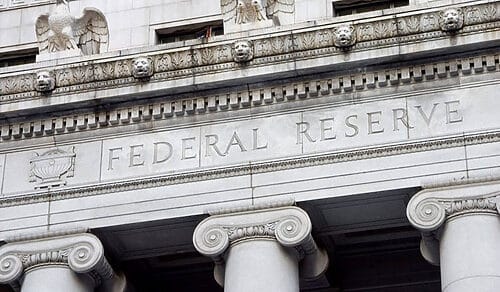

The Federal Reserve’s monetary policy plays a crucial role in shaping the U.S. economy, particularly concerning employment and inflation. In recent years, the Fed embarked on a series of aggressive interest rate hikes and quantitative tightening measures aimed at curbing soaring inflation. However, after recent labor market data and inflation trends, it has become evident that the Fed’s assumptions and strategies were flawed. This article delves into the reasons why the Fed was wrong about jobs and inflation, the consequences of its policy decisions, and the potential path forward for economic recovery and stability.
Revisiting the Fed’s Inflation Control Strategy
The Federal Reserve’s primary tool to tame inflation is adjusting interest rates. Between 2021 and 2023, the Fed embarked on a rapid sequence of rate hikes, aiming to slow economic activity and reduce demand-driven inflation. The rationale was that tighter monetary policy would cool the labor market, reduce wage pressures, and subsequently lower inflation.
Alongside rate hikes, the Fed implemented quantitative tightening, shrinking its balance sheet by selling off assets acquired during pandemic relief efforts. This policy aimed to further tighten financial conditions and reduce liquidity in the economy. The Fed’s approach was rooted in historical precedents where such measures helped control inflation but often at the cost of rising unemployment.
However, this strategy underestimated the resilience of the labor market and overestimated the negative impact on inflation. By focusing heavily on reducing employment to curb inflation, the Fed overlooked key economic dynamics, such as labor supply constraints and sector-specific vulnerabilities, especially in housing.
Labor Market Resilience Defies Expectations
Contrary to the Fed’s expectations, the labor market remained robust despite aggressive monetary tightening. The November 2023 jobs report showed an unemployment rate of just 3.7%, with nonfarm payrolls increasing by 199,000. These figures highlight that the labor market did not deteriorate as the Fed anticipated.
Job openings, which serve as a critical indicator of labor demand, peaked at 12 million in early 2022 and have moderated to around 8.7 million but remain historically high. This suggests that employers continue to seek workers actively, defying predictions of a sharp contraction in employment opportunities.
Moreover, the Fed’s metric for signaling labor market weakness—jobless claims exceeding 323,000 on a four-week moving average—has not been breached. This further confirms that the labor market has not broken down, and the feared recession driven by mass layoffs has not materialized.
The Misguided Impact on the Housing Sector
While the labor market showed resilience, the housing sector bore the brunt of the Fed’s tightening policies. Higher interest rates led to increased mortgage costs, significantly dampening demand for existing homes. Consequently, existing home sales plummeted to levels reminiscent of the Great Financial Recession.
This contraction in housing activity has had ripple effects on the broader economy, including decreased consumer spending on home-related goods and services. The Fed’s focus on labor market contraction as the primary inflation control lever failed to anticipate or mitigate the disproportionate harm to housing.
The housing slowdown also poses risks to economic growth and wealth accumulation for many Americans. By neglecting the sector’s vulnerability, the Fed’s policies inadvertently contributed to economic unevenness, highlighting the need for a more nuanced approach.
Understanding Employment Recovery Post-COVID-19
Early in the COVID-19 pandemic, economic recovery models predicted a phased return to normalcy. By April 2020, recoveries had begun, and by September 2022, total employment had fully rebounded to pre-pandemic levels. This milestone disproved fears of prolonged job losses caused by the pandemic.
However, it’s important to recognize that full recovery means not just regaining lost jobs but also achieving the employment growth that would have occurred without the pandemic. Normal economic expansion would have pushed employment figures higher, between 157 million and 159 million today. Until these thresholds are crossed, the labor market remains in a recovery phase.
This perspective explains why slowing job growth does not necessarily signal an impending recession. Instead, it reflects the natural tapering of employment gains as the economy reaches equilibrium, with population and labor force growth rates slowing down.
The Fed’s Overestimation of Recession Risks
Many analysts and policymakers believed that slowing job growth would inevitably lead to a recession in 2022 or 2023. This assumption was based on historical patterns where employment contraction often preceded economic downturns. However, this interpretation overlooked the unique post-pandemic dynamics affecting the labor market.
The Fed’s reliance on job growth as a recession indicator proved inadequate because jobless claims, a more sensitive gauge of labor market stress, remained low. Employment data showed moderation but not collapse, indicating that the economy was adjusting rather than contracting sharply.
This misreading led to overly aggressive monetary tightening, which risked undermining economic growth unnecessarily. The Fed’s error lay in conflating slower expansion with recession and failing to account for structural changes in labor supply and demand.
Monetary Policy Moving Forward: The Case for Rate Cuts
Given the current economic landscape, there is growing consensus that the Fed’s restrictive policies need recalibration. Inflation trends have moderated, and the labor market remains stable, creating an environment conducive to easing monetary policy in 2024.
Rate cuts could support sectors like housing that have been disproportionately affected, helping to restore balance to the economy. Moreover, a dovish stance by the Fed would signal confidence in inflation containment without sacrificing employment growth.
Targeting the core Personal Consumption Expenditures (PCE) inflation rate over three, six, and twelve months can guide measured rate reductions. This approach allows the Fed to 'land the plane' gently, avoiding a hard landing that could trigger a recession.
Key Economic Indicators to Watch
Moving forward, several economic markers will be critical for assessing the Fed’s policy effectiveness. First, jobless claims remain a pivotal indicator of labor market health; sustained increases above 323,000 could signal emerging weakness.
Second, inflation metrics, particularly core PCE inflation, will guide the pace and scale of monetary easing. A continued downward trend in inflation without adverse employment effects would validate a shift to lower rates.
Lastly, housing market data, including existing home sales and mortgage rates, will reflect the broader economic impact of monetary policy. Improvements here would suggest that easing is supporting economic recovery without fueling inflationary pressures.
Implications for Businesses and Consumers
The Fed’s missteps have tangible consequences for both businesses and consumers. Elevated interest rates have increased borrowing costs, curtailing investments and slowing expansion in various sectors, especially real estate and manufacturing.
For consumers, higher mortgage rates and housing prices have constrained homeownership opportunities and reduced disposable income. However, stable employment and moderating inflation provide a foundation for cautious optimism.
Looking ahead, businesses must navigate a shifting monetary environment, balancing growth ambitions with cost pressures. Consumers can anticipate more favorable borrowing conditions if the Fed adopts a dovish stance, potentially revitalizing demand and economic momentum.
Conclusion
The Federal Reserve’s recent approach to managing inflation through rapid interest rate increases and balance sheet reduction was based on assumptions that did not fully align with economic realities. The labor market’s unexpected strength and the disproportionate impact on housing reveal critical flaws in the Fed’s strategy. As inflation moderates and employment remains steady, there is a clear argument for the Fed to pivot toward a more accommodative stance in 2024. By carefully adjusting monetary policy, the Fed can support sustainable growth, stabilize key sectors, and avoid the pitfalls of an unnecessary recession, ultimately steering the economy back onto a healthy trajectory.