
● Atiku hails move, seeks strong opposition alliance
● Abure faction calls exit ‘liberation’, apologises for backing Obi in 2023
● Lagos APC criticises defection, says action politically calculated
● How South-East adopted ADC as new political platform
● Otti rules out defection with Obi, pledges to remain in Labour Party
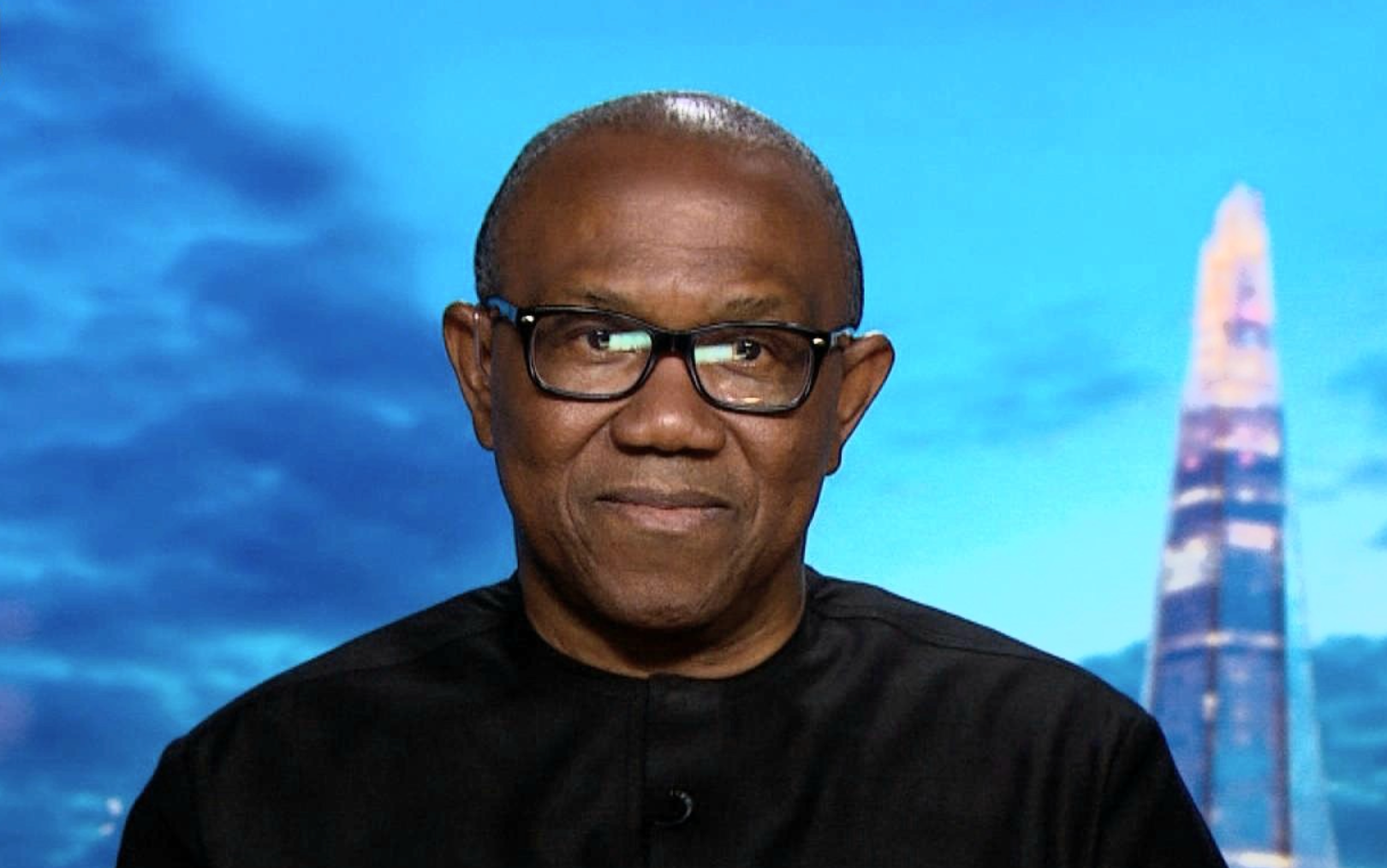
Divergent reactions have followed Peter Obi’s defection to the African Democratic Congress (ADC), exposing deep fractures within the Labour Party (LP), reshaping opposition alliances and forcing the South-East into fresh political calculations, as rival camps debate the implications of the move for leadership, unity and power ahead of 2027.
Former Vice President Atiku Abubakar described it as a significant moment in the evolution of political coalitions in Nigeria.
In a post on his social media handle yesterday, Atiku, a former presidential candidate of the Peoples Democratic Party (PDP), said he looked forward to working closely with Obi within the ADC.
“Today marks a significant moment in the history of political coalitions in our country, with the official declaration of my brother and associate, Peter Obi, into the African Democratic Congress (ADC),” Atiku said.
“It is my pleasure to welcome him officially, as we look forward to a robust working relationship that will foster a virile opposition, one that will ultimately form a government capable of bringing prosperity and peace to our people.
“And as the ADC coalition train leaves Enugu, the capital of the South-East region, I hope this inspires other patriots to join the cause with the train headed in their direction.”
Idowu Adelusi, former Chief Press Secretary to ex-Ekiti State governor Ayo Fayose, said Obi’s eventual destination in the ADC may not change the political equation in 2027.
According to him, “The aspirations of opposition leaders to change the country may sound good, but when such desires cannot be suppressed in the face of personal ambition, there will be problems.
“I do not see former Vice President Atiku Abubakar bowing to Obi or any other presidential hopeful in the ADC, especially as 2027 may be his last chance to secure a presidential ticket. I also want to see whether an average South-Easterner would encourage Obi to play second fiddle to Atiku. I equally wonder if former Rivers State governor, Rotimi Amaechi, would shelve his presidential ambition for another person. It is going to be a serious mountain for the party’s managers to climb.
“We should also bear in mind that time is not on their side, considering the Electoral Act and the election timetable. Individual presidential ambitions may affect the party.”
Taking a different position, a chieftain of Ohanaeze Ndigbo, Goddy Uwazurike, described Obi as a game changer, saying his decision to join the ADC—also positioned as a reform-oriented platform—would have a significant impact in 2027.
On whether Obi should shelve his presidential ambition for Atiku or accept the position of running mate, Uwazurike said: “Capital no! I will never encourage Obi to step down for Atiku. The former vice president and Obi belong to different political categories. While Atiku represents the old political order, Obi is part of a new generation determined to change the country.
“Rather than succumbing, Obi should rather leave. It is not a must.”
Explaining why Obi formally joined the party on the last day of 2025, former national chairman of the ADC, Ralph Okey Nwazurike, said Obi was not new to the party, noting that he had been part of its strategic repositioning from the outset.
He added that Obi’s defection would help reposition the South-East in Nigeria’s national political calculations.
Okey also dismissed fears over competing presidential ambitions within the party, saying: “Over 170 million Nigerians now own the ADC, and it is whoever and whatever they want that the party will present.”
Abure faction calls Obi’s exit ‘liberation’, apologises for backing him in 2023
The Julius Abure-led faction of the Labour Party described the defection of Peter Obi to the African Democratic Congress as a “liberation” while apologising to Nigerians for presenting him as its flagbearer in the last general election.
In a statement issued yesterday and signed by the faction’s National Publicity Secretary, Mr Obiora Ifoh, the group said it had taken note of Obi’s defection alongside some of his supporters, questioning the substance of his address at the declaration event and what it described as the absence of new ideas.
The faction claimed that the party had effectively parted ways with Obi and some of his supporters in the National Assembly since September 2024, following prolonged internal disagreements.
According to the statement, the Abure-led leadership had on several occasions urged Obi and his supporters to leave the party if they were unwilling to work with the leadership, noting that several lawmakers had been suspended for alleged anti-party activities.
It further claimed that similar disciplinary action was being considered against Obi before what it described as the intervention of “well-meaning Nigerians”.
The faction blamed Obi and Abia State Governor, Alex Otti, for the internal crisis that engulfed the Labour Party, accusing them of sponsoring actions aimed at undermining the leadership of Julius Abure.
It also expressed surprise that Otti had not formally exited the party, despite what it said was his suspension, urging him to align with Obi’s political move.
Commenting on Obi’s defection rally in Enugu, the Abure-led group dismissed the event as poorly attended, claiming it was largely boycotted by prominent political and traditional institutions in the South-East.
The faction argued that Obi had lost the political appeal he enjoyed during the 2023 election cycle and that any renewed presidential or vice-presidential ambition was unviable.
It further alleged that the South-East suffered political setbacks under the administration of President Bola Tinubu due to the region’s support for Obi in the 2023 elections.
Citing ministerial appointments, the faction said: “While some states have as many as five ministers, the entire South-East was given five ministerial slots,” adding that the region continued to experience marginalisation in federal infrastructure allocation.
In a rare admission, the faction apologised to Nigerians for fielding Obi as its presidential candidate in 2023, describing the decision as a major political miscalculation.
“We plead for forgiveness from Nigerians. We are already working on presenting a better prospect that we believe can return Nigeria to its glorious days,” the statement said.
Lagos APC criticises Obi’s defection to ADC, calls move politically calculated
THE Lagos State chapter of the All Progressives Congress criticised the formal defection of Peter Obi to the African Democratic Congress, describing it as a politically calculated move rather than a genuine ideological realignment.
In a statement issued yesterday, the party said Obi’s decision confirmed what it described as a long-anticipated political alignment aimed at challenging the Nigerian state, rather than offering constructive alternatives within the democratic process.
According to the Lagos APC, the defection marked the end of what it called “the pretence of political independence”, arguing that the development exposed a coalition driven by grievances and personal ambition.
The party said the timing and setting of the declaration were deliberate and symbolic, adding that the move did not come as a surprise to close observers of the political landscape.
It further argued that Obi’s political history showed a pattern of frequent party switches, which it said undermined claims of principled opposition, adding that the latest move reinforced concerns about what it termed “convenience politics” rather than commitment to internal democracy or ideological consistency.
The Lagos APC also accused the ADC of serving as a platform for disparate political interests united mainly by opposition to the ruling party, rather than shared policy ideas, describing the coalition as lacking a clear ideological foundation and driven primarily by electoral ambition.
Raising security concerns, the party criticised what it described as the opposition coalition’s silence on terrorism and national security, arguing that political actors seeking national leadership must take clear positions on issues affecting citizens’ safety.
While criticising the opposition, the Lagos APC defended the APC-led Federal Government under President Bola Tinubu, saying it remained focused on economic stabilisation, institutional reforms and restoring investor confidence. It contrasted this with what it described as opposition reliance on misinformation and pessimism about the country’s challenges.
Reiterating its confidence in the ruling party’s Renewed Hope Agenda, the Lagos APC said it remained firmly on course despite political opposition and expressed optimism that Nigerians would reject what it termed the politics of disruption in favour of governance and stability.
“What has occurred is not political evolution; it is the public activation of a coalition forged in grievance, sustained by falsehood, and animated by an unhealthy appetite for national dislocation,” the party said.
How South-East adopted ADC as new political platform
A new political alignment emerged in the South-East yesterday as the 2023 presidential candidate of the Labour Party, Peter Obi, led politicians, elders, women and youths from the region to formally adopt the African Democratic Congress as their preferred political platform.
The declaration, held at the Nike Lake Resort in Enugu, attracted a capacity crowd, with leaders unanimously affirming the ADC as the vehicle through which the South-East would seek a return to the centre of national politics and redefine its political future ahead of the 2027 general election.
The event drew members of several political parties, including the LP, Peoples Democratic Party (PDP), Young Progressives Party (YPP), All Progressives Congress (APC) and All Progressives Grand Alliance (APGA), many of whom announced their resignation from their former parties to join the ADC.
Among those present were former PDP National Secretary, Okwesilieze Nwodo; former governors Achike Udenwa and Sam Egwu; and former Imo State governor, Emeka Ihedioha.
Also in attendance were Senators Enyinnaya Abaribe, Tony Nwoye and Victor Umeh; former senator Gilbert Nnaji; Chief Onyema Ugochukwu; former Minister of Women Affairs, Josephine Anenih; former ADC national chairman, Ralph Okey Nwosu; Senator Ben Ndii Obi; former presidential adviser, Prof Osita Ogbu; and political economist, Prof Pat Utomi.
Members of the Obidient Movement, led by its President (Worldwide), Yenusa Tanko, were also present, alongside the ADC National Chairman, David Mark; former Sokoto State governor, Aminu Tambuwal; former Edo State governor, Prof Oserheimen Osunbor; rights activist Aisha Yusuf; as well as 18 members of the House of Representatives and several state legislators.
Addressing the gathering, Obi said the decision to adopt the ADC was driven by the need to offer Nigerians an alternative political platform in the face of what he described as erosion of values, pervasive corruption, worsening insecurity and the “bastardisation” of Nigeria’s democratic process.
He argued that national unity and competent leadership were essential to repositioning the country, adding that the ADC formed part of a broader mission to “save Nigeria and make it work for the citizenry”.
Obi lamented that beneficiaries and veterans of Nigeria’s democratic struggle had, in his view, undermined the system, stressing that disunity and poor leadership had stripped the country of its pride.
“We’ve now seen people who benefited from our democracy being part of celebrating electoral flaws publicly,” he said. “We are saying that those who are planning to rig the election in Nigeria come 2027 will be resisted by every means, lawfu l and legitimate.”
He added that studies undertaken by his political movement showed that unity and competence were critical to national renewal. “Nigeria today is not united. We must ensure the unity of the country. We must ensure we have competent leadership,” he said.
Obi painted a grim picture of the country’s socio-economic conditions, citing widespread hunger, rising insecurity and deepening divisions. He argued that despite Nigeria’s vast resources, mismanagement had left citizens impoverished.
“Nigeria has never seen this level of insecurity. We have never seen this level of hunger,” he said, calling on political leaders to stop exploiting divisions and impoverishing the population. “Nigeria is not a poor country. We are looking into poverty, and we must stop seeing Nigerians as lazy people.”
On the economy, Obi said government revenue could not grow while citizens languished in poverty, likening the economy to a bank account that required deposits before withdrawals. He criticised what he described as extractive governance and pledged that the ADC would pursue reforms to reverse the trend, assuring supporters that the party had come to “salvage the country”.
In his remarks, ADC National Chairman, David Mark, said the party was committed to internal democracy, respect for members and people-oriented governance. He said the collective aspiration of the party was to build a secure nation, a productive economy through federalism, massive job creation, and the inclusion and empowerment of youths and women.
Describing the South-East as a hub of enterprise, intellect, resilience and patience, Mark said the region’s entry into the ADC would facilitate its return to the centre of national decision-making. He promised fairness, mutual respect, transparency, and genuine partnership within the party, adding that a formidable political force reflecting Nigerians’ hopes and aspirations would soon emerge.
Earlier, Ihedioha said he had been part of building Nigeria’s democracy but regretted what he described as the growing muzzling of opposition. He moved a motion for the formal adoption of the ADC as the political platform of the South-East, arguing that the region had been excluded from national power since 2015.
“Since 2015, we have been excluded as a people, and we understand what that means,” he said. “We are thirsty and we are hungry. We have experienced other platforms, and we are conscious of the fact that the platform that will satisfy our aspirations and justify our participation will be the African Democratic Congress.”
The motion, seconded by Prof Osita Ogbu, was adopted through a thunderous voice vote, formally endorsing the ADC as the new political platform for the South-East.
Earlier, the ADC National Vice Chairman (South), Ben Obi, said the gathering was driven by the need for a platform to represent Igbo interests within a broader national framework, adding that the ADC was positioned to move Nigeria forward.
Otti rules out defection with Obi, pledges to remain in Labour Party
ABIA State Governor, Alex Otti, has dismissed speculation that he plans to defect from the Labour Party alongside the party’s 2023 presidential candidate, Peter Obi.
Otti made the clarification on Tuesday during his monthly media briefing in Umuahia, the Abia State capital.
The governor said Obi had personally informed him of his decision to leave the Labour Party and that he respected and supported the choice, but stressed that he had no intention of following suit.
“If you remember, I joined the Labour Party before Peter Obi, so I did not join the party with him,” Otti said. “He has communicated to me that he is leaving the Labour Party. I gave him my blessings. But I will remain in the Labour Party, and I told him that I would continue the struggle to rescue the Labour Party.
“That is the party that brought me to power. If we fight and get to the end, and we are unable to reposition the Labour Party, then we can discuss other options. Therefore, for now, I am not defecting to any party.”
Otti also responded to recent appeals by the Deputy Speaker of the House of Representatives, Benjamin Kalu, urging him to join the All Progressives Congress, saying he would not be swayed or distracted by such calls.
He reaffirmed his commitment to the Labour Party, insisting that his focus remained on governance and strengthening the party that brought him to office.
Originally reported by guardian.ng. Adapted for our readers.