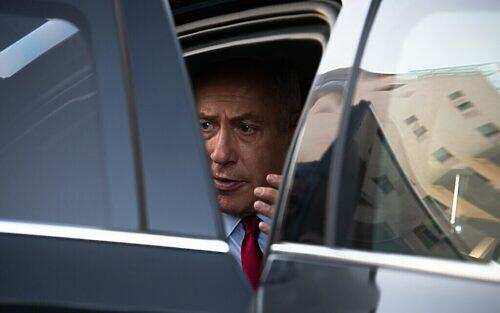

The political and legal landscape in Israel has been shaken by reports that three drivers employed by the Prime Minister’s Office for decades were abruptly dismissed shortly after Benjamin Netanyahu resumed his role as Prime Minister. These drivers are not just employees but pivotal witnesses in Netanyahu’s high-profile corruption trial, scheduled to testify in the coming weeks. The Deputy Attorney General’s Office has now launched an investigation to ascertain whether their firing was linked to their involvement in the trial, raising serious questions about potential interference with judicial proceedings and the integrity of the Prime Minister’s Office.
Background of the Drivers’ Employment and Dismissal
The three drivers in question had served the Prime Minister’s Office for approximately 30 years, providing transportation services to Benjamin Netanyahu and other high-ranking officials. Their long tenure reflects a trusted position within the government’s operational framework, often requiring close proximity to sensitive discussions and confidential environments.
Media reports initially suggested that the drivers were dismissed due to their prior employment under former Prime Ministers Naftali Bennett and Yair Lapid. This explanation, however, raised eyebrows given the timing of their termination and their involvement in Netanyahu’s ongoing trial.
Subsequent revelations indicated that these drivers are not merely staff but are witnesses expected to testify in Case 1000, one of the three corruption cases against Netanyahu. Their dismissal prompted concerns about potential attempts to obstruct justice or intimidate witnesses in a highly sensitive legal process.
The Significance of Case 1000 in Netanyahu’s Trial
Case 1000 centers on allegations that Benjamin Netanyahu received expensive gifts, including luxury cigars, from wealthy businessmen such as Hollywood producer Arnon Milchan. Prosecutors argue these gifts were part of a quid pro quo arrangement, where Netanyahu provided favors in exchange for personal benefits.
The testimony of the drivers is critical because they possess firsthand knowledge of the procurement and handling of these gifts. Their statements contradict Netanyahu’s version, particularly regarding who purchased the cigars, casting doubt on his defense.
Netanyahu has denied all wrongdoing, asserting that the charges are part of a politically motivated conspiracy involving law enforcement, the media, and opposition politicians. However, the drivers’ testimonies could significantly influence the court’s evaluation of the evidence.
Details of the Drivers’ Contradictory Testimonies
During police investigations, Netanyahu claimed that the cigars attributed to Milchan were purchased personally through his drivers. He refused to disclose their identities, complicating the inquiry.
The three dismissed drivers denied ever purchasing large quantities of cigars for Netanyahu, directly contradicting his account. Their statements have made them valuable witnesses for the prosecution, slated to testify in the Jerusalem District Court in the coming weeks.
This contradiction has intensified scrutiny on the circumstances surrounding their firing, especially as they represent a subset of a larger group of seven drivers who have been called upon as witnesses in the trial.
The Deputy Attorney General’s Investigation
Deputy Attorney General Gil Limon has reportedly agreed to open a formal investigation into the drivers’ dismissal following a request from prosecutors. This move underscores the seriousness of the allegations that their firing might have been an attempt to influence the trial.
The investigation aims to determine whether the dismissal was legitimate or if it constituted improper interference with court proceedings, potentially undermining the rule of law and the independence of the judiciary.
The Attorney General’s Office has confirmed the probe, highlighting the importance of maintaining transparency and accountability within the Prime Minister’s Office, especially amidst ongoing legal battles involving the nation’s highest political figure.
Responses from the Prime Minister’s Office
The Prime Minister’s Office has denied any connection between the drivers’ dismissal and their role as witnesses in the corruption trial. In an official statement, they emphasized that the decision was based on trust and loyalty considerations essential for individuals serving as the Prime Minister’s drivers.
The statement clarified that other drivers who are also witnesses have retained their positions, suggesting that the removal of the three drivers was unrelated to the trial. It also noted that the dismissed drivers would be reassigned to the motorcade of President Isaac Herzog.
Despite these assurances, critics argue that the timing and nature of the dismissals raise concerns about potential attempts to intimidate or penalize witnesses, thereby impacting the integrity of the judicial process.
Legal and Ethical Implications of the Dismissals
Firing key witnesses during an ongoing trial raises profound legal and ethical questions. It can be perceived as an attempt to obstruct justice or retaliate against individuals providing testimony adverse to the Prime Minister.
Such actions, if proven, undermine public trust in governmental institutions and the impartiality of legal proceedings. They may also violate labor laws and protections afforded to employees involved in judicial processes.
The investigation by the Deputy Attorney General will be pivotal in clarifying whether the dismissals were lawful and justified or if they represent a breach of ethical standards and legal norms, potentially leading to further legal consequences.
Broader Political Context and Netanyahu’s Legal Challenges
Benjamin Netanyahu faces three separate corruption cases involving charges of fraud, breach of trust, and bribery. These cases have polarized Israeli society and shaped the nation’s political discourse for years.
Netanyahu’s supporters argue that the charges are part of a politically motivated campaign to oust him, while critics see them as essential measures to uphold accountability and combat corruption at the highest level.
The dismissal of the drivers and the ensuing investigation add another layer to this complex political and legal saga, highlighting the intertwined nature of politics and justice in Israel’s current climate.
Potential Outcomes and Impact on the Trial
The Deputy Attorney General’s investigation could result in various outcomes, from clearing the Prime Minister’s Office of wrongdoing to uncovering improper conduct that might influence the trial’s proceedings and public perception.
If the dismissals are found to be retaliatory or obstructive, it could strengthen the prosecution’s case by demonstrating attempts to interfere with justice, potentially impacting the trial’s dynamics.
Conversely, if the dismissals are deemed legitimate and unrelated to the trial, it may reinforce the Prime Minister’s defense narrative and mitigate concerns about interference, though skepticism among the public and opposition may persist.
Conclusion
The dismissal of three veteran drivers from the Prime Minister’s Office, who are also witnesses in Benjamin Netanyahu’s corruption trial, has sparked a critical investigation by the Deputy Attorney General. This development underscores the delicate balance between political power and judicial accountability in Israel. As the probe unfolds, it will be crucial to uphold the principles of transparency and justice to maintain public confidence in both the legal system and democratic institutions. The outcome of this investigation may have far-reaching consequences not only for Netanyahu’s trial but also for the broader political landscape in Israel.
Originally reported by destyy.com. Adapted for our readers.