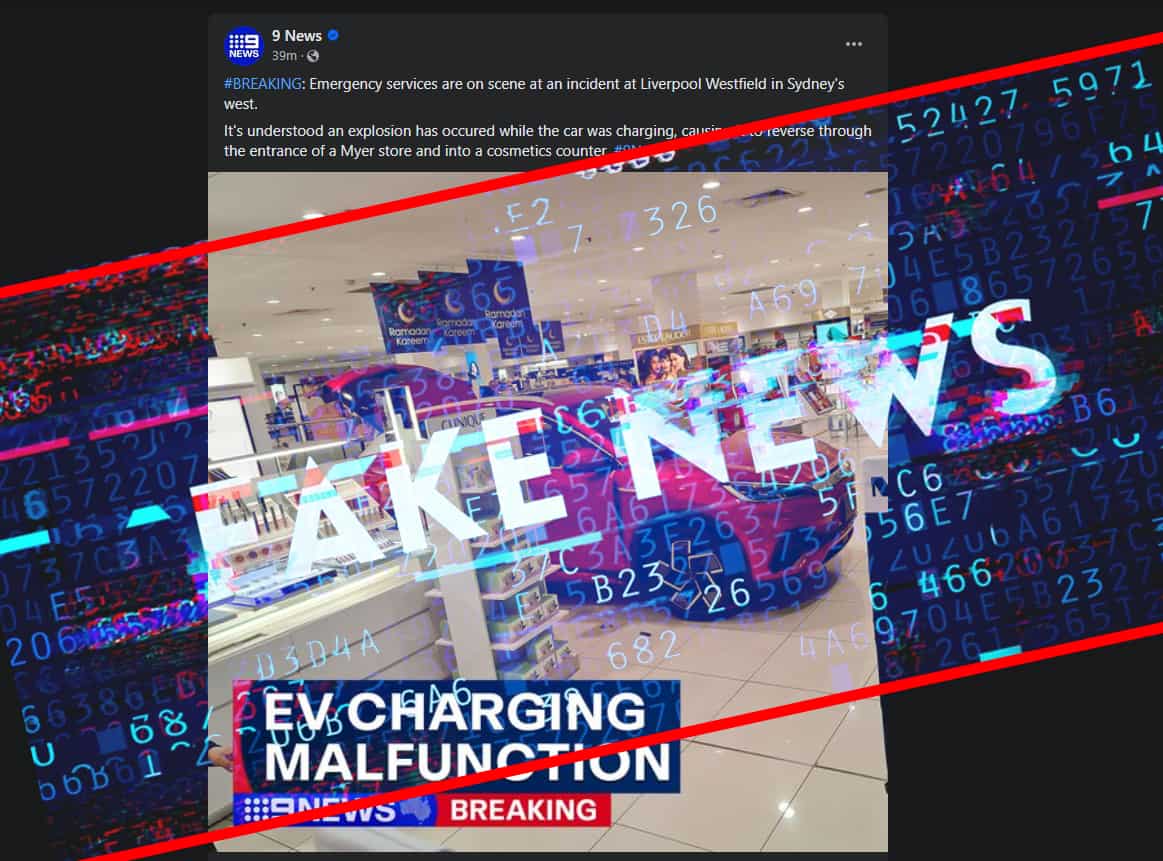

On a seemingly ordinary afternoon, 9 News published a breaking news report claiming that a BYD electric vehicle exploded while charging at Liverpool Westfield in Sydney’s west. The report described emergency services responding to the incident, which allegedly involved the vehicle reversing uncontrollably into a Myer store, causing injuries and property damage. However, this sensational story was quickly called into question. A detailed investigation into the event reveals that no explosion occurred, and the incident was instead an unfortunate accident involving a display vehicle and human error. This article unpacks the facts behind the false report, examines why such misinformation is harmful, and highlights the importance of responsible journalism when covering electric vehicle technology.
The False Report by 9 News: What Was Claimed
Earlier today, 9 News posted an alarming story on their social media channels and website, stating that emergency services were called to Liverpool Westfield in Sydney's west due to a BYD electric vehicle explosion. The report suggested the car exploded while charging, then reversed through the entrance of a Myer store, crashing into a cosmetics counter and injuring people. This narrative quickly gained traction, especially on social media platforms.
The post attracted significant engagement, including thousands of likes and hundreds of comments, many of which expressed skepticism or fear about electric vehicles. The report's dramatic tone and lack of detailed evidence made the story highly shareable, but also potentially misleading, especially to readers unfamiliar with electric vehicle technology.
Such a report from a prominent news outlet can have a wide-reaching impact, shaping public perception negatively. The initial claim painted BYD vehicles as unsafe and prone to catastrophic failure, which contradicted established knowledge about electric vehicle safety standards and battery technology.
Investigating the Truth: What Really Happened at Liverpool Westfield
Skeptical of the report's accuracy, an investigation was launched to verify the claims. Contacting the Myer store within Liverpool Westfield directly revealed that no explosion or fire had occurred. Store representatives emphatically denied any such incident, confirming that the premises had not suffered any damage from an exploding vehicle.
Further reports from 7 News clarified the actual circumstances. The incident involved a display vehicle at the shopping center, where a teenager was inside the car when it unexpectedly moved forward, crashing into a glass panel. The vehicle then reversed into the Myer store, striking two people. This tragic accident was linked to human error rather than any mechanical or battery malfunction.
These facts starkly contrast with the original narrative, highlighting the importance of accurate reporting. The incident was unfortunate but did not involve an explosion or battery failure, and the cause was related to the vehicle being operated without proper authorization or supervision.
Understanding Electric Vehicle Battery Safety
Lithium-ion batteries, which power most electric vehicles including BYD models, are designed with multiple safety features to prevent catastrophic failures such as explosions. While battery fires can occur, they are rare and typically involve thermal runaway conditions triggered by severe damage or manufacturing defects.
BYD’s blade battery technology is particularly noted for its robustness and safety. Independent tests have demonstrated that even direct punctures do not ignite fires, underscoring the company’s commitment to battery safety. This technology significantly reduces the risk of fire or explosion compared to traditional lithium-ion batteries.
Moreover, electric vehicles cannot be shifted into drive or reverse while charging, as the charging cable physically restricts such actions. This fact alone makes the original report’s claim—that the car exploded while charging and then reversed into a store—highly implausible given the vehicle’s safety interlocks and design.
The Role of Human Error in the Incident
The confirmed facts indicate that the incident was caused by human error, specifically a teenager gaining access to a display vehicle and inadvertently causing it to move. Questions remain about how the individual was able to enter and operate the vehicle, considering that modern electric cars typically require a key fob to start and engage transmission.
This situation raises concerns about safety protocols at retail locations displaying vehicles. Ensuring that display cars are secured and supervised is critical to prevent unauthorized use, especially in busy public spaces like shopping centers.
While the accident was unfortunate and resulted in injuries, it is important to separate this from vehicle safety issues. The vehicle’s movement was not caused by a malfunction but by unauthorized operation, highlighting the need for better preventative measures in such environments.
The Impact of Misinformation on Electric Vehicle Perception
False reports like the one from 9 News can significantly damage public perception of electric vehicles, which are already subject to scrutiny and skepticism. Misinformation fuels fears about safety and reliability, potentially slowing the adoption of cleaner transportation technologies.
Such sensational stories often overshadow the extensive safety testing and advancements made by manufacturers to ensure that electric vehicles meet rigorous standards. The spread of incorrect information can create unnecessary alarm and undermine consumer confidence.
It is essential for media organizations to verify facts thoroughly before publishing, especially on topics as impactful as vehicle safety. Responsible reporting helps educate the public and supports informed decision-making rather than spreading fear based on inaccurate claims.
Why Accurate Reporting Matters in the Age of Social Media
In today’s digital age, news spreads rapidly through social media platforms, where sensational headlines can go viral before facts are checked. This phenomenon increases the responsibility of news outlets to ensure accuracy and avoid contributing to misinformation.
The 9 News incident exemplifies how quickly misinformation can gain traction, with thousands engaging with the post before corrections or clarifications are made. This can lead to widespread misconceptions that are difficult to correct once entrenched in public discourse.
Journalists and editors must prioritize fact-checking and source verification, particularly when reporting on emerging technologies like electric vehicles. Providing context and expert insights can help prevent misunderstandings and promote balanced coverage.
How BYD and the EV Industry Can Respond to False Allegations
For manufacturers like BYD, misinformation about vehicle safety poses a serious reputational risk. Promptly addressing false claims through official statements and engaging with media outlets to correct inaccuracies is vital to protect brand integrity.
BYD’s demonstrated commitment to battery safety and innovation offers a strong foundation to counteract negative press. Public education campaigns can also help clarify how their technology works, dispelling myths and building consumer trust.
The broader EV industry benefits from a unified approach to combating misinformation by collaborating with media, regulators, and consumer groups. Transparent communication and open dialogue foster a better understanding of electric vehicles and their safety features.
Lessons Learned and Moving Forward
This incident highlights the critical need for responsible journalism and public awareness when reporting on electric vehicles. Misinformation can cause unwarranted fear and hinder progress toward sustainable transportation goals.
Consumers should approach sensational stories with healthy skepticism and seek information from credible sources. Understanding the technology behind electric vehicles helps dispel myths and supports informed discussions.
Ultimately, promoting accurate reporting, improving safety protocols at display venues, and enhancing public education are key steps to ensuring that incidents like this do not unfairly damage the reputation of electric vehicles or their manufacturers.
Conclusion
The false report of a BYD electric vehicle explosion at Liverpool Westfield underscores the dangers of misinformation, especially concerning emerging technologies like electric vehicles. Thorough investigation revealed that the incident was caused by human error involving a display car, not a battery malfunction or explosion. This case highlights the importance of responsible journalism and public education to ensure accurate understanding of EV safety. As electric vehicles continue to play a crucial role in sustainable transportation, combating false narratives and fostering informed discussions will be essential to their acceptance and success.
Originally reported by techau.com.au. Adapted for our readers.