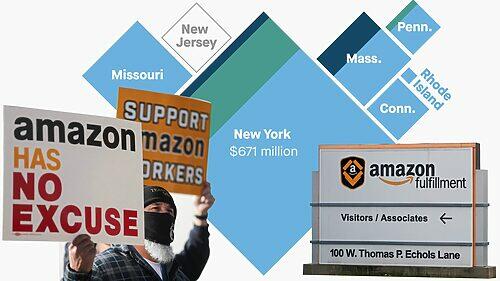

Amazon’s growth into a trillion-dollar global powerhouse has been accompanied by significant financial support from U.S. state and local governments. According to data compiled by Good Jobs First, Amazon has received at least $5 billion in tax breaks and other subsidies within the United States alone. These incentives span various business operations, from distribution centers to data hubs and office campuses. This article delves into the details of Amazon’s subsidies, the rationale behind such government incentives, the controversies they ignite, and the efforts by advocacy groups to hold Amazon accountable.
Understanding Amazon’s Subsidies and Tax Breaks
Amazon’s receipt of at least $5 billion in tax breaks and subsidies highlights the significant role government incentives play in the company’s expansion strategy. These funds come in the form of tax abatements, grants, and other financial incentives intended to encourage business development and job creation in local communities. However, the exact total may be higher, as many agreements remain confidential or undisclosed.
Good Jobs First, a nonprofit organization that tracks corporate subsidies, emphasizes that Amazon's publicly known subsidies represent only a fraction of the total benefits the company may receive. Since Amazon is not mandated to disclose all subsidy agreements, researchers rely on publicly available documents and media reports to estimate the scale of these incentives.
These subsidies cover a broad spectrum of Amazon’s operations, including fulfillment centers, corporate offices, data centers, and even entertainment production related to its Prime streaming services. The diversity of subsidized activities underscores how governments across the country are competing to attract and retain Amazon’s multifaceted business units.
Breakdown of Amazon’s Subsidies Across U.S. States
Amazon’s subsidies have been distributed across 38 U.S. states, with certain regions offering especially lucrative packages. Virginia and Illinois stand out as the largest contributors, providing $824 million and $732 million respectively in tax breaks and incentives. Virginia’s substantial support was primarily directed toward Amazon’s second headquarters, HQ2, which the company awarded after a competitive bidding process involving multiple cities.
The HQ2 bidding war, initiated by Amazon in 2017, saw cities across the U.S., Canada, and Mexico vying to host the new headquarters. Governments offered generous subsidies to attract Amazon’s investment, hoping to stimulate local economies and create jobs. Virginia’s eventual win highlights how state and local governments prioritize attracting large corporations through financial incentives.
Beyond HQ2, Amazon’s distribution centers account for the majority of subsidies, representing approximately 52% ($2.7 billion) of the total. Offices garner around 31%, and data centers receive 11%. Additionally, subsidies extend to Amazon’s subsidiaries, such as Whole Foods, and other operational facets, revealing the widespread nature of these government-backed benefits.
Economic Impact and Controversies Surrounding Subsidies
Offering tax breaks and subsidies to corporations is a common practice among state and local governments aiming to boost economic growth and employment. However, recent academic research casts doubt on the effectiveness of such incentives in generating broad economic benefits. A Princeton University study found little evidence that company-specific tax incentives lead to significant overall growth in local economies.
Critics argue that companies like Amazon often have the leverage to choose locations based on multiple factors beyond subsidies, such as existing infrastructure, labor market conditions, and logistical advantages. Consequently, many contend that subsidies simply reward companies for decisions they would have made regardless, diverting public funds from other critical services.
Moreover, subsidy packages can create disparities between regions, as wealthier areas are better equipped to offer competitive incentives. This dynamic can exacerbate inequality and strain public budgets, raising questions about the long-term sustainability and fairness of such government strategies.
Amazon’s Global Subsidies and International Incentives
Amazon’s receipt of subsidies is not confined to the United States. Although data on international incentives is more limited due to varying transparency standards, Good Jobs First has identified at least $500 million in public funding for Amazon projects abroad. These subsidies reflect a global trend among governments seeking to attract major corporations through financial inducements.
The challenge of tracking international subsidies lies in less stringent disclosure requirements and the complexity of multinational agreements. Nevertheless, the available evidence indicates that Amazon benefits from a broad network of incentives, which support its global expansion and infrastructure development.
This international dimension underscores the competitive environment in which Amazon operates, where governments worldwide vie to bring in large employers and investment. It also highlights the need for increased transparency and accountability in subsidy practices globally.
The Make Amazon Pay Campaign: Advocating for Accountability
The Make Amazon Pay campaign, launched in 2020, is a coordinated international movement demanding greater accountability from Amazon regarding its labor practices, environmental impact, and tax contributions. Each year on Black Friday, the campaign organizes strikes and protests involving Amazon workers and consumers across approximately 40 countries.
This movement seeks legislative reforms to curb Amazon’s extensive tax avoidance, improve working conditions, and reduce its carbon footprint. Advocates argue that tax breaks and subsidies should not enable a corporation to avoid its social and environmental responsibilities.
Participants in Make Amazon Pay emphasize the interconnectedness of issues like tax avoidance, labor rights, and climate change, asserting that addressing these challenges requires comprehensive policy solutions. The campaign also calls on policymakers to scrutinize the implications of corporate subsidies and to reform practices that enable exploitation.
Government Incentives: Balancing Economic Development and Public Interest
State and local governments face a delicate balancing act when offering subsidies to attract corporations like Amazon. While these incentives can generate jobs and stimulate local economies, they must be weighed against the potential loss of tax revenue and the risk of perpetuating corporate practices that may harm communities.
Transparent and accountable subsidy programs are critical to ensuring that public investments deliver tangible benefits without compromising essential public services. Policymakers must consider the long-term economic and social impacts of such incentives and strive for agreements that promote equitable growth.
Increasingly, experts advocate for performance-based subsidies, where companies must meet specific employment, wage, and environmental standards to qualify for benefits. This approach aims to align corporate incentives with public goals and ensure that subsidies serve the broader community interests.
Future Outlook: Reforming Corporate Subsidies and Tax Policies
The rising scrutiny of Amazon’s subsidies reflects broader debates about corporate taxation and economic justice. As governments reassess their incentive programs, there is growing momentum toward reforming corporate tax policies to address loopholes and ensure fair contributions from multinational companies.
Legislators are exploring measures to increase transparency around subsidy agreements and to implement stricter criteria for awarding incentives. These reforms aim to prevent excessive giveaways and promote responsible corporate behavior.
Public awareness campaigns and advocacy efforts, such as Make Amazon Pay, continue to pressure both governments and corporations to rethink the relationship between public funds and private profit. The future of corporate subsidies may hinge on achieving a more balanced framework that fosters sustainable economic development while protecting workers and communities.
Conclusion
Amazon’s receipt of billions in tax breaks and subsidies exemplifies the complex interplay between corporate growth strategies and government economic development policies. While these incentives aim to attract investment and jobs, their effectiveness and fairness remain contentious. Advocacy groups and researchers highlight the need for greater transparency, accountability, and reform to ensure that public funds serve the broader community interest. As scrutiny intensifies, the future of corporate subsidies may see transformative changes that better align business practices with social and environmental responsibilities.