
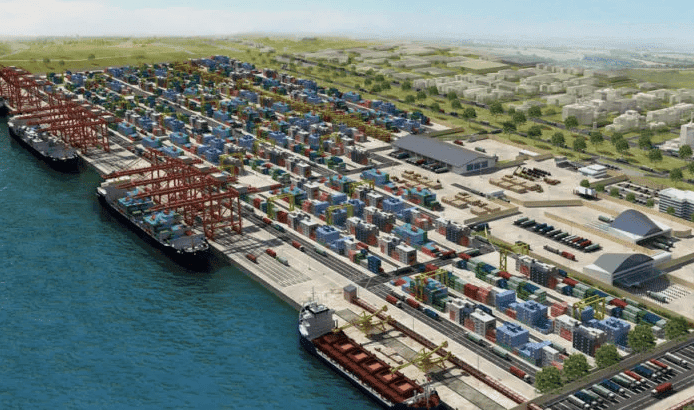

The Nigerian Ports Authority (NPA) has revealed that the Lekki Deep Seaport will generate more than 170,000 direct and indirect jobs upon its full completion. Commissioned by President Muhammadu Buhari in January 2023, the port stands as the deepest seaport in West Africa and is poised to transform Nigeria’s maritime sector and broader economy. This article delves into the extensive benefits of the Lekki Seaport, exploring its impact on employment, infrastructure, trade facilitation, and Nigeria’s position in global maritime commerce.
Overview of the Lekki Deep Seaport Project
The Lekki Deep Seaport is a multi-purpose port facility located on the Lagos Lagoon, designed to handle a wide range of cargo including containers, bulk, and liquid cargo. With its status as the deepest port in West Africa, it can accommodate large vessels that previously could not dock at Nigeria’s older ports, significantly enhancing Nigeria’s maritime capacity.
Commissioned in January 2023, the port represents a major infrastructural milestone for Nigeria. It is expected to reduce congestion at traditional ports like Apapa and Tin Can Island, which have long struggled with traffic bottlenecks and operational delays. The port’s modern facilities and advanced technology promise a more efficient cargo handling process.
The project was developed through a public-private partnership, reflecting Nigeria’s commitment to leveraging private sector expertise and investment in critical infrastructure. The Lekki Deep Seaport is not just a port but a comprehensive logistics hub designed to improve trade flows and stimulate economic growth in the region.
Job Creation and Economic Impact
According to the NPA Managing Director, Mohammed Koko, the Lekki Seaport is expected to generate over 170,000 jobs, both directly within the port operations and indirectly through related industries. These jobs span various sectors including logistics, shipping, manufacturing, and services.
The creation of such a significant number of jobs will have a multiplier effect on the Nigerian economy by increasing household incomes, reducing unemployment, and stimulating demand for goods and services. This aligns with Nigeria’s broader economic diversification goals by promoting maritime and industrial sectors.
Beyond employment, the port is anticipated to boost Nigeria’s GDP by facilitating increased trade volumes, attracting foreign direct investment, and enhancing export capacity. The port’s operational efficiency will lower the cost of doing business, making Nigerian products more competitive in global markets.
Enhancement of Nigeria’s Maritime Economy
The Lekki Deep Seaport is a game-changer for Nigeria’s maritime economy. By providing a modern, deep-water facility, it enables the handling of larger vessels and higher cargo volumes, which were previously constrained by the capacity limits of older ports.
Maritime transport accounts for approximately 85% of global trade volume, and Nigeria’s strategic location along major shipping routes makes it a critical player in West Africa’s maritime landscape. The port’s development is poised to capitalize on this advantage, positioning Nigeria as a regional maritime hub.
Furthermore, the port’s operations are expected to stimulate ancillary industries such as ship repair, logistics, warehousing, and manufacturing. This will foster a more integrated maritime ecosystem, facilitating seamless supply chains and boosting Nigeria’s competitiveness in international trade.
Infrastructure and Logistics Improvements
To complement the port’s operations, the Nigerian government and the NPA have prioritized rehabilitating rail lines connecting the port to inland destinations. This rail infrastructure will ensure efficient movement of goods, reducing road congestion and transportation costs.
The integration of rail and road transport networks with the port will streamline the logistics chain, enabling faster clearance and delivery of cargo. This is particularly critical for exporters looking to reduce turnaround times and increase competitiveness in global markets.
Additionally, facilities like the Lilypond Terminal offer exporters dedicated infrastructure to handle export cargoes at reduced costs and time. This focus on export facilitation supports Nigeria’s economic agenda to diversify away from oil dependency by boosting agricultural and solid mineral exports.
Collaboration with Trade and Industry Stakeholders
The NPA emphasizes the importance of partnerships with trade and industry stakeholders such as the Enugu Chamber of Commerce, Industry, Mines & Agriculture (ECCIMA). These collaborations foster a conducive environment for trade development and economic growth.
By engaging with chambers of commerce and industry associations, the NPA ensures that the port’s operations align with the needs of businesses and exporters, thereby enhancing trade facilitation and reducing bureaucratic delays.
Such partnerships also create platforms for entrepreneurs to thrive by providing access to infrastructure, market opportunities, and regulatory support. This collaborative approach is essential for realizing the full potential of the Lekki Seaport in driving national development.
Addressing Challenges in Nigeria’s Port Sector
Despite the promising prospects of the Lekki Deep Seaport, challenges remain in Nigeria’s port sector, including congestion, bureaucratic inefficiencies, and delays in cargo clearance at existing ports like Onne and Port Harcourt.
Trade bodies such as ECCIMA have urged the government and port operators to adopt pragmatic solutions to decongest ports and streamline operations. Addressing these issues is vital for ensuring smooth logistics and enhancing investor confidence in the maritime sector.
The NPA’s commitment to infrastructure upgrades and operational reforms, including rail rehabilitation and export facilitation initiatives, indicates progress towards resolving these challenges. Continued focus on transparency, efficiency, and stakeholder engagement will be critical for sustained improvements.
Future Prospects and Regional Significance
Looking ahead, the Lekki Deep Seaport is expected to catalyze regional trade integration in West Africa by serving as a strategic gateway for goods entering and leaving the Economic Community of West African States (ECOWAS) region.
Its advanced facilities and capacity to handle large vessels will attract shipping lines and logistics companies, enhancing Nigeria’s role as a maritime hub and boosting intra-African trade under the African Continental Free Trade Area (AfCFTA) framework.
Moreover, the port’s development aligns with Nigeria’s Vision 2050 objectives to create sustainable economic growth through infrastructure development, industrialization, and job creation, thereby enhancing the country’s global economic standing.
Government Commitment and Policy Support
The Nigerian government has demonstrated strong commitment to the success of the Lekki Deep Seaport through policy support, infrastructure investments, and regulatory reforms aimed at attracting private sector participation.
President Muhammadu Buhari’s commissioning of the port underscores the strategic importance placed on maritime infrastructure as a catalyst for economic transformation and employment generation.
Going forward, sustained government focus on improving port governance, enhancing security, and fostering innovation will be essential to maximize the port’s benefits and ensure it operates at world-class standards.
Conclusion
The Lekki Deep Seaport represents a transformative development in Nigeria’s maritime sector, promising substantial economic and social benefits. With its capacity to generate over 170,000 jobs, enhance export competitiveness, and improve logistics infrastructure, the port is a vital catalyst for national growth. While challenges persist in the broader port system, ongoing reforms and partnerships are paving the way for a more efficient and dynamic maritime economy. As Nigeria continues to invest in maritime infrastructure and foster regional trade, the Lekki Seaport stands as a beacon of progress and opportunity for the country and West Africa.
Originally reported by destyy.com. Adapted for our readers.