
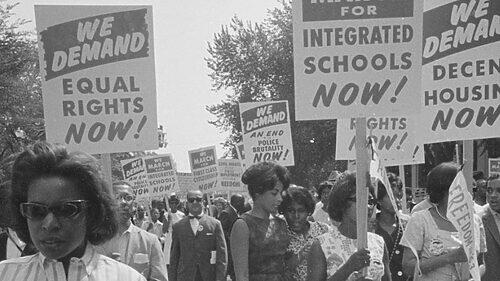

The US Supreme Court has revealed itself as a "coldly atavistic force" in American social life. In a sweeping ruling against Harvard and the University of North Carolina, the Court effectively outlawed affirmative action in university admissions, ending measures institutions used to diversify student bodies. Written by Chief Justice John Roberts, the opinion flatly prohibits race as a consideration in admissions—a radical overturning of precedent enabled by decades of unchallenged right-wing rhetoric. This decision is not merely a legal technicality but a symbolic repudiation of the nation's struggle to confront its racial history. By framing race-conscious remedies as inherently discriminatory, the Court ignores systemic inequity and endorses a vision of equality that refuses unequal starting points. The ruling arrives when educational disparities along racial lines remain stark, making its timing consequential for opportunity in America.
The Bakke Foundation and the Limits of Precedent
The affirmative action framework was never as secure as supporters believed. In 1978, Allan Bakke, a white applicant, sued the University of California after being rejected while less-qualified Black students were admitted. The Court ruled racial quotas unconstitutional but permitted race as one factor among many—not determinative. This compromise created vulnerability to erosion. Bakke acknowledged diversity as a compelling state interest while restricting tools to achieve it, creating a fault line for future challenges. Universities implemented programs within Bakke's boundaries, but its ambiguity invited litigation aimed at further constraining race-conscious policies. Over time, conservatives refined a strategy not to overturn Bakke outright but to erode its practical application through cases chipping away at race as a permissible factor. Each ruling narrowed what universities could consider, building momentum toward the conclusion that any race consideration violated the Equal Protection Clause. The Bakke framework contained the seeds of its own undoing, as its compromises proved insufficient against sustained ideological assault.
The Right's Rhetorical Strategy
Conservatives framed affirmative action as anti-white discrimination: if organisations cannot discriminate by race, schools cannot admit students "just because they're Black." This ignores historical context. The author offers a metaphor: Black applicants were pushed into a ditch for generations; when courts stopped the pushing, white applicants who advanced only because Black competitors were removed claimed new fairness was unfair. In Arizona, where the Black population was tiny, the author heard "White guys can't get jobs any more!"—a grievance disconnected from reality but potent politically. This reframing moved debate from remedying historical injustice to claims of present-day victimization. The strategy resonated with those perceiving minority advancement as a zero-sum threat, regardless of objective realities. By focusing on anecdotes of perceived reverse discrimination while ignoring systemic advantage, conservatives built a narrative feeling intuitively fair, even as it obscured structural realities affirmative action addressed. This victory in public opinion paved the way for judicial acceptance of the same framing.
Casual Racism Enters the Mainstream
The rhetoric migrated from fringe to the White House. George W. Bush's press secretary Tony Snow, a former journalist, claimed he left National Public Radio because "you did better there if you had a name that sounded like it was made up by Rudyard Kipling." The author, a white man hired at NPR with no broadcast experience, worked alongside colleagues Snow disparaged. Their names were mocked, achievements dismissed—by a man "sitting smugly at the feet of the most powerful person in the world." Such sentiments, once private, gained legitimacy through repetition in elite circles, normalizing subtle bigotry in high-status environments and shifting the Overton window on acceptable race discourse. Snow's comments exemplified elitist prejudice dismissing minority professionals' accomplishments while questioning their presence in prestigious institutions. By suggesting NPR success depended on ethnically marked names, he revealed belief that minority achievement was suspect or unearned. The author's NPR experience contradicted this, showing diverse backgrounds could excel through merit and hard work. Yet Snow's influential platform allowed prejudiced views without consequence, embedding them in institutional culture.
The Consequence of Ignoring Extremism
The Court's decision represents the culmination of decades during which right-wing talking points were allowed to "stew and fester in the population." Ignoring them in hope they would disappear failed. The moral: those committed to fairness must confront such narratives directly rather than cede ground. The ruling does not merely change admissions policy; it enshrines a worldview treating remedial equity as discrimination, reversing civil rights law's moral logic. This judicial endorsement of ahistorical equality ignores that equal treatment requires addressing unequal foundations. By refusing to acknowledge persistent discrimination effects, the Court adopted formalistic equality prioritizing procedural neutrality over substantive fairness. This fails to grapple with reality that removing overt barriers does not immediately create equal opportunity after generations of disadvantage. The decision is a philosophical rejection of society's obligation to actively counteract past injustice's lingering effects, moving the nation from equal opportunity toward equality ignoring historical and structural realities.
What Comes Next
The decision's implications extend beyond university admissions. By declaring race-conscious remedies unconstitutional, the Court constrained tools to address systemic inequality in education, employment, and beyond. Institutions must now pursue diversity through race-neutral proxies—socioeconomic status, geography, adversity essays—approaches that may not achieve same results. Burden shifts to policymakers, educators, and advocates to devise new strategies within a narrower legal framework, forcing reimagining of equity pursuit when direct tools are prohibited. Early evidence from states that banned affirmative action shows race-neutral alternatives often fail to produce comparable diversity, especially at selective institutions. Socioeconomic-based admissions address class inequities but do not necessarily correlate with racial diversity due to race-class interplay. Geography-based approaches increase regional diversity but often fail to alter racial composition significantly. Adversity essays identify individual challenges but place burden on applicants to articulate hardships and may not capture systemic barriers effectively. As institutions experiment, the challenge is developing innovative approaches withstanding legal scrutiny while progressing toward equitable representation.
What this means
The Supreme Court's affirmative action ruling is not an isolated legal decision but the endpoint of a long campaign to recast the pursuit of racial equity as discrimination. The Court declared that the Constitution forbids considering race even to remedy its historical misuse—a position treating history's ledger as settled when it remains profoundly unbalanced. For those believing progress is fragile, the lesson is clear: narratives left unchallenged become law. The work of equity continues in a more hostile legal terrain, requiring creativity, persistence, and refusal to accept the Court's revision of history as final. This moment demands renewed commitment to the principle that true equality requires more than procedural fairness; it necessitates active efforts to dismantle structures perpetuating inequality. While the legal path forward has narrowed, the moral imperative to address racial inequity remains unchanged, calling for innovative approaches advancing justice within evolving constraints.
Originally reported by corneey.com. Adapted for our readers with AI assistance.


