

Freelancing and consulting are often seen as solo pursuits, but sustainable independent careers rest on deliberate skill acquisition, guided practice and a clear path from learner to earner. In Lagos, the Lagos State Government's Agripreneurship Programme (LAP) has created more than 15,000 jobs by training young people aged 18 to 30 in modern agricultural practices. Although LAP is not a freelance scheme, its design—free tuition, one month of intensive on-site training, a three-month internship and mentorship phase, and enterprise activation—mirrors the journey successful consultants and gig workers must navigate. This article distils what independent professionals can learn from the programme's approach.
The Lagos Agripreneurship Programme in Brief
The Lagos Agripreneurship Programme is an intervention led by the Lagos State Ministry of Agriculture and Food Systems under the state's THEMES+ Developmental Agenda, which includes capacity building, employment generation and food security promotion. Conceptualised in 2020 and modelled after Israel's Arava International Center for Agriculture Training, LAP is built on the principle of learning by doing.
According to Ms Folake Ogunlana-Lawal, Director of the Agricultural Training Institute, LAP has trained more than 5,000 people. Each beneficiary empowers and creates jobs for an average of two to three additional people, generating more than 15,000 jobs overall. Trainees receive one month of on-site demonstration training at the Lagos State Agricultural Training and Entrepreneurial Centre in Araga–Epe, followed by a three-month internship or mentorship placement with agro-allied companies and farms. Successful participants then enter an incubation period at the Lagos Food Production and Entrepreneurial Centre, Songhai, Badagry. Training, accommodation, meals, materials and safety kits are provided free of charge. The next batch resumes on 22 February 2026.
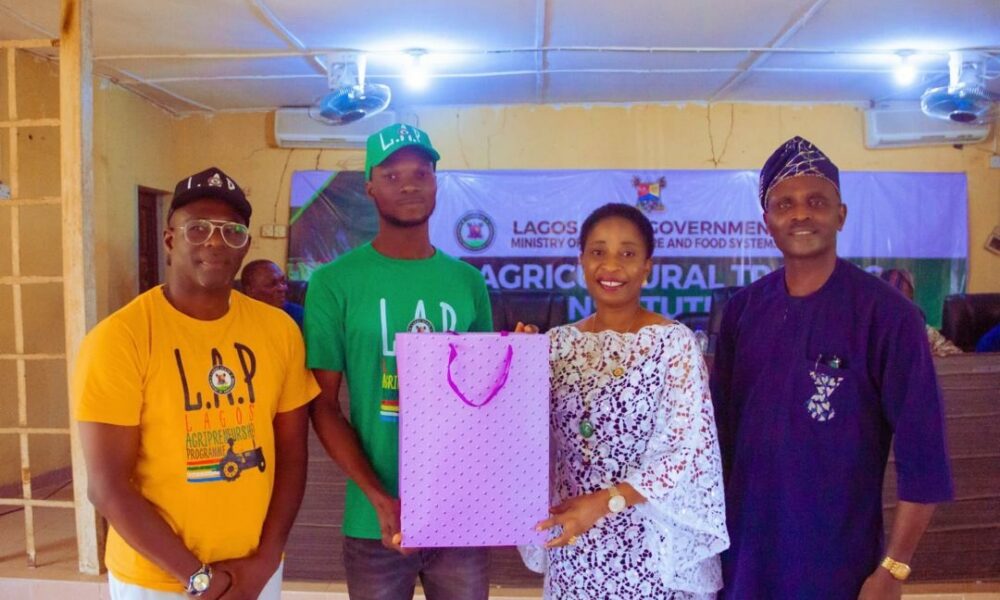
At the closing ceremony of the 26th cohort, beneficiaries praised the programme's practical focus. Ayodeji Oyindamola John, a graduate of Agriculture Extension and Rural Development from the University of Ilorin, said the experience deepened his practical understanding of agriculture. Balogun Saheed Ololade said he gained knowledge in aquaculture and pig production and intended to set up his own agribusiness.
Why Structured Training Matters for Freelancers
A common mistake new freelancers make is skipping the learning phase and pitching for work before they are ready. LAP shows that a defined training period pays dividends: participants are immersed in modern agricultural practices, climate-smart techniques and market linkages before they operate independently.
For freelancers and consultants, the equivalent is a deliberate period of upskilling. Whether you are learning copywriting, data analysis, project management or agricultural consulting, a structured foundation reduces errors, builds confidence and gives you a portfolio of competence rather than guesswork. Treat free or subsidised training as an investment, not a shortcut.
Internship and Mentorship as Client Rehearsals
LAP's three-month internship and mentorship phase is its most transferable feature. Trainees work inside real agro-allied companies and farms, observing how decisions are made, how buyers are handled and how operations are managed. This is the freelance equivalent of shadowing a senior consultant or taking on small, supervised projects before handling full engagements alone.
If you are building a consulting practice, seek mentorship or subcontracted work under an established practitioner before branding yourself as a solo expert. The rehearsal period teaches you how to scope work, communicate timelines and recover when a project drifts. It also gives you references and case studies that are more persuasive than a list of self-declared skills.
Skill-Building in a Niche: The Agriculture Advantage
Agriculture is not always the first sector freelancers associate with consulting, yet it offers opportunities in agronomy advice, supply-chain mapping, farm financial modelling, climate-smart extension services and agritech implementation. LAP's focus on modern agripreneurial skills, climate-smart practices and market linkages points to growing demand for specialists who can bridge traditional farming with data, sustainability and business strategy.
Globally, food system challenges are prompting governments, startups and development agencies to hire independent experts. For Nigerian freelancers, agriculture offers a home-market advantage: local knowledge and an understanding of regional supply chains are hard to replicate from abroad. Positioning yourself as a sector specialist rather than a generalist often justifies higher fees and repeat engagements.
From Learning by Doing to Earning
The LAP principle of learning by doing is directly relevant to consulting. Early in a freelance career, demonstrated outcomes matter more than theoretical knowledge. Take on small engagements, document results and use them to win larger contracts. This mirrors LAP's progression from demonstration training to internship to enterprise activation.
Resilience matters too. LAP aims to build a sustainable agricultural sector in Lagos, and the same mindset should shape a consulting practice. Diversify your client base, maintain a cash reserve and keep your skills current. Good client management starts before the contract is signed. LAP trainees are encouraged to join the Lagos Agrinnovation Club to connect with peers, share ideas and drive innovation. Freelancers should build similar networks where referrals and partnerships form.
Pricing, Negotiation and Sustainability
Pricing and negotiation require the same discipline LAP applies to its staged training. Calculate the real cost of your time, including non-billable hours spent on administration and business development. Research market rates in your niche, then set a floor below which you will not work. Anchor your price to the value you deliver rather than the hours you spend.
If a client cannot afford your standard rate, reduce scope rather than slashing your rate. Habitual discounting undermines both your positioning and your sustainability. The goal is not one lucrative project but a practice that survives market cycles.
Remote Work and the Global Gig Economy
Remote work has expanded the market for independent professionals, but it has also intensified competition. LAP shows that local, practical expertise remains a durable advantage. While general remote tasks can be outsourced globally, specialised knowledge of Nigerian agriculture, regulation, culture and supply chains is location-bound and therefore valuable.
For freelancers outside agriculture, the same logic applies: deep domain expertise in a specific geography, industry or regulatory environment is harder to commoditise. Combine that expertise with remote delivery tools and you can serve clients across borders while retaining a defensible specialism. The gig economy rewards breadth of reach, but consulting rewards depth of expertise.
What this means
The Lagos Agripreneurship Programme is a public investment in turning young people into productive economic actors. For freelancers and consultants, the underlying pattern matters more than the sector: learn deliberately, practise under supervision, specialise in a valuable niche, manage clients professionally and price for sustainability. Whether your field is agriculture, technology, marketing or finance, those principles convert a side hustle into a career. As LAP prepares its next batch for 22 February 2026, independent professionals can take the same lesson to heart: the most reliable way to earn on your own terms is to build skills that others genuinely need.
Originally reported by societynow.ng. Adapted for our readers with AI assistance.


