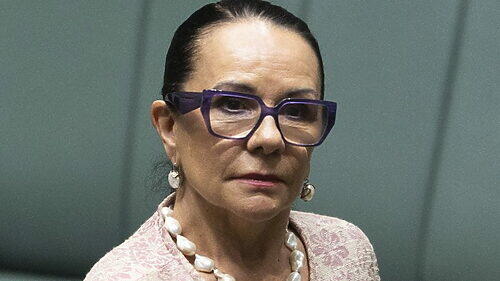

Australia’s debate over the Indigenous Voice to Parliament is entering a decisive phase. With the referendum expected in October and recent polling placing the No side marginally ahead, Indigenous Australians Minister Linda Burney is preparing to deliver her most detailed outline yet of what the body would actually do if Australians vote Yes. In a speech to the National Press Club, Burney is expected to argue that the Voice should begin with a full agenda and concentrate first on four practical areas: health, education, jobs and housing. The address is widely interpreted as an effort to move the conversation away from abstract constitutional risk and towards concrete outcomes for Indigenous communities.
A Full Agenda from the First Meeting
Burney intends to present the Voice not as an empty vessel awaiting direction, but as a body with immediate work to do. According to a draft of the speech, she will tell the audience that the Voice will have a full in-tray from day one and that she will ask it to prioritise health, education, jobs and housing.
The minister is expected to request practical advice on some of the most persistent challenges facing Aboriginal and Torres Strait Islander communities. These include how to reduce suicide among Indigenous people, how to help children attend school and thrive, how to improve overall health and life expectancy, how to increase employment, and how to strengthen family support.
By foregrounding these issues, Burney is attempting to ground the Voice in everyday policy concerns rather than letting it float as a symbolic or procedural reform. The framing suggests that the body’s value will be measured by the quality of its advice on measurable problems.
Linking Local Knowledge to Government Decision-Making
A central theme of the minister’s argument is collaboration. Burney is expected to describe the Voice as a bridge between local communities and national policymakers, enabling grassroots concerns to reach the people who design programmes and allocate funding.
She is likely to illustrate this with the example of low school attendance. Under her sketch of how the Voice could operate, a local community that notices children are missing school could raise the matter with its Voice representative. That representative could then make representations to government and parliament about how to improve attendance in that specific community.
The model relies on local insight being channelled upwards without being distorted by layers of bureaucracy. Whether that mechanism would work as smoothly in practice remains an open question, but it offers voters a concrete picture of the Voice in action.
Responding to Critics on Both Sides
The speech comes after a difficult parliamentary sitting in which the Coalition pressed Burney to define the Voice’s scope and to rule out advice on contentious cultural questions, such as changing the date of Australia Day. Opposition Leader Peter Dutton has argued that the Voice is ill-defined, legally risky and broad enough to slow the machinery of government.
Burney’s response appears to be twofold. First, she will insist that the Voice can make a practical difference in closing the gap on Indigenous disadvantage. Second, she will directly answer progressive No campaigners, including Victorian senator Lidia Thorpe, who have argued the Voice would be too weak to matter. Burney is expected to say the body will not be a passive advisory panel and that she wants it to be active and engaged.
This dual rebuttal is politically important. The Yes campaign needs to reassure centrist voters that the Voice will not overreach, while persuading Indigenous activists and progressives that it will not be toothless.
The Gap Between Constitutional Scope and Political Focus
The tension between reassurance and scope is sharpened by the constitutional wording itself. The proposed amendment would give the Voice the power to make representations to the parliament and the executive government on matters relating to Aboriginal and Torres Strait Islander peoples. That language is broad enough to cover a wide range of issues, including symbolic debates such as Australia Day.
Constitutional lawyers who support the referendum have noted that the Voice could technically offer advice on almost any issue affecting Indigenous Australians. Voice architect Megan Davis has gone further, saying parliament would not be able to silence the Voice and that the body would be free to choose its own priorities.
Supporters argue that, in practice, political constraints rather than legal limits would keep the Voice focused on urgent Indigenous disadvantage. A body that spends its political capital on peripheral issues risks squandering the trust it needs to influence the areas Burney has identified. The minister’s speech can therefore be read as an attempt to set informal guardrails around a formally broad power.
The Countdown to the Referendum
The timing of the address is no accident. A Resolve Political Monitor survey conducted last month showed the No side leading 51 to 49 per cent on the referendum question, a narrow but worrying margin for the Yes campaign with only months remaining.
Burney is expected to frame a Yes vote as an act of patriotism and belief in Australia’s potential. She is likely to argue that recognising Indigenous Australians would make the country greater, not weaker. This is a direct counter to the No campaign’s claim that the Voice would divide Australians along racial lines.
The minister will also point to the latest closing-the-gap data as evidence that current approaches are failing. Only four of the 19 targets were on track, while life expectancy, housing and healthy birth weights for Indigenous babies were not. For Burney, the data is proof that maintaining the status quo is not a viable option.
What this means
Burney’s National Press Club address is best understood as a strategic attempt to give the Voice a defined, working identity before Australians vote. By naming health, education, jobs and housing as day-one priorities, she is offering voters a reason to support the proposal that goes beyond symbolism or constitutional theory. Whether that message is enough to reverse the Yes campaign’s slide in the polls will depend on whether voters believe an active, engaged Voice can genuinely turn local knowledge into better policy. With the referendum drawing closer, the test for both sides is no longer just what the Voice is, but what it would actually achieve.
Originally reported by festyy.com. Adapted for our readers with AI assistance.