
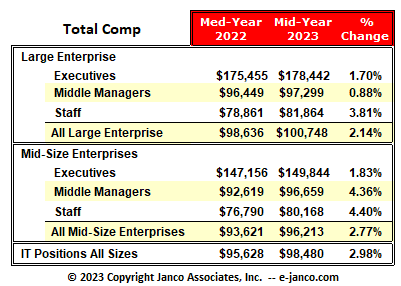

The IT job market, once a rapidly expanding sector, has experienced a marked slowdown in 2023, according to Janco Associates Inc. After robust growth in previous years, the first five months of 2023 saw only modest job creation, signaling a shift in hiring dynamics. Concurrently, salary increases for IT professionals have been minimized, reflecting cautious budgeting by organizations amid economic uncertainties. This article delves into the factors influencing this trend, the sectors most affected, and what IT professionals and organizations can expect moving forward.
Current State of IT Job Market Growth
Janco Associates' latest data indicates a stark contrast in IT job growth between 2022 and 2023. While 97,300 IT jobs were created in the first five months of 2022, only 3,400 jobs were added during the same period in 2023. This slowdown highlights a significant deceleration in hiring momentum within the IT sector.
The number of unfilled IT positions has also decreased considerably, shrinking from over 200,000 in December 2022 to just under 80,000 by the end of May 2023. This reduction suggests a tightening labor market, possibly due to companies adjusting hiring strategies amidst economic headwinds and a shortage of qualified candidates.
Janco revised its forecast for IT job market growth in 2023 downward by over 20,000 positions, now projecting an increase of 60,000 to 70,000 jobs for the entire year, compared to previous estimates of 80,000 to 90,000. This adjustment underscores the tempered optimism prevalent among IT employers.
Sector-Specific Employment Trends
The slowdown has not impacted all IT sectors equally. Information service providers have been among the biggest losers, shedding approximately 8,800 jobs in the early months of 2023. Telecommunications and content providers have also experienced job losses, with 3,100 and 1,900 positions eliminated respectively.
Job reductions are concentrated primarily in data center operations, administrative functions, and human resources roles related to recruiting and diversity, equity, and inclusion (DEI) initiatives. These areas are undergoing automation and process optimization, leading to workforce reductions.
Conversely, demand remains relatively strong for skilled IT professionals in security, programming, and emerging technologies like blockchain. Experienced coders and developers continue to find opportunities despite the overall market slowdown, highlighting the importance of specialized technical expertise.
Impact of Automation and Economic Uncertainty
Automation is playing a critical role in reshaping IT employment. CIOs and CFOs are focusing on enhancing productivity by automating routine processes and reporting functions, which has led to the elimination of non-essential managerial and staff roles, particularly in telecommunications and data center operations.
Economic uncertainty further compounds cautious hiring. Many IT leaders anticipate a potential economic downturn, influencing decisions to limit new hires and control technology expenditures. This conservative approach aims to safeguard organizational budgets amid unpredictable market conditions.
The combined effects of automation and economic caution have resulted in a less-than-optimal job market for IT professionals, with slower job creation and limited upward pressure on salaries compared to previous years.
Trends in IT Salaries and Compensation
Janco’s 2023 Mid-Year Salary Survey reveals that salary increases for IT professionals have been minimized, particularly impacting IT executives. The restrained compensation growth reflects broader economic concerns and tighter corporate budgets.
While base salaries have seen modest growth, bonuses and other variable pay components have been constrained, signaling a cautious approach to total compensation packages. Organizations are prioritizing cost control over aggressive talent acquisition incentives.
Despite these challenges, specialized roles such as cybersecurity experts and blockchain developers continue to command competitive salaries due to persistent demand and the critical nature of their skills in safeguarding digital assets and driving innovation.
Unfilled IT Positions and Talent Shortages
Although the number of unfilled IT jobs has decreased, a substantial talent shortage remains. Janco reports over 145,000 unfilled IT positions nationwide, indicating a persistent gap between employer needs and the availability of qualified candidates.
This shortage is exacerbated by the evolving skill requirements in the IT sector, where proficiency in emerging technologies and security expertise is increasingly vital. Organizations face challenges in recruiting professionals who meet these specialized demands.
To mitigate talent gaps, many companies are investing in upskilling initiatives, partnering with educational institutions, and leveraging remote work models to broaden their access to qualified IT professionals.
Forecasts and Future Outlook for IT Employment
Looking ahead, Janco anticipates moderate growth in IT employment during the latter half of 2023, albeit at a slower pace than seen in 2021 and 2022. The revised forecast projects an addition of 60,000 to 70,000 IT jobs for the year, reflecting cautious optimism.
Supply chain improvements, particularly if China fully reopens, are expected to alleviate some recessionary pressures over the coming months. This could encourage companies to resume hiring and technology investments more aggressively.
However, ongoing economic uncertainties and the continued push toward automation suggest that IT professionals must remain adaptable and continuously update their skills to align with shifting market demands.
Strategic Recommendations for IT Professionals and Organizations
IT professionals are advised to focus on developing expertise in high-demand areas such as cybersecurity, cloud computing, and blockchain technologies to enhance their employability in a competitive market.
Organizations should leverage comprehensive management toolkits, like Janco’s 2023 CIO Management Tool Kit, which addresses current IT infrastructure challenges including compliance, remote work, and cloud processing, enabling more efficient resource allocation and risk mitigation.
Both employers and employees must prioritize agility and continuous learning to navigate the evolving IT landscape successfully, ensuring alignment with technological advancements and economic conditions.
Conclusion: Navigating a Changing IT Employment Landscape
The IT job market in 2023 presents a complex picture characterized by slowed hiring, minimized salary increases, and ongoing talent shortages. Janco’s analysis highlights the significant impact of automation, economic caution, and sector-specific challenges shaping these trends.
Despite these headwinds, opportunities remain for IT professionals with specialized skills, particularly in security and emerging technologies. Organizations that adapt strategically by investing in talent development and adopting modern management tools will be better positioned to thrive.
Continued monitoring of market conditions and proactive responses will be essential for both IT professionals and employers as the industry navigates this period of transition and uncertainty.
Conclusion
The slowing of IT hiring and restrained salary increases in 2023 reflect a cautious and transformative period for the technology sector. Organizations are balancing automation and economic uncertainties while seeking to fill critical roles with specialized talent. For IT professionals, staying current with in-demand skills and adapting to shifting market demands is essential. Janco’s insights provide valuable guidance for navigating these challenges, emphasizing the importance of strategic planning and agile workforce development to sustain growth and competitiveness in a changing environment.
Originally reported by destyy.com. Adapted for our readers.