
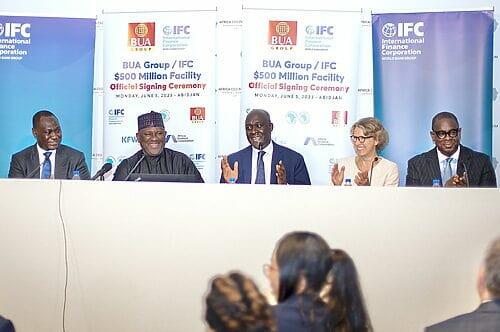

In a major boost to Nigeria’s industrial sector, BUA Cement Plc has secured a $500 million financing package, marking the largest-ever investment in northern Nigeria by the International Finance Corporation (IFC). This strategic funding, supported by African and European partners, is set to finance two new energy-efficient cement production lines in Sokoto State. The project not only promises to enhance Nigeria’s cement production capacity but also aims to catalyze economic growth, create thousands of jobs, and foster sustainable development in an underserved region. This article delves into the details of the financing, its implications for industrialization, job creation, and sustainable growth in northern Nigeria and the greater Sahel region.
Overview of the $500 Million Financing Package
The $500 million financing package for BUA Cement is a collaborative effort led by the IFC, alongside key partners including the African Development Bank (AfDB), Africa Finance Corporation (AFC), and the German Investment Corporation (DEG). IFC’s contribution comprises a $160.5 million loan from its own account and an additional $94.5 million through the Managed Co-Lending Portfolio Program (MCPP). The remaining $245 million comes from parallel loans syndicated among its partners.
This comprehensive financial structure underscores a strong vote of confidence in BUA Cement’s growth strategy and the broader potential of northern Nigeria’s industrial sector. The partnership showcases a unified commitment by international financial institutions to support sustainable industrialization and infrastructure development in regions that have historically faced economic marginalization.
The announcement was made during the Africa CEO Forum held in Abidjan, Côte d’Ivoire, highlighting the project’s continental significance. By leveraging such multi-institutional support, BUA Cement is positioned to significantly expand its operational footprint while adhering to stringent environmental and social governance (ESG) standards.
Strategic Importance of Northern Nigeria for Industrial Growth
Northern Nigeria, particularly Sokoto State, where BUA Cement’s new plants will be established, has long been considered an underserved region with vast economic potential. The area faces challenges such as limited infrastructure, lower industrial activity, and high unemployment rates. This investment is pivotal in addressing these issues by injecting capital and technology that will stimulate local economic dynamics.
Developing cement production lines in this region is strategically important due to the demand for affordable and reliable construction materials. This will support infrastructural projects such as roads, housing, and public amenities, which are critical for the socio-economic development of the region and neighboring countries like Niger and Burkina Faso.
Moreover, the focus on northern Nigeria aligns with IFC’s broader strategy of promoting sustainable development in underserved regions. By targeting industrial growth in these areas, the initiative aims to reduce regional inequalities and foster inclusive economic prosperity.
Innovative and Sustainable Production Technologies
A standout feature of BUA Cement’s expansion is its commitment to environmental sustainability. The new production lines will incorporate energy-efficient technologies and utilize alternative fuels derived from waste materials and solar power. This approach significantly reduces the carbon footprint of cement manufacturing, an industry traditionally known for high emissions.
In addition to cleaner fuel sources, BUA Cement plans to modernize its logistics fleet by gradually replacing diesel trucks with vehicles powered partly by natural gas. This transition is expected to lower emissions and operational costs, further enhancing the environmental benefits of the project.
These innovations reflect BUA Cement’s adherence to ESG principles, ensuring that industrial growth does not come at the expense of environmental degradation. The project sets a precedent for sustainable manufacturing practices within Nigeria’s cement industry.
Job Creation and Economic Impact
The project is projected to generate approximately 1,000 direct jobs and an additional 10,800 indirect jobs, significantly impacting employment in the region. Direct employment opportunities will span manufacturing, engineering, and automation, while indirect jobs will include roles in mining, transportation, maintenance, and waste management sectors.
By creating these jobs, BUA Cement not only addresses unemployment challenges but also stimulates ancillary industries and local businesses, fostering a multiplier effect on the regional economy. Improved employment prospects contribute to poverty reduction and enhance the quality of life for many communities.
Furthermore, the reliable supply of cement will facilitate infrastructure development, which is crucial for attracting further investment and enhancing productivity across various sectors. This comprehensive economic impact underscores the project’s importance beyond the cement industry alone.
Role of International Partners and Financial Institutions
The involvement of prominent financial institutions such as IFC, AfDB, AFC, and DEG demonstrates a coordinated effort to support sustainable industrial projects in Africa. Each institution brings unique expertise and resources, enhancing the project’s robustness and credibility.
IFC’s leadership in structuring and managing the financing reflects its commitment to fostering private sector growth and sustainable development across the continent. Similarly, AfDB and AFC focus on infrastructure and industrialization to accelerate Africa’s economic transformation.
DEG’s participation highlights the importance of European investment in African industrial projects, promoting cross-continental cooperation. This synergy among partners ensures that BUA Cement benefits from comprehensive financial and advisory support, mitigating risks and maximizing development impact.
Commitment to Gender Inclusion and Social Responsibility
As part of the project, IFC will advise BUA Cement on implementing a gender-inclusive workplace strategy aimed at increasing opportunities for women across all operations. This initiative aligns with global efforts to promote gender equality and empower women in traditionally male-dominated industries.
The focus on social responsibility extends beyond gender inclusion to encompass community engagement, environmental stewardship, and adherence to responsible business practices. BUA Cement has undergone rigorous assessments by its financial partners to validate its commitment to ESG principles.
Such measures not only improve workplace diversity and social equity but also enhance operational efficiency and corporate reputation. By fostering an inclusive and responsible business culture, BUA Cement contributes to building a more equitable and sustainable society.
Future Outlook and Regional Economic Transformation
The successful implementation of this project is expected to serve as a catalyst for further industrial investments in northern Nigeria and the greater Sahel region. By establishing modern, sustainable manufacturing capacity, BUA Cement is setting a benchmark for future infrastructure and industrial projects.
The increased availability of affordable cement will enable accelerated construction of critical infrastructure, including roads, schools, hospitals, and housing developments, which are essential for long-term economic growth and social development.
Moreover, the project’s emphasis on sustainability and inclusivity provides a replicable model for balancing industrialization with environmental and social considerations. This integrated approach positions northern Nigeria as an emerging hub for sustainable industrial development in Africa.
Conclusion
BUA Cement’s $500 million financing milestone marks a transformative moment for northern Nigeria’s industrial landscape. By developing modern, energy-efficient cement production facilities, the company is not only expanding its capacity but also driving sustainable economic growth, creating thousands of jobs, and supporting critical infrastructure development. The collaboration between IFC, African and European partners, and BUA Cement exemplifies how strategic investments can foster inclusive industrialization in underserved regions. As the project advances, it promises to enhance regional prosperity, promote environmental stewardship, and set a precedent for future sustainable manufacturing initiatives across Africa.
Originally reported by destyy.com. Adapted for our readers.