
Egypt’s government has embarked on a transformative journey to revitalize its economy by leveraging private sector participation through an ambitious Asset Monetization Programme. Central to this effort is the appointment of the International Finance Corporation (IFC) as the strategic advisor, tasked with guiding the government in structuring, preparing, and implementing the privatization of state-owned enterprises (SOEs). This collaboration aligns with Egypt’s broader State Ownership Policy (SOP), designed to boost competitiveness, create jobs, and improve living standards. This article delves into the significance of the IFC's role, the objectives of the Asset Monetization Programme, and the anticipated impacts on Egypt’s economic landscape.
Understanding Egypt’s Asset Monetization Programme and Its Goals
The Asset Monetization Programme represents a cornerstone of Egypt’s economic reform agenda, focusing on optimizing the management and ownership of state assets. This initiative is embedded within the State Ownership Policy (SOP) launched in December 2022, which seeks to streamline public sector involvement and encourage private sector dynamism. By monetizing state assets, the government aims to unlock capital that can be reinvested into priority sectors, fostering sustainable development.
The programme targets a broad spectrum of state-owned enterprises across various sectors, intending to enhance their efficiency and competitiveness through private sector participation. This strategic shift is expected to spur economic growth by attracting both domestic and foreign investments, generating employment opportunities, and improving public service delivery. The monetization process includes privatizations, public-private partnerships (PPPs), and other innovative financial mechanisms.
Importantly, the programme also aims to improve corporate governance within SOEs, increasing transparency and accountability. This approach aligns with international best practices and is designed to build investor confidence. By adopting a clear and structured framework, Egypt is positioning itself as an attractive destination for strategic and financial investors, signaling a new era of economic openness and reform.
The International Finance Corporation: A Trusted Strategic Advisor
The International Finance Corporation (IFC), a member of the World Bank Group, brings extensive expertise in privatization, asset management, and public-private partnerships. Its appointment as the strategic advisor to Egypt’s Asset Monetization Programme underscores the government’s commitment to leveraging global best practices and fostering a robust private sector ecosystem. IFC’s neutrality and international reputation make it an ideal partner in navigating complex transactions.
IFC’s role involves providing technical assistance and advisory support throughout the entire asset monetization process. This includes developing comprehensive strategies, structuring transactions, preparing assets for sale, and enhancing corporate governance frameworks. The corporation’s multi-sectoral experience and strong relationships with strategic and financial investors provide valuable insights and networks that can accelerate the programme’s success.
Furthermore, IFC’s involvement is expected to ensure transparency, fairness, and efficiency in the privatization process. By coordinating closely with Egypt’s Asset Monetization Unit within the cabinet, IFC will help operationalize the government’s vision, ensuring that selected transactions are executed effectively. This partnership is a testament to IFC’s long-standing collaboration with Egypt, spanning several decades and various development initiatives.
Key Components of the Transaction Advisory Services Agreement (TASA)
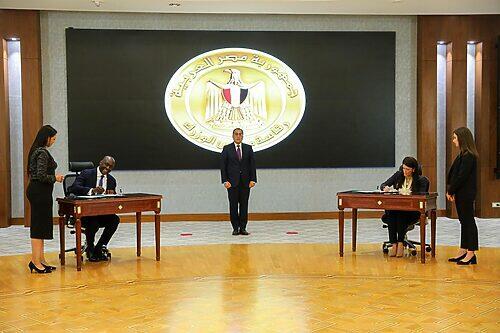
The Transaction Advisory Services Agreement (TASA) formalizes IFC’s engagement and outlines its responsibilities in supporting Egypt’s Asset Monetization Programme. Signed in the presence of Prime Minister Mostafa Madbouly, the agreement is the first major operation under the World Bank Group’s Egypt Country Partnership Framework 2023-2027. It establishes a clear mandate for IFC to provide strategic and technical advisory services.
Under TASA, IFC will assist the government in crafting a detailed implementation plan, identifying suitable privatization models for each SOE, and defining tailored sale processes. This includes evaluating potential investors, structuring transactions to maximize value, and ensuring that governance and operational standards meet international benchmarks. The agreement also emphasizes capacity building within governmental institutions to sustain reform efforts.
The phased approach embedded in TASA allows for careful preparation and execution of asset sales, minimizing risks and maximizing returns. IFC’s expertise in managing complex privatization transactions, including IPOs and trade sales, will be instrumental in navigating regulatory, financial, and market challenges. This structured framework aims to deliver measurable outcomes aligned with Egypt’s broader economic objectives.
Economic Implications: Boosting Private Sector and Job Creation
One of the primary objectives of Egypt’s Asset Monetization Programme is to catalyze private sector growth, which is critical for sustainable economic development. By transferring state-owned assets to private ownership or management, the programme aims to unlock efficiencies, foster innovation, and stimulate competition. This transition is expected to attract substantial investment inflows, both domestic and international.
The privatization and monetization of SOEs are anticipated to create numerous employment opportunities, directly through new business ventures and indirectly via economic multiplier effects. Enhanced competitiveness in key sectors can lead to improved productivity and higher wages, thereby elevating living standards for Egyptian citizens. The programme also supports the government’s goal of diversifying the economy and reducing reliance on public sector dominance.
Moreover, involving the private sector can improve service quality and infrastructure development, benefiting consumers and businesses alike. By fostering a more vibrant business environment, Egypt can enhance its global economic standing, attracting further investments and facilitating integration into international markets.
Enhancing Corporate Governance and Transparency in SOEs
Improving corporate governance within state-owned enterprises is a critical pillar of the Asset Monetization Programme. Weak governance structures have historically hindered SOE performance, leading to inefficiencies and limited accountability. The programme seeks to address these challenges by adopting international standards and best practices that promote transparency and sound management.
IFC’s advisory role includes assisting in the establishment of robust governance frameworks, comprising clear roles for boards, management, and regulators. This includes enhancing financial reporting, risk management, and compliance mechanisms. Strengthening governance not only boosts investor confidence but also ensures that state assets are managed responsibly and sustainably.
Transparent and accountable SOEs are more likely to attract strategic partners and investors, facilitating smoother privatization processes. Additionally, improved governance aligns with Egypt’s commitments under its broader economic reform agenda and international development partnerships, reinforcing its credibility on the global stage.
The Role of the World Bank Group and Egypt’s Country Partnership Framework
The Asset Monetization Programme and IFC’s advisory appointment are integral components of the World Bank Group’s Egypt Country Partnership Framework (CPF) 2023-2027. This framework was jointly developed with the Egyptian government to support key development priorities, including economic diversification, private sector development, and fiscal sustainability. The CPF emphasizes collaboration across World Bank Group entities to maximize impact.
IFC’s involvement under the CPF reflects a coordinated approach to address Egypt’s reform challenges by leveraging expertise in investment climate improvements, financial sector development, and governance reforms. The partnership is designed to deliver technical assistance, policy advice, and financing solutions that complement the government’s strategic objectives.
This alignment ensures that the Asset Monetization Programme benefits from a comprehensive support system, including capacity-building initiatives and policy reforms. The CPF framework also facilitates monitoring and evaluation, enabling adaptive management and ensuring that outcomes contribute to Egypt’s long-term development goals.
Stakeholder Perspectives and Government Endorsements
Prominent Egyptian leaders have expressed strong support for the IFC’s role and the Asset Monetization Programme. Prime Minister Mostafa Madbouly highlighted IFC’s neutrality, global experience, and deep ties with investors as key advantages in driving privatization efforts. He emphasized the importance of close coordination between IFC and the government’s Asset Monetization Unit to ensure successful implementation.
Minister of International Cooperation Rania Al-Mashat underscored the programme’s significance in advancing the State-Owned Enterprise reform agenda and attracting private capital. She noted that IFC’s advisory support would help tailor privatization models to each SOE, considering potential investors and appropriate sale processes. This approach reflects a nuanced understanding of sectoral dynamics and investor preferences.
Hassan Abdalla, Governor of the Central Bank of Egypt, described asset monetization as vital for Egypt’s economic development. He affirmed the Central Bank’s commitment to supporting this multi-stakeholder initiative, which sends a clear message to the global investment community that Egypt is open for business. The backing from top government officials signals strong political will and institutional alignment.
Future Outlook: Anticipated Benefits and Challenges Ahead
Looking forward, the partnership between the Egyptian government and IFC is poised to unlock significant economic benefits, including enhanced fiscal sustainability, improved public sector efficiency, and a more dynamic private sector. Successful monetization of state assets will generate much-needed capital to finance infrastructure projects and social programs, contributing to inclusive growth.
However, the programme also faces challenges, such as managing political sensitivities around privatization, ensuring social safeguards, and maintaining transparency throughout the process. Effective communication with stakeholders and robust regulatory frameworks will be essential to mitigate risks and build public trust.
Continued collaboration with international partners, capacity building within government institutions, and adherence to global best practices will be critical for overcoming obstacles. If managed successfully, Egypt’s Asset Monetization Programme could serve as a model for other countries pursuing economic reforms through strategic asset management.
Conclusion
The appointment of the International Finance Corporation as the strategic advisor to Egypt’s Asset Monetization Programme marks a significant milestone in the country’s economic reform journey. By leveraging IFC’s expertise and global networks, Egypt is well-positioned to unlock the value of its state-owned assets, attract private capital, and foster a more competitive and inclusive economy. This partnership embodies the government’s commitment to transparency, good governance, and sustainable development. While challenges exist, the collaborative framework established through the Transaction Advisory Services Agreement and the World Bank Group’s Country Partnership Framework provides a strong foundation for success. Ultimately, the programme holds the promise of transforming Egypt’s economic landscape, creating jobs, and improving the quality of life for millions of Egyptians.
Originally reported by ceesty.com. Adapted for our readers.