
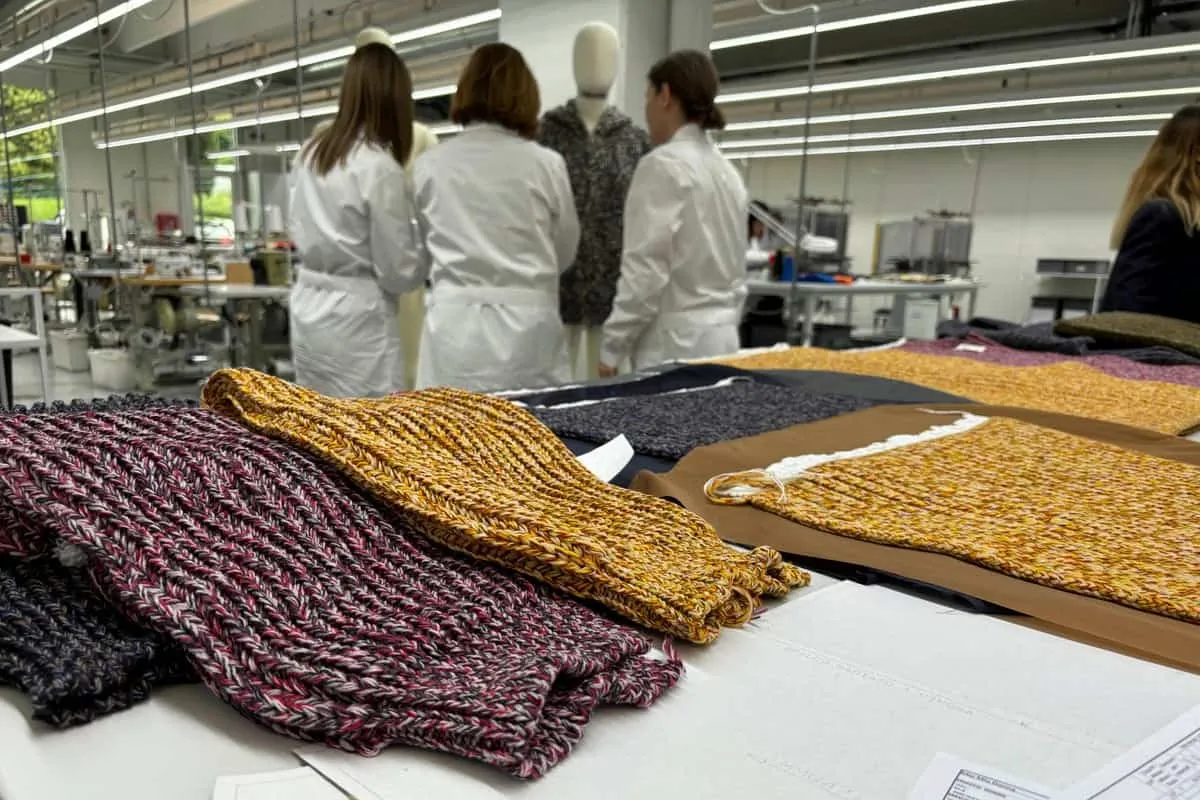

When Prada's CEO Andrea Guerra unveiled a €60 million expansion of their knitwear factory in Umbria this week, he wasn't just announcing new jobs — he was making a statement about the enduring value of specialised craftsmanship in an age of automation and outsourcing. The luxury group now employs 220 people at its Torgiano plant, up from just 39 when they acquired it in 2001, working alongside a network of 60 smaller partner companies producing 30,000 pieces monthly.
This investment in vertical integration — controlling more of the supply chain through deep partnerships rather than arm's-length contracting — offers a compelling model for freelancers and consultants everywhere, including Nigeria's rapidly growing gig economy. The principles that sustain Italian artisan workshops — mastery, mentorship, long-term client relationships, and pricing that reflects true value — translate directly to building a resilient independent career.
The Artisan Mindset: Mastery Over Commodity
Prada's strategy centres on what Guerra calls "a network of intelligent relationships and craftsmanship merged with a constant capacity to bring innovation to the market." Rather than treating production as a commodity to be sourced at the lowest cost, the company invests in proprietary know-how through its internal academy, where experienced artisans train the next generation. This master-apprentice model ensures that specialised skills — whether hand-crocheting Miu Miu culottes or engineering complex software architectures — remain within the organisation's ecosystem.
For freelancers, the lesson is clear: generic services compete on price; specialised expertise commands premium rates. Nigerian consultants who develop deep domain knowledge — whether in fintech compliance, agricultural supply chain optimisation, or creative storytelling for global brands — position themselves as partners rather than vendors. The World Bank estimates 154–435 million online gig workers globally, making differentiation through genuine mastery essential for sustainable income.
The emphasis on craftsmanship extends beyond technical skill to include the transmission of tacit knowledge that cannot be easily codified or automated. At the Torgiano plant, veteran knitters pass down techniques for working with luxury yarns that have been refined over decades — knowledge that would be lost if production were outsourced to the lowest bidder. Similarly, Nigerian consultants who cultivate nuanced understanding of local business contexts while maintaining global standards create irreplaceable value that platforms cannot replicate through algorithmic matching.
The Global Context: Remote Work as Equaliser
Remote work has transformed geographic constraints. NaijaHub estimates 2.3 million Nigerians earned from international remote employers or freelance platforms in 2026, up from under 500,000 in 2020. Platforms like Remote4Africa, Upwork, Toptal, and Andela connect Nigerian talent with global opportunities.
However, global competition is fierce. The artisan model — deep specialisation, demonstrable mastery, reliable delivery, and professional communication — remains the most reliable differentiator. Nigerian professionals who combine world-class technical skills with cultural fluency and time-zone compatibility for European and North American clients occupy a uniquely valuable position.
This dynamic creates both opportunity and pressure. While Nigerian freelancers can access clients paying London or San Francisco rates while living in Lagos or Abuja, they must compete with talent from Eastern Europe, Southeast Asia, and Latin America. The artisan approach provides a sustainable competitive advantage: rather than racing to the bottom on hourly rates, consultants can build practices around specific, high-value problems where their unique combination of skills and experience creates defensible positioning.
Practical Steps for Your Next Quarter
1. Audit your current skill set against market demand on 3–5 global platforms. Identify one high-value specialisation to deepen.
2. Convert your two best client relationships from project-based to retainer or advisory arrangements.
3. Increase your rate by 15–25% for new proposals, anchored to documented outcomes from past work.
4. Allocate 5 hours weekly to structured learning in your chosen specialisation.
5. Build a simple CRM to track prospects, conversations, and follow-ups — treating your practice as a business, not a job hunt.
6. Join or create a peer mastermind group of 4–6 consultants for accountability, referrals, and knowledge exchange.
These steps translate the artisan principles of mastery, partnership, and continuous improvement into actionable freelance practices. The skill audit mirrors Prada's investment in identifying where their knitwear expertise creates the most value. Converting clients to retainer arrangements reflects the long-term partnerships Prada builds with its supplier network. Rate increases tied to documented outcomes align with pricing for value rather than time — a core tenet of the artisan economy. The weekly learning commitment echoes the Prada Academy's role in skill transmission, while the CRM and mastermind group establish the business infrastructure and peer support networks that sustain independent practices over time.
What this means
Prada's €60 million bet on Italian artisanship isn't nostalgia — it's a calculated strategy to control quality, secure proprietary know-how, and build resilience through deep partnerships. The same logic applies to any freelancer or consultant building a career meant to last.
The Nigerian gig economy's trajectory — from $5.2 billion and 3 million workers toward projected continued growth — rewards those who treat their practice as a craft to be mastered, a business to be managed, and a network of relationships to be nurtured. Whether you're a Lagos-based developer building for Berlin startups, an Abuja consultant advising on agricultural exports, or a Port Harcourt designer creating for global brands, the artisan principles remain: master your craft, choose your partners wisely, price for value, never stop learning, and build something that outlasts any single project.
Your career is your workshop. Invest in it accordingly.
Originally reported by independent.co.uk. Adapted for our readers with AI assistance.


