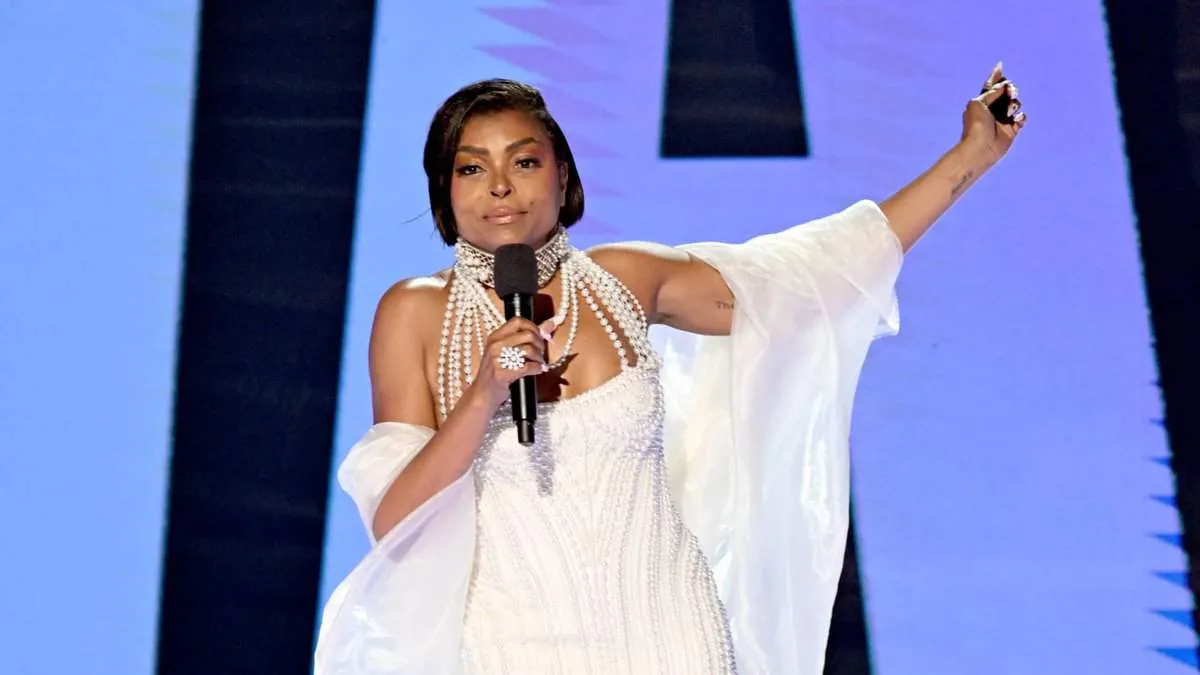

The 2024 BET Awards, known for celebrating Black excellence in entertainment, took a bold political turn this year under the hosting of acclaimed actress Taraji P. Henson. Beyond the glitz and performances, Henson used her platform to address pressing political concerns affecting Black communities and the nation at large. From critiquing divisive rhetoric to spotlighting the conservative blueprint known as Project 2025, and even sharing a compelling skit with Vice President Kamala Harris, Henson’s hosting was a call for awareness and action. This article delves into the significant moments from the BET Awards that underscored the intersection of entertainment and political activism.
Taraji P. Henson’s Bold Opening: Setting the Tone for Political Engagement
Taraji P. Henson kicked off the BET Awards with a powerful parody of Kendrick Lamar’s song “Not Like Us,” immediately signaling that this year’s show would carry a strong political message. She emphasized that the BET Awards are a celebration "for us," highlighting the importance of representation and unity within the Black community.
Early in her opening monologue, Henson addressed a controversial comment made by former President Donald Trump during a presidential debate, where he referenced "Black jobs" in a dismissive context. Henson confronted this rhetoric head-on, pointing out the implicit devaluation of Black labor and talent. Her critique was sharp yet grounded, reminding viewers that the community already understands the disparities and does not need condescending explanations.
This opening set the stage for a night that would blend entertainment with urgent political discourse, establishing Henson not just as a host but as a vocal advocate for social justice and voter empowerment.
The Skit with Vice President Kamala Harris: A Creative Call to Action
One of the most talked-about moments of the night was a skit featuring Taraji P. Henson FaceTiming Vice President Kamala Harris. In this comedic yet serious bit, Henson voiced concerns about the upcoming election, focusing on critical issues such as women’s reproductive rights, the integrity of the Supreme Court, and the erosion of fundamental freedoms.
Vice President Harris responded empathetically, acknowledging the stakes involved and reinforcing the message that extremists threaten freedoms including voting rights, bodily autonomy, and protection from gun violence. The skit cleverly referenced Kendrick Lamar’s “Not Like Us,” tying the theme of resistance against exclusionary forces throughout the show.
This interaction was more than entertainment; it served as a direct appeal to viewers to recognize the gravity of the current political climate and to participate actively in the democratic process.
Highlighting Project 2025: A Warning Against Authoritarian Policies
Taraji P. Henson used her platform to bring national attention to Project 2025, a conservative policy proposal championed by the Heritage Foundation. Often described by critics as a "playbook for authoritarianism," this blueprint aims to implement sweeping changes to the federal government, many of which could undermine civil liberties and social protections.
During the broadcast, Henson urged viewers to research Project 2025 themselves, emphasizing that it is not a secret agenda but a clear threat to vulnerable populations. She warned that the plan includes disturbing elements such as reinstating the military draft, which could disproportionately affect marginalized communities.
By spotlighting this policy proposal during a widely viewed event, Henson sought to inform and mobilize the audience against potential governmental overreach and to protect democratic norms.
Addressing Voting Rights and the Importance of Civic Participation
Throughout the BET Awards, Henson repeatedly stressed the importance of voting, framing it as a crucial tool for protecting rights and shaping the future. She acknowledged the frustration some people feel towards the political system but emphasized that abstaining from voting only leads to further disenfranchisement.
Her message was clear: "You better show up and show out with them ballots." This call to action highlighted that elections are not just about presidential races but also local and judicial contests that directly impact communities.
Henson encouraged voters to think strategically, likening political engagement to playing chess rather than checkers, underscoring the long-term consequences of electoral decisions on careers, civil liberties, and generations to come.
Shedding Light on Social Issues: Homelessness and Judicial Concerns
In addition to electoral matters, Taraji P. Henson drew attention to pressing social issues, including the criminalization of homelessness. She referenced a recent Supreme Court decision upholding an Oregon law that penalizes people experiencing homelessness for sleeping outdoors with basic items like blankets and cardboard boxes.
Henson’s commentary underscored the broader trend of policies that disproportionately harm the most vulnerable citizens, challenging viewers to recognize the human cost of such legal rulings.
By integrating these topics into the awards show, Henson connected the dots between political decisions, judicial outcomes, and everyday struggles faced by marginalized communities.
Challenging Conservative Narratives: The Wrong 'P’s' in Politics
In a pointed critique during her skit with Vice President Harris, Henson highlighted how conservative forces were "pushing the wrong P’s," referring to their attempts to restrict Pride celebrations, access to Plan B emergency contraception, and funding for Planned Parenthood, while simultaneously protecting gun ownership rights.
This clever phrase encapsulated the tension between progressive values and conservative policies, framing the debate around bodily autonomy, LGBTQ+ rights, and gun control.
Henson’s articulation of these issues resonated with many viewers, reinforcing the idea that political battles are deeply connected to personal freedoms and social justice.
The Cultural Impact of Taraji P. Henson’s Political Advocacy
Taraji P. Henson’s decision to infuse the BET Awards with political commentary reflects a growing trend of celebrities leveraging their platforms for activism. Her approach balanced humor, directness, and heartfelt appeals, making complex political issues accessible to a diverse audience.
The combination of entertainment and activism at a culturally significant event like the BET Awards demonstrates how art and politics intersect to inspire community engagement and awareness.
Henson’s performance not only elevated the awards show beyond entertainment but also sparked conversations about the power of celebrity influence in shaping public discourse and motivating voters.
Looking Ahead: The Role of Entertainment in Political Awareness
As the 2024 election approaches, moments like Taraji P. Henson’s hosting at the BET Awards highlight the critical role entertainment can play in increasing political awareness and encouraging civic participation.
By addressing timely issues such as Project 2025, voting rights, and social justice, entertainers can bridge gaps between politics and popular culture, reaching audiences that might otherwise remain disengaged.
The success of politically charged moments within entertainment platforms suggests that future events may continue to serve as vital venues for advocacy and education, influencing the direction of public opinion and democratic involvement.
Conclusion
Taraji P. Henson’s politically charged hosting of the 2024 BET Awards transformed the event into a platform for urgent social and political dialogue. By addressing controversial policies like Project 2025, engaging in a poignant skit with Vice President Kamala Harris, and repeatedly urging viewers to vote, Henson bridged the worlds of entertainment and activism. Her candid commentary and calls for awareness serve as a reminder that the fight for equality, justice, and democratic participation requires vigilance and action from all communities. The BET Awards proved that entertainment spaces can be powerful catalysts for political engagement and social change.
Originally reported by thedailybeast.com. Adapted for our readers.