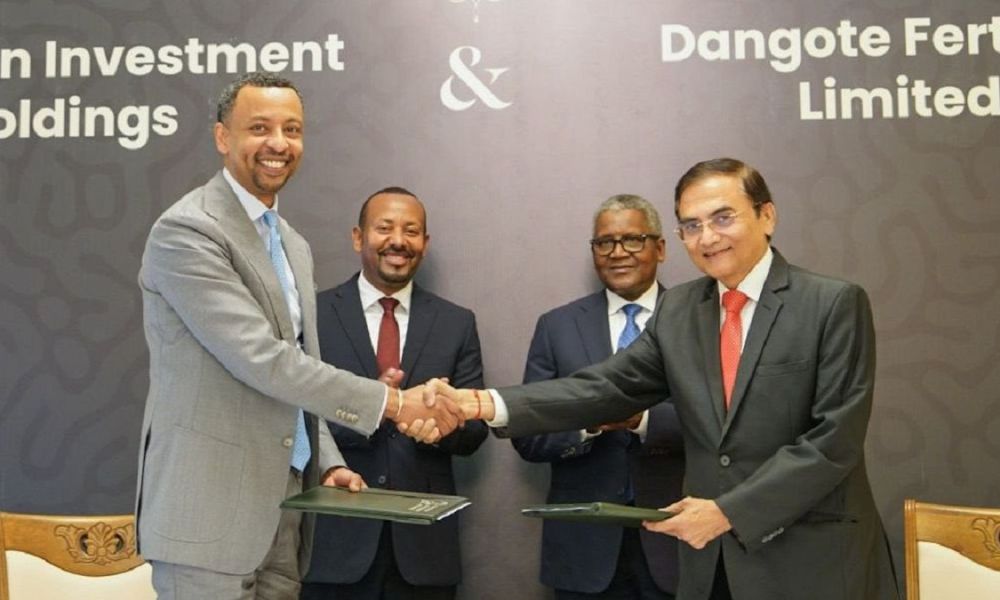

The Dangote Group, Africa’s largest industrial conglomerate, has embarked on a groundbreaking venture in partnership with Ethiopian Investment Holdings (EIH) to construct a $2.5 billion urea fertiliser plant in Ethiopia. This ambitious project represents one of the largest industrial investments in the nation’s history and is set to establish a world-class fertiliser production complex with a capacity of three million metric tons per annum. Strategically located in Gode, the facility will leverage Ethiopia’s rich natural gas reserves to produce fertiliser, significantly boosting agricultural productivity and food security across the region. This article explores the multifaceted aspects of this landmark project, its implications for Ethiopia and Africa, and the transformative potential it holds for the continent’s agricultural sector.
Strategic Partnership Between Dangote Group and Ethiopian Investment Holdings
The partnership between Dangote Group and Ethiopian Investment Holdings (EIH) is a prime example of collaborative industrial development in Africa. EIH, the strategic investment arm of the Ethiopian government, holds a 40% equity stake in the project, while Dangote Group retains a 60% ownership. This joint venture underscores a shared commitment to industrialisation, economic diversification, and regional development.
This partnership structure not only ensures strong Ethiopian participation but also brings together Dangote Group’s extensive experience in large-scale industrial projects and EIH’s strategic vision for national growth. The collaboration is designed to foster long-term sustainability, with both parties jointly responsible for the development, construction, operation, and financing of the fertiliser complex.
By aligning their goals, EIH and Dangote Group aim to create a transformative industrial hub in Ethiopia that will serve domestic and regional markets. This partnership is expected to catalyse further industrial investments and set a precedent for future public-private collaborations in Africa.
Project Scope and Production Capacity
The fertiliser plant is planned as one of the world’s largest single-site urea production complexes, with a combined annual production capacity of three million metric tons. This scale places the facility among the top five largest urea producers globally, promising a significant leap in Africa’s fertiliser manufacturing capabilities.
The project’s scope extends beyond manufacturing to include the development of advanced gas transport pipelines that will channel natural gas from Ethiopia’s proven Hilal and Calub reserves directly to the Gode production site. This dedicated pipeline infrastructure is critical for ensuring a reliable and cost-effective feedstock supply, which is essential for continuous fertiliser production.
In addition to the core urea plant, the project envisions the development of associated infrastructure such as storage facilities, logistics networks, and export terminals. These components are vital for efficient distribution and will enhance Ethiopia’s capacity to serve both local farmers and regional markets, reducing reliance on imported fertilisers.
Economic and Agricultural Impact on Ethiopia
The establishment of this fertiliser complex is poised to be a major economic boon for Ethiopia. By producing fertiliser domestically at scale, the country will drastically reduce its dependence on costly imports, improving trade balances and stabilising fertiliser prices for farmers.
The project will generate thousands of direct and indirect employment opportunities, particularly in the Somali Regional State where the plant is located. This job creation will stimulate local economies, improve livelihoods, and foster skills development in industrial and agricultural sectors.
Moreover, the availability of affordable fertiliser is expected to enhance agricultural productivity significantly. Increased access to fertiliser can improve crop yields, contribute to food security, and support Ethiopia’s broader goals of poverty reduction and rural development.
Technological Innovation and Infrastructure Development
This fertiliser plant will incorporate state-of-the-art technology to ensure efficient and environmentally responsible production processes. The integration of advanced gas pipelines and modern manufacturing equipment exemplifies the project’s commitment to operational excellence and sustainability.
The construction of dedicated infrastructure such as gas transport pipelines from Hilal and Calub gas fields is a critical innovation. By securing a direct and cost-effective natural gas supply, the project minimizes production costs and potential supply disruptions, which are common challenges in fertiliser manufacturing.
Additionally, the development of logistics and storage infrastructure will improve supply chain efficiency. These enhancements will facilitate timely distribution of fertiliser products to farmers across Ethiopia and neighboring countries, reinforcing the project’s role as a regional agricultural catalyst.
Regional Significance and Export Potential
Beyond Ethiopia’s borders, the fertiliser plant is expected to position the country as a regional hub for fertiliser production and export. This will help meet the growing demand for fertilisers in East Africa and the Horn of Africa, where agricultural sectors are expanding rapidly.
By exporting fertiliser products to neighboring countries, Ethiopia can strengthen economic ties and contribute to regional food security initiatives. This export potential also promises to generate foreign exchange earnings that can support national development priorities.
The project’s scale and advanced facilities will enable Ethiopia to compete with established fertiliser producers globally, enhancing the continent’s industrial footprint and reducing Africa’s dependence on imported agricultural inputs.
Future Expansion and Diversification Plans
The shareholders’ agreement includes provisions for future expansions and upgrades to the fertiliser complex. Plans are underway to explore production of other ammonia-based fertilisers such as ammonium nitrate, ammonium sulfate, and calcium ammonium nitrate, broadening the product portfolio and market reach.
Such diversification will enable the fertiliser plant to cater to a wider range of agricultural needs, supporting different crop types and farming systems. It will also enhance the plant’s resilience against market fluctuations by tapping into various fertiliser segments.
Continued investment in research and development is expected to support these future initiatives, ensuring the complex remains at the forefront of fertiliser technology and production efficiency.
Leadership Perspectives and Vision
Alhaji Aliko Dangote, President and CEO of Dangote Group, described the project as a pivotal moment in Africa’s industrialisation journey. He emphasized the strategic importance of Gode’s location and Ethiopia’s natural gas reserves in creating one of the world’s largest fertiliser complexes.
Dangote highlighted the group’s commitment to leveraging decades of industrial experience to ensure the project becomes a cornerstone of Ethiopia’s economic transformation and a catalyst for agricultural productivity throughout the region.
Dr. Brook Taye, CEO of Ethiopian Investment Holdings, echoed this vision, underscoring the project’s alignment with Ethiopia’s national development priorities and its potential to enhance agricultural modernisation and self-sufficiency.
Timeline and Financial Commitments
The fertiliser plant’s development is estimated to cost approximately $2.5 billion, reflecting the scale and sophistication of the project. This substantial investment is indicative of the confidence both partners have in the project’s long-term viability and impact.
Construction is targeted to be completed within 40 months from commencement, a timeline that reflects ambitious but achievable goals given the project’s strategic importance and resource backing.
The financial structure includes joint ownership and shared responsibilities for financing, operating, and maintaining the complex, ensuring aligned interests and sustained commitment from both Dangote Group and Ethiopian Investment Holdings.
Conclusion
The Dangote Group and Ethiopian Investment Holdings’ $2.5 billion fertiliser plant project marks a transformative milestone in Ethiopia’s industrial and agricultural landscape. By harnessing Ethiopia’s abundant natural gas reserves and leveraging cutting-edge technology, this world-class fertiliser complex is set to revolutionize fertiliser production in Africa. It promises to enhance food security, reduce import dependence, generate significant employment, and establish Ethiopia as a regional industrial powerhouse. As the project progresses towards completion, it exemplifies the power of strategic partnerships in driving sustainable economic growth and agricultural development across the continent.
Originally reported by ripplesnigeria.com. Adapted for our readers.