
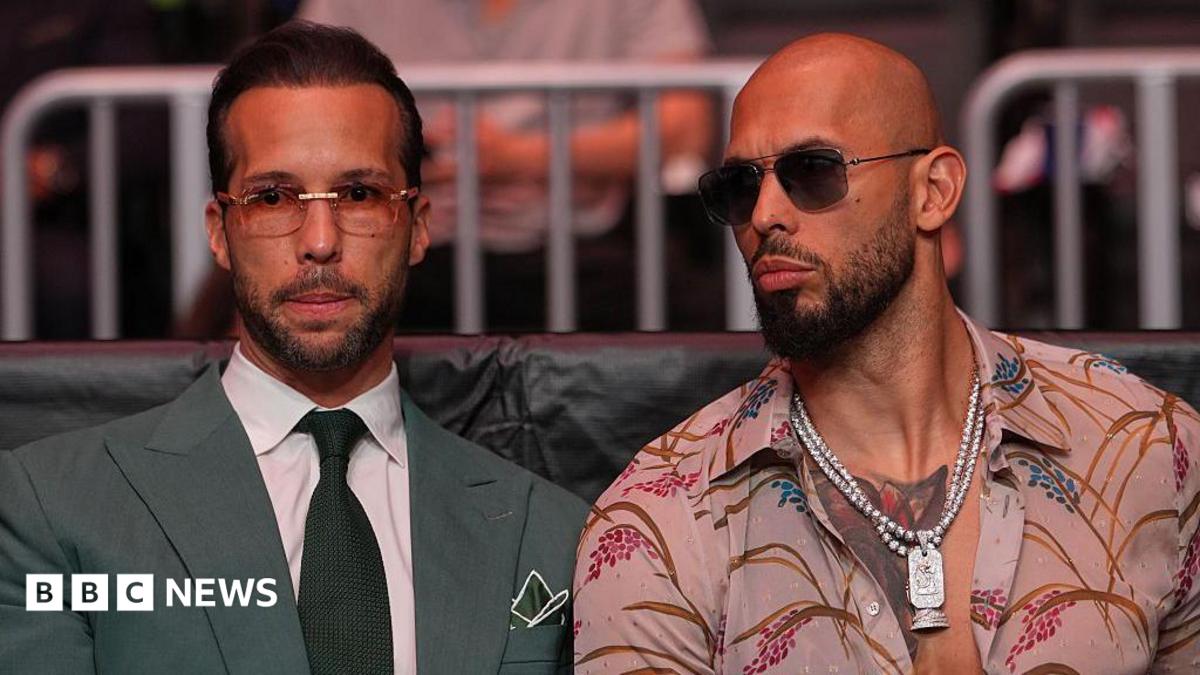
Image source, Pool/Getty ImagesImage caption, Tristan and Andrew Tate are both facing extradition to the UKByBrandon Drenon, and Tom Bateman in MiamiPublished20 July 2026, 20:03 BSTUpdated 10 minutes agoControversial influencer Andrew Tate and his brother Tristan have appeared in a federal courtroom in Miami, marking the beginning of extradition proceedings to the UK over a slate of new charges that includes rape and sex trafficking. Speaking outside the court after the hearing, a lawyer for the brothers said they would fight extradition.The Tates have been held in a Florida jail…
What happened
Image source, Pool/Getty ImagesImage caption, Tristan and Andrew Tate are both facing extradition to the UKByBrandon Drenon, and Tom Bateman in MiamiPublished20 July 2026, 20:03 BSTUpdated 10 minutes agoControversial influencer Andrew Tate and his brother Tristan have appeared in a federal courtroom in Miami, marking the beginning of extradition proceedings to the UK over a slate of new charges that includes rape and sex trafficking. Speaking outside the court after the hearing, a lawyer for the brothers said they would fight extradition.The Tates have been held in a Florida jail since their arrest on Saturday, after the Crown Prosecution Service (CPS), which prosecutes criminal cases in England and Wales, announced 38 new charges against them. The Tate brothers, who arrived in Florida in 2025 after departing Romania where they face similar charges, have repeatedly denied any wrongdoing. In court on Monday, the pair wore light brown prison uniforms and were handcuffed and shackled at the waist and ankles. They spoke only when asked if they understood their rights to which they replied together "yes your honour".The brothers' attorney, Joe McBride, told reporters after the brief hearing that his clients are innocent. "They've never done nothing wrong. They shouldn't be extradited for crimes they didn't commit," McBride said. "It's garbage. It's a stitch up job," he added. He compared the charges…
Source: Tate brothers appear in US court for extradition proceedings via www.bbc.co.uk.
This article was curated with AI assistance and reviewed according to Tamfis editorial settings.
Editor’s note: The following is AI-generated commentary and context on this topic, not original reporting.
Understanding international extradition proceedings
Extradition cases of this kind sit at the intersection of two legal systems, and they tend to move slowly by design. When a person is arrested in one country to face charges filed in another, courts must weigh a range of legal safeguards before anyone is physically transferred across borders. Judges typically examine whether the underlying offences would also be crimes in the country where the person is being held, whether the paperwork supporting the request meets treaty requirements, and whether the person’s fundamental rights would be protected if the transfer goes ahead.
Between the US and the UK, extradition is governed by a long-standing bilateral treaty that sets out the categories of offence that qualify and the procedural steps both sides must follow. Serious allegations such as sexual assault or trafficking are almost always extraditable offences under that framework, but qualifying for extradition is only the first hurdle. The person facing the request is entitled to contest it, and defence teams frequently raise arguments about the sufficiency of evidence, the conditions they might face in custody, or procedural irregularities in how the case was brought.
Why these cases attract intense public attention
High-profile social media figures facing serious criminal allegations tend to generate outsized public interest, partly because their online personas have already made them familiar to millions of followers, and partly because the allegations themselves often touch on issues — such as the treatment of women online, safeguarding of vulnerable audiences, and the responsibilities of influencers with large platforms — that resonate well beyond the courtroom. That attention can cut both ways: it puts pressure on prosecutors and courts to proceed carefully and transparently, but it can also complicate the ability of a defendant to receive a fair hearing, since public opinion often forms long before any evidence is formally tested in court.
It is also worth remembering that an extradition hearing is not a trial on the underlying allegations. The court hearing the extradition request is not asked to decide guilt or innocence; it is asked only whether the legal conditions for transfer have been met. Any questions about the truth of the specific allegations will, if the extradition proceeds, be resolved later by the courts in the jurisdiction that filed the charges, following that jurisdiction’s own rules of evidence and standards of proof.
What typically happens next
- Further hearings are usually scheduled to allow both sides to file legal arguments and supporting documents.
- The defence may seek bail or continued detention review while the case proceeds.
- Appeals are common at multiple stages, which can extend extradition proceedings for months or longer.
- Parallel legal matters in other jurisdictions, where they exist, can also influence the timeline.
Cases involving multiple ongoing legal matters across different countries are rarely resolved quickly. Readers following this story should expect a series of incremental court dates and procedural rulings rather than a single decisive moment, and should treat any early statements from lawyers on either side — who are, after all, advocating for their clients — as claims to be weighed rather than settled fact.
The broader conversation around influencer accountability
Beyond the specifics of any one case, this story sits within a wider public conversation about how online platforms, audiences, and regulators respond when creators with large followings face serious legal allegations. Platforms have faced growing pressure to reconsider how they moderate and monetise content from figures under investigation, while commentators continue to debate where the line falls between due process for the accused and accountability for public figures who wield significant influence over younger audiences. That debate is likely to continue regardless of how any individual legal proceeding concludes.
Media literacy and following ongoing legal stories
For readers trying to follow a fast-moving legal story responsibly, it helps to distinguish between three categories of information: confirmed procedural facts (such as a court date or a formal charge), statements from interested parties (such as lawyers representing either side), and speculation or commentary circulating online. Only the first category can generally be treated as settled; the other two should be understood as perspectives that may later be confirmed, revised, or contradicted as the legal process unfolds. Waiting for official confirmations from courts or prosecutors before drawing firm conclusions remains the most reliable approach, particularly in cases that generate heavy social media speculation.