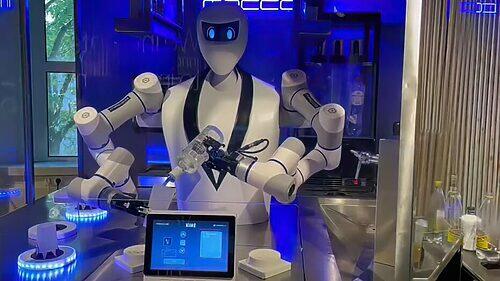

Robotic bartenders are no longer props from science fiction. KIME, a humanoid bartending kiosk developed by Macco, is already pouring pints and dispensing snacks around the clock. With the ability to serve two beers every six seconds, offer up to 12 products per kiosk, and take orders in as many as 10 languages via an app or touchscreen, KIME represents a sharp leap forward in automated food and beverage service. Antimicrobial materials, real-time sales data, smart ERP integration, and built-in payment systems add business appeal. Yet the real story is not only about what happens behind the bar; it is about what happens to the people who design, install, manage, and improve these systems. For freelancers and consultants, the rise of machines like KIME is less a threat and more a signal that a new wave of specialised work is opening up.
The Automation Trend Is Bigger Than One Robot
KIME is not an isolated novelty. True Bird has launched an automated coffee kiosk in New York City, while Bear Robotics' Servi is handling front-of-house tasks in restaurants. Together, these examples show that robotics is moving from factory floors into customer-facing roles. Each deployment creates demand for people who can translate business needs into technical reality: integration specialists, user-experience consultants, food-safety advisers, data analysts, and change-management freelancers. The task for independent professionals is to recognise where human judgment still matters and position themselves at those intersections. A machine may pour a drink, but a person still has to decide whether the machine belongs in a particular venue, how it fits the brand, and how staff and customers will interact with it.
Consulting Niches Emerging from Robotic Food Service
Businesses bringing in automation do not simply buy a machine and press start. They need help selecting the right system, training staff, redesigning workflows, interpreting sales data, and maintaining hygiene standards. Freelancers with expertise in hospitality operations, software integration, or ERP implementation can find work advising venues on whether a robotic kiosk suits their customer base.
A consultant might map out how KIME's app-based ordering and multilingual interface fit a venue's existing service flow, or how its real-time monitoring can inform stock control. Designers and copywriters can support the customer-facing side, from touchscreen interfaces to onboarding materials. Trainers can run sessions that turn bartenders into robot supervisors rather than redundant staff. The most valuable consultants will be those who combine sector knowledge with enough technical literacy to speak credibly to both engineers and front-line workers.
Skill-Building for the Automation Era
The shift towards robotics calls for new skill sets geared towards managing and collaborating with these advanced systems. For freelancers, that means deliberately broadening capabilities rather than clinging to a single narrow specialism. Technical literacy is essential: understanding APIs, point-of-sale integrations, basic data analytics, and cybersecurity hygiene.
Soft skills matter just as much. Client management, change communication, and training delivery help organisations adopt new tools without alienating their people. Project management methodologies, whether Agile or more traditional frameworks, allow freelancers to coordinate pilots and rollouts. Finally, commercial acumen, pricing, and negotiation skills become vital because automation projects often involve significant upfront investment and ongoing support contracts. The freelancers who treat these capabilities as a portfolio will find more doors open.
Pricing and Negotiating Automation Consultancy Work
Automation projects differ from one-off creative gigs. They tend to run longer, involve measurable return on investment, and require maintenance or optimisation over time. Freelancers should price accordingly. Value-based pricing often fits better than hourly billing: a consultant might tie part of their fee to outcomes such as reduced serving times, lower waste, or improved sales visibility.
Retainers can cover ongoing monitoring and system tweaks, while discovery phases are priced separately to assess whether automation is appropriate at all. When negotiating, be transparent about assumptions, scope boundaries, and what happens if the project expands. Clients investing in robots like KIME need clarity on integration costs, training time, and post-launch support. A well-structured proposal that addresses those points builds trust and justifies premium fees.
Client Management Lessons from High-Tech Hospitality
Client management in automation consulting requires a balance of enthusiasm and realism. It is easy to be swept up by the novelty of a humanoid bartender, but successful freelancers keep the conversation anchored in business outcomes. Ask what problem the client is trying to solve, whether that is labour shortages, speed of service, hygiene concerns, or data visibility.
Set clear milestones for pilot programmes. Document food-safety responsibilities, especially when antimicrobial materials and reduced human contact are selling points. Maintain regular check-ins after launch because early adoption often surfaces unexpected friction. Strong client management turns a single automation project into a long-term advisory relationship, which is where the most stable freelance income usually lives.
Nigeria and the Global Gig Economy
The gig economy in Nigeria, like elsewhere, is shaped by global technology trends. While robotic bartenders are more visible in developed hospitality markets, the same automation forces are influencing outsourcing, customer service, and digital operations worldwide. Nigerian freelancers working in software development, virtual assistance, technical writing, and business analysis can serve clients deploying automation abroad.
Remote work has made location less relevant than capability. A Lagos-based consultant can advise a hospitality group in London on data analytics, or a frontend developer in Abuja can improve a touchscreen ordering interface. The key is to cultivate internationally relevant skills and build a portfolio that demonstrates remote reliability. As automation raises the bar for efficiency, freelancers who offer human judgment, creativity, and cross-cultural communication remain competitive.
What this means
The robotic bartender is not the end of human work; it is a reminder that work keeps changing. Machines like KIME excel at speed, consistency, and round-the-clock availability, but they still need people to choose, install, refine, and operate them. For freelancers and consultants, that is where the opportunity lies. By developing the right blend of technical, commercial, and interpersonal skills, independent professionals can turn automation from a source of anxiety into a reliable income stream. The future belongs not to those who compete with robots, but to those who know how to work alongside them.
Originally reported by corneey.com. Adapted for our readers with AI assistance.