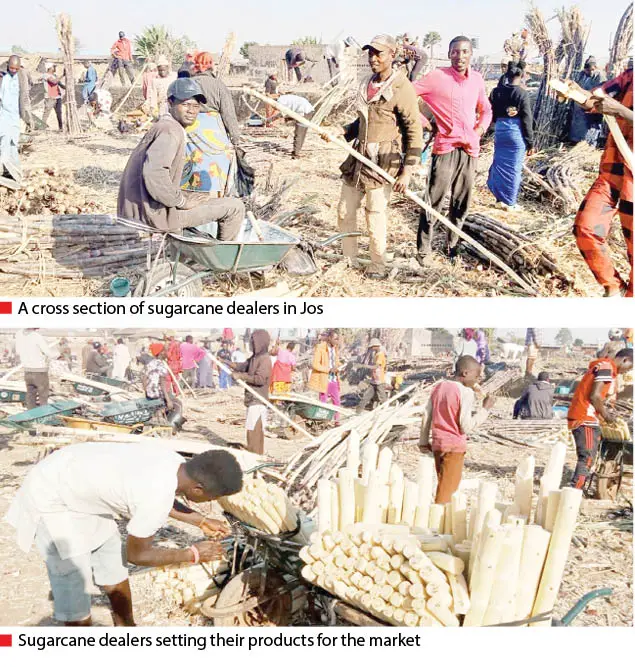

In the heart of Plateau State, Jos youths are rewriting their economic narratives by engaging in the sugarcane business. With limited access to formal education and scarce job opportunities, many young people in the region have turned to hawking sugarcane as a means of livelihood. This small-scale enterprise requires minimal capital but offers significant returns, making it an attractive option for less privileged youths. The availability of sugarcane from local farms and neighboring states fuels this burgeoning trade, transforming the streets of Jos and rural communities into vibrant hubs of commerce. This article delves into the dynamics of this grassroots business, exploring how it empowers youths, the challenges they face, and the broader socio-economic impact on the region.
The Socioeconomic Context Driving Youths to Sugarcane Business
Plateau State, like many parts of Nigeria, faces high youth unemployment and limited access to formal education and vocational training. These challenges have left many young people with few options for sustainable income, prompting them to seek alternative sources of livelihood that require little to no startup capital.
In a society where formal employment opportunities are scarce, Jos youths have adopted an entrepreneurial mindset, focusing on accessible resources within their immediate environment. Sugarcane hawking has emerged as a practical business that addresses both the need for income and the desire for engagement and productivity.
This shift reflects a broader trend where survival is no longer solely dependent on traditional employment but on the ability to identify and leverage local economic opportunities. The sugarcane trade exemplifies how resourcefulness and community ties can create viable economic pathways for marginalized youths.
Sugarcane Supply and Availability in Plateau State
The success of the sugarcane business in Jos is largely due to the abundant supply of sugarcane in Plateau State, particularly in the Mangu and Bokkos local government areas. These regions are known for their agricultural productivity, providing a steady source of fresh sugarcane for traders and hawkers alike.
Beyond local production, traders also source sugarcane from neighboring states such as Kaduna and Kano, ensuring a continuous and diverse supply. This inter-state trade strengthens the sugarcane market in Jos, making the product readily available and affordable for both sellers and consumers.
The availability of sugarcane in large quantities enables youths to purchase stock in bulk, which they then process and sell in various urban and rural markets. This supply chain supports thousands of young entrepreneurs and sustains the vibrant trade scene across Plateau State.
The Business Model: How Jos Youths Engage in Sugarcane Hawking
Sugarcane hawking in Jos is predominantly a small-scale business that requires minimal capital investment. Most youths start with wheelbarrows, which they use to transport and sell sugarcane around the city and in surrounding villages. This mobility allows them to reach a wide customer base.
The process involves purchasing sugarcane in bulk, often early in the morning, then cutting, processing, and neatly packing the sugarcane into manageable portions for sale. The hawkers then move through busy streets, markets, and residential areas to attract customers.
This hands-on approach demands physical stamina and resilience, as hawkers often work long hours under the sun or rain, navigating crowded urban spaces while pushing heavy loads. Despite these challenges, the business model remains attractive due to its profitability and accessibility.
Economic Gains and Income Potential for Sugarcane Hawkers
A survey of sugarcane hawkers in Jos reveals that many earn incomes comparable to or exceeding those of mid-level civil servants. For example, a hawker pushing a wheelbarrow can make approximately N2,500 daily, which translates to about N75,000 monthly if sustained consistently.
Profit margins are significant, with sellers often making gains of N2,000 to N3,000 daily depending on their purchase volume. These earnings enable many youths to support themselves and their families, contributing to improved living standards and financial independence.
The profitability of sugarcane hawking also fosters entrepreneurial spirit among young people, encouraging them to reinvest in their businesses or diversify into related ventures such as farming or wholesale trading.
Challenges Faced by Youths in the Sugarcane Trade
Despite its profitability, sugarcane hawking is physically demanding and fraught with challenges. The weight of the sugarcane, coupled with long distances covered daily, requires considerable energy and endurance, making it unsuitable for the faint-hearted or physically weak.
Weather conditions add to the difficulties, as hawkers often operate in extreme heat or rain without adequate protective gear. This exposure increases their vulnerability to health issues and fatigue, impacting their productivity and earnings.
Additionally, the lack of formal training and business support services limits opportunities for scaling up operations. Many youths remain confined to low-margin retail activities without access to credit, marketing, or storage facilities that could enhance their profitability.
Community Impact and Social Benefits of the Sugarcane Business
The sugarcane trade has become a vital economic lifeline for many communities across Plateau State. It provides employment for thousands of youths, reducing idleness and the associated risks of social vices such as crime and drug abuse.
Moreover, the income generated supports family welfare, education, and local development. Many hawkers have been able to marry, raise children, and contribute to their communities through the proceeds of their sugarcane businesses.
The vibrant market activities foster social cohesion and create a sense of purpose among youths, who take pride in their entrepreneurial achievements. This communal engagement strengthens local economies and promotes sustainable livelihoods.
The Role of Traders and the Sugarcane Supply Chain
Traders play a crucial role in sustaining the sugarcane business ecosystem in Jos. They facilitate bulk purchases from farmers and neighboring states, ensuring a reliable supply that meets the high demand in urban markets.
These merchants often operate from central hubs like the Bukuru market, where sugarcane is received, processed, and distributed daily. Their networks enable efficient movement of goods and provide market access for small-scale hawkers.
Longstanding traders have witnessed the growth of the business over the years and attest to its capacity to generate jobs and improve livelihoods. Their experience and connections are vital in maintaining the flow of sugarcane and supporting the broader economic fabric of Plateau State.
Future Prospects and Opportunities for Expansion
The sugarcane business in Jos holds promising prospects for growth and diversification. With better access to credit, training, and infrastructure, youths could expand from hawking to processing sugarcane into value-added products like juice, syrup, or ethanol.
Government and private sector support could further enhance the industry by improving supply chains, introducing mechanized farming, and creating cooperative societies to empower young entrepreneurs and reduce operational challenges.
By leveraging technology and innovation, the sugarcane trade could evolve into a more formalized sector, attracting investment and generating broader economic benefits for Plateau State and beyond.
Conclusion
The sugarcane business in Jos exemplifies how resourcefulness and entrepreneurship can transform economic challenges into opportunities. Despite facing physical hardships and structural limitations, Plateau State youths have carved out a sustainable livelihood by harnessing local agricultural resources. This thriving trade not only supports individual incomes but also strengthens community ties and promotes social well-being. With targeted support and strategic investments, the sugarcane sector has the potential to evolve into a significant contributor to the region’s economy, offering brighter prospects for the youth and their families. Ultimately, the success of these young entrepreneurs underscores the importance of leveraging local assets and fostering inclusive economic growth in underserved communities.
Originally reported by destyy.com. Adapted for our readers.