
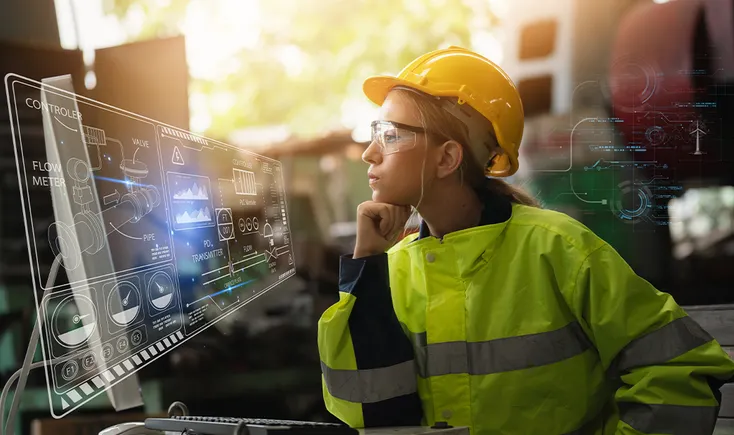

The construction industry has long been cautious in adopting new technologies, especially those promising revolutionary changes without practical benefits. Artificial Intelligence (AI) holds immense potential to optimize construction jobsites, but success hinges on aligning AI capabilities with the realities of daily field operations. Instead of introducing friction through complex systems, AI must support established workflows—helping foremen, superintendents, and project managers work smarter without disrupting their routines. This article delves into where AI truly delivers value on construction sites, highlighting real-world applications, adoption strategies, and measurable productivity improvements.
Understanding the Gap Between AI Potential and Construction Reality
AI’s promise in construction often falls short because many solutions overlook how work is actually performed on jobsites. Foremen plan tasks based on experience and immediate conditions, superintendents monitor progress through visual inspections and reports, while project managers reconcile costs using complex data streams. Tools that fail to integrate with these roles create additional work rather than alleviating it.
The challenge is not the technology but the misalignment between AI tools and construction workflows. Successful AI solutions must complement existing processes by enhancing accuracy and speed without requiring teams to change how they operate fundamentally. This alignment ensures that AI acts as an enabler rather than a disruptor.
By focusing on practical applications—such as validating labor entries or surfacing relevant drawings—AI can support the daily rhythms of construction work. This approach builds trust and encourages adoption, setting the stage for broader AI integration across projects.
AI in Data Entry and Validation: Enhancing Accuracy and Reducing Rework
Construction teams routinely submit data like time cards, equipment hours, and material quantities. Errors or inconsistencies in these entries can lead to costly corrections weeks later. AI can review these submissions in real-time, automatically flagging anomalies that deviate from historical patterns or project norms.
By catching errors early, AI prevents the accumulation of inaccuracies that complicate cost reconciliation and productivity analysis. This immediate feedback loop saves time and reduces frustration for field teams and office staff alike.
Moreover, AI-driven validation improves reporting accuracy, providing clearer visibility into labor productivity and resource utilization. This transparency supports better decision-making and more reliable project forecasting.
Streamlining Drawing and Documentation Support with AI
Construction crews often waste valuable time searching through multiple revision sets, RFIs, and specifications to find the right information. AI-powered systems can instantly surface relevant drawings, annotations, and documents based on natural language queries or task context.
This instant access reduces delays caused by waiting for office support and minimizes errors stemming from outdated or incomplete information. Crews get answers on the spot, enabling continuous workflow and reducing downtime.
Additionally, AI can assist in mapping project tasks to specific drawing details, accelerating clarification cycles and enhancing overall communication between field and office teams.
Progress Tracking and Variance Detection: Focusing on What Matters
Monitoring planned versus actual progress is critical to managing construction projects effectively. AI compares schedules with real-time data, identifying discrepancies that require attention. This targeted insight allows teams to focus on exceptions rather than manually reviewing all activities.
By highlighting variances early, AI supports proactive problem-solving, reducing the risk of delays and cost overruns. Project managers can allocate resources more efficiently and adjust plans dynamically based on accurate, up-to-date information.
This focused approach streamlines progress meetings, making them shorter and more productive by centering discussions on critical issues instead of routine updates.
Resource Planning: Leveraging AI to Optimize Labor and Equipment Use
AI analyzes patterns from past projects to guide short-term resource planning. By examining labor deployment, equipment cycles, and subcontractor sequences, AI helps identify potential bottlenecks and inefficiencies before they occur.
This predictive capability supports smarter scheduling, ensuring that crews and machinery are available when needed without unnecessary idle time. It also aids in balancing workloads and optimizing subcontractor coordination.
Ultimately, AI-driven resource planning enhances overall project flow, reducing delays and improving cost control by aligning resources with actual jobsite demands.
Principles for Successful AI Adoption on Construction Jobsites
Introducing AI in construction requires a thoughtful approach centered on three core principles. First, leverage data already captured in existing systems—such as time cards, cost codes, schedules, and equipment logs—without imposing new data collection burdens on teams.
Second, deliver AI-generated insights at natural decision points. Foremen, superintendents, and project managers should receive information when they review work, update costs, or plan resources, avoiding separate dashboards that are rarely consulted.
Third, start with focused applications. Narrow, well-defined AI roles—like labor entry validation or drawing retrieval—build user trust and demonstrate tangible value quickly. As confidence grows, AI capabilities can expand to cover broader aspects of project management.
Measurable Productivity Gains Enabled by AI
AI consistently drives improvements in key areas such as labor reporting accuracy, drawing interpretation speed, and progress review efficiency. For example, AI’s anomaly detection in labor entries reduces costly rework and clarifies productivity metrics.
In documentation, AI accelerates access to relevant drawings and specifications, shortening clarification cycles and keeping crews focused on building rather than searching for information.
Progress tracking benefits from AI’s ability to highlight variances, enabling more focused meetings and clearer decision-making. These productivity gains translate to time savings, cost reductions, and better project outcomes.
Future Outlook: AI-Powered Construction Management with CMiC NEXUS
Emerging AI-powered platforms like CMiC’s NEXUS are setting new standards for construction management by integrating Natural Language Processing, Construction Intelligence, and Agent-Driven Automation into a unified ERP system.
NEXUS allows teams to query data using natural language, delegate repetitive tasks to AI agents, and leverage sentiment analysis to detect potential project issues early. This modernized interface simplifies interactions with complex data sets and automates routine workflows.
Such advanced AI solutions promise to revolutionize construction operations, enabling teams to make smarter decisions faster, reduce risks, and elevate overall project performance for long-term success.
Conclusion
Artificial Intelligence is no longer a futuristic concept for construction jobsites; it is a present-day tool that, when thoughtfully applied, delivers tangible value. By focusing on practical AI applications that integrate seamlessly with existing workflows, construction teams can enhance accuracy, accelerate decision-making, and optimize resource use without adding complexity. The key to success lies in aligning AI with how work actually gets done—supporting foremen, superintendents, and project managers in their daily tasks. As advanced AI platforms like CMiC’s NEXUS continue to evolve, the construction industry stands poised to embrace a smarter, more efficient future where technology empowers teams to build better, faster, and more cost-effectively.
Originally reported by constructiondive.com. Adapted for our readers.