
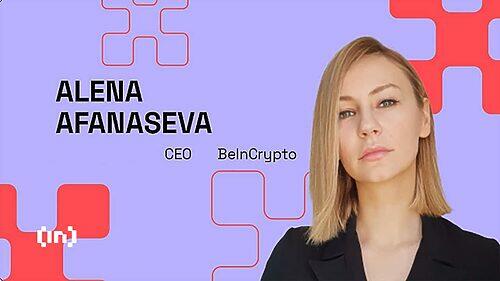

When Alena Afanaseva took the stage at LABITCONF 2022, she shared the operational playbook that grew BeInCrypto from a startup to a 200-strong media company across 60 countries — average employee age 31.5, 40% women, seven of ten departments led by women. Only 5% of the team had met in person. Her lessons on vetting remote talent, preventing burnout, fair compensation and honest CVs apply beyond Web3 to any freelancer navigating the global gig economy.
Remote work demands deliberate culture, not just tools
Afanaseva found remote efficiency requires structure, not just tools. New hires struggled with self-discipline, so BeInCrypto created a structured onboarding and upskilling programme teaching time-blocking, asynchronous communication and clear deliverables.
For freelancers: treat your home office like a managed workspace. Set core hours, publish a personal 'user manual' for clients on response times, brief preferences and deliverable definitions. Add a weekly 30-minute review to audit workload, spot scope creep and protect recovery time. The company’s bespoke HR system tracked wellbeing: sport, family time, rest and non-work social interaction. Freelancers can replicate this with a spreadsheet logging sleep, exercise, client hours and deep work. When ratios drift, you get early burnout warnings.
Vetting clients and projects with the same rigour recruiters use
Afanaseva told recruiters to engage candidates on Twitter, Reddit, Discord and at hackathons, mandate crypto-knowledge tests and on-chain background checks. For freelancers: vet clients before pitching. Check Glassdoor reviews, LinkedIn churn, payment history on Upwork or Malt, and brief clarity. A vague brief is like a fake profile — walk away or demand a paid discovery call.
Build your own 'on-chain' reputation: publish case studies with measurable outcomes, maintain a public Notion portfolio, collect video testimonials and contribute to open-source or community projects. When clients verify your track record in 60 seconds, you skip trust-building and move straight to scope and price.
Honest CVs win; lies cost 21 per cent of liars their jobs
Afanaseva’s statistics: 93% know someone who lied on a CV; 27% lied about experience, 18% about abilities, 17% about responsibilities. 21% of liars lost the job or offer. In freelancing, exaggerating Figma proficiency or claiming a lead role you only supported is exposed fast — usually in the first deliverable review.
Adopt a 'no-embellishment' rule. List tools you use daily, know well and are learning. If a brief asks for Webflow and you’ve only used Framer, say so and quote a learning buffer. Clients respect transparency over a perfect but fragile match. It also protects your reputation in tight communities — Nigerian tech Twitter, London fintech Slack, Lagos design Discord — where word travels faster than blockchain.
Token-aware compensation: think beyond hourly rates
Afanaseva highlighted tokens and task-based rewards in a 'refined selection process'. For freelancers: expand your pricing toolkit. Consider milestone bonuses tied to KPIs (conversion lift, churn reduction), equity or token grants for early-stage clients, retainers guaranteeing capacity with priority access, and revenue-share for productised services.
A practical framework: anchor your floor rate to costs plus 30% buffer, then layer variable upside. Example: a Nigerian product designer charges ₦1.2m monthly retainer plus 0.5% equity vesting over 12 months for a pre-seed fintech. If the startup raises Series A, equity covers a year’s rent. If it folds, the retainer kept the lights on. Always have a UK-qualified solicitor or Nigerian commercial lawyer review equity and token agreements — tax treatment differs by jurisdiction.
Continuous upskilling as a competitive moat
BeInCrypto addressed skill gaps with systematic training. Freelancers must self-fund equivalent learning. Allocate 5–10% of gross revenue to courses, certifications, conferences and community memberships. Prioritise adjacent skills: a copywriter learns SEO and GA4; a Solidity auditor learns formal verification; a virtual assistant learns Notion automation and Make.com workflows.
Schedule learning like client work. Block Tuesday and Thursday mornings for 'skill sprints' — 90-minute focused sessions with defined output (a cloned landing page, smart-contract test suite, Notion template). Publish the artefact publicly; it becomes portfolio piece and accountability mechanism.
Nigeria-specific context: infrastructure, regulation and community
Nigerian freelancers face power instability, FX volatility and evolving crypto regulation (CBN circulars, SEC guidelines). Mitigate with: solar inverters or co-working memberships (Workstation, Vibranium Valley), multi-currency accounts (Grey, Geegpay, Wise) to smooth naira-dollar conversion, and legal wrappers — register a Business Name or LLC to invoice corporates and access grants like the FGN-BOI fund.
Engage local communities: Ingressive for Good, TechCabal’s ecosystem, Female Founders Nigeria, and Discord servers hosting hackathons Afanaseva praised. These are your 'hackathon equivalent' — where clients scout talent and peers share leads. Contribute consistently; visibility compounds.
The 'when, not if' mindset for emerging tech
Afanaseva closed: 'The question is not whether you will be on Web3 or not. The question is when.' For freelancers eyeing AI, Web3, climate tech or health tech: replace Web3 with your niche’s paradigm shift. Winners allocate a small, consistent bet — time, money, network — to the next wave before it’s mandatory.
Start a 'future fund': one hour weekly exploring a new protocol, model or tool. Document findings in a public newsletter or Notion page. When a client asks, 'Can you help us pilot X?', you already have a prototype and point of view. That moves you from reactive gig work to strategic consulting.
What this means
Afanaseva's LABITCONF talk was ostensibly about Web3 hiring, but the principles — deliberate remote culture, rigorous vetting, radical honesty, creative compensation, relentless upskilling and community embeddedness — are the operating system for any modern freelance or consulting career. Whether you are a Lagos-based UI designer billing in dollars, a London strategist advising fintechs, or a Nairobi developer contributing to DAOs, the playbook is the same. Build your infrastructure, verify your reputation, price for upside, learn in public and show up where the future is being built. The question is not whether the gig economy will keep evolving. The question is when you will adapt — and the answer should be today.
Originally reported by corneey.com. Adapted for our readers with AI assistance.


