
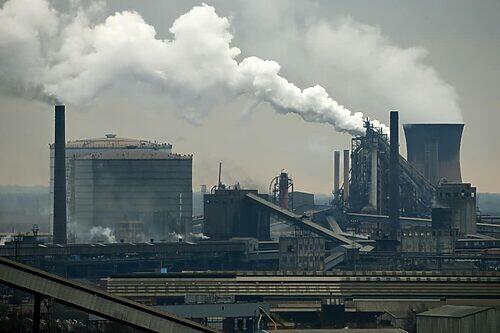

British Steel, a key player in the UK’s steel industry, recently unveiled plans to replace its traditional coal-powered blast furnaces with electric arc furnaces (EAFs) at its Scunthorpe and Teesside plants. Owned by the Chinese Jingye Group, the company aims to reduce carbon emissions significantly through this £1.25 billion green technology investment. However, the announcement has sparked warnings from trade unions about the potential loss of up to 2,000 jobs, casting a shadow over the future of steel workers and local economies. This article delves into the motivations behind British Steel’s green transition, the expected environmental benefits, the socio-economic impacts, and the crucial role of government support in shaping the future of UK steel manufacturing.
The Drive Towards Decarbonising UK Steel Production
Steel production has long been a carbon-intensive industry, with blast furnaces relying heavily on coal to extract iron from ore. British Steel’s move to electric arc furnace technology represents a significant shift aimed at reducing greenhouse gas emissions and aligning with the UK’s net-zero ambitions. The company’s plan to convert its Scunthorpe and Teesside plants to EAFs is part of a broader industry trend seeking cleaner, more sustainable steelmaking methods.
Electric arc furnaces operate by melting recycled steel scrap or direct reduced iron using electricity, which can be sourced from renewable energy. This process drastically cuts carbon dioxide emissions compared to traditional blast furnaces. British Steel estimates that the new technology could come online by late 2025, potentially transforming the environmental footprint of its operations and contributing to the UK’s climate targets.
Jingye Group’s £1.25 billion investment underscores the scale and seriousness of this decarbonisation effort. However, the company acknowledges that this transition depends heavily on receiving appropriate government support to be financially viable. As energy costs and infrastructure requirements pose significant challenges, state backing is critical to enabling this green transformation.
Economic and Employment Concerns Amidst the Transition
While the environmental benefits of switching to electric arc furnaces are clear, the potential impact on employment has caused alarm among trade unions and local communities. British Steel currently employs approximately 4,500 people nationwide, with a significant proportion based at the Scunthorpe site. Unions warn that up to 2,000 jobs could be at risk as the company phases out blast furnace operations.
The GMB trade union has voiced deep concerns about the potential social and economic repercussions, describing job losses of this magnitude as a devastating blow to the town of Scunthorpe and the broader steel sector. The shift to EAFs often requires fewer workers due to automation and changes in production processes, leading to fears of widespread layoffs.
British Steel has pledged to maintain current operations during the transition period to minimize disruption, but the uncertainty surrounding the scale and timing of job cuts remains a critical issue. Negotiations with unions have begun, but detailed plans on workforce restructuring have yet to be disclosed, keeping employees and communities on edge.
The Role of Government Support in Enabling Decarbonisation
The financial viability of British Steel’s green furnace project hinges on substantial government support. The UK government has acknowledged this need and negotiated what it describes as a “generous” funding package exceeding £300 million to aid British Steel’s emission-cutting initiatives. This funding aims to underpin the company’s efforts to transition while safeguarding jobs.
This support is part of a wider governmental commitment to securing a sustainable future for the UK steel sector, recognizing its importance to the economy and national security. The steel industry’s decarbonisation is a complex and capital-intensive process that requires collaboration between industry and government to succeed.
Comparisons have been drawn with Tata Steel’s £500 million government-backed funding for its Port Talbot electric arc furnace project in Wales. Despite this, Tata Steel still faces considerable workforce reductions, highlighting the challenges of balancing green industrial transformation with employment preservation.
Technological and Operational Challenges of Switching to Electric Arc Furnaces
Replacing blast furnaces with electric arc furnaces is not a straightforward process. Blast furnaces are designed to process iron ore directly, while EAFs primarily rely on steel scrap or direct reduced iron, which requires adjustments in raw material sourcing and supply chains. British Steel must navigate these operational complexities to ensure a smooth transition.
Moreover, the electric arc furnace technology demands a stable and affordable electricity supply, ideally from renewable sources, to maximize environmental benefits and keep production costs competitive. This necessitates infrastructure upgrades and close coordination with energy providers, adding layers of logistical and financial challenges.
The company’s CEO, Xijun Cao, has highlighted that attempts to decarbonise existing blast furnace operations were not viable, reinforcing the need for a fundamental shift in technology. Jingye Group’s prior £330 million investment in British Steel demonstrates a commitment to overcoming these challenges, but the path forward requires meticulous planning and stakeholder cooperation.
Community Impact and Local Economic Considerations
The Scunthorpe community, historically centered around steel production, faces uncertainty as British Steel moves toward electric arc furnace technology. Job losses could have significant ripple effects on local businesses, public services, and social cohesion. The potential for up to 2,000 redundancies heightens concerns about economic decline in the region.
Trade unions stress the need for robust support measures, including retraining programs, redeployment opportunities, and economic diversification initiatives to mitigate the adverse effects on workers and their families. Ensuring that the green transition does not come at the expense of community well-being is a key challenge for policymakers and the company alike.
Engagement with local stakeholders and transparent communication throughout the transition process will be critical in building trust and securing social license for the project. British Steel’s preliminary talks with unions signal initial steps, but sustained collaboration will be essential to address community concerns effectively.
The Strategic Importance of British Steel in UK Industry
British Steel remains a vital component of the UK’s industrial landscape, supplying steel to sectors including construction, automotive, and manufacturing. Its ability to produce lower-carbon steel domestically aligns with national goals to reduce reliance on imports and enhance industrial resilience.
The company’s ownership by the Chinese Jingye Group reflects globalisation trends in heavy industry, with foreign investment playing a crucial role in sustaining UK steel production. Jingye’s significant capital injection since acquiring British Steel in 2020 has helped stabilize operations and fund modernization efforts.
Maintaining competitive, environmentally sustainable steel production within the UK is strategically important for economic security, especially amid geopolitical uncertainties and supply chain disruptions. British Steel’s green furnace plans are a test case for balancing industrial competitiveness with environmental responsibility.
Future Outlook: Balancing Green Innovation and Workforce Stability
British Steel’s transition to electric arc furnaces represents a pioneering step toward greener steelmaking in the UK, with the potential to significantly reduce carbon emissions. However, the success of this initiative depends on harmonizing technological innovation with the socio-economic realities of the workforce and local communities.
As the industry evolves, continuous dialogue between the company, unions, government, and community stakeholders will be essential to navigate uncertainties and develop inclusive strategies that protect jobs and promote sustainable growth.
The coming years will reveal whether British Steel can achieve a viable, low-carbon production model that supports both environmental goals and the livelihoods of thousands of steelworkers, setting an example for the broader UK manufacturing sector.
Conclusion
British Steel’s ambitious move to adopt electric arc furnace technology marks a significant milestone in the UK’s journey toward a low-carbon steel industry. While the environmental benefits are promising, the potential impact on employment and local economies cannot be overlooked. Success will require robust government support, technological innovation, and strong collaboration with trade unions and communities. Navigating this complex transition effectively could position British Steel as a leader in sustainable steel production, but it will demand a delicate balance between green progress and protecting the livelihoods of thousands of workers.
Originally reported by gestyy.com. Adapted for our readers.