
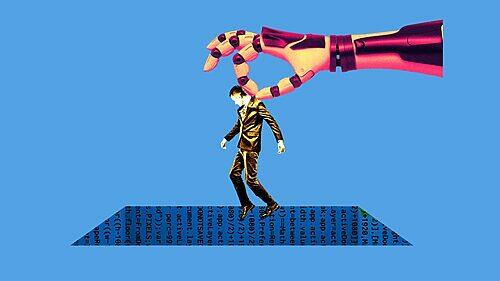

The irony is stark: a career spent advocating for artificial intelligence as a liberator of human potential ended with that same technology making the advocate redundant. This personal reckoning, shared by a former IBM Software Evangelist turned freelance writer, isn't just a cautionary tale—it's a roadmap. For freelancers and consultants in Nigeria and beyond, the rise of AI isn't a distant threat; it's reshaping how work is found, done, and valued today. Understanding this shift isn't about fearing the machine, but about adapting your craft, your pitch, and your resilience to stay indispensable in a gig economy where disruption is the only constant.
Recognising the New Reality of Disruption
The first step for any freelancer facing AI-driven change is acknowledgment without self-blame. As our source notes reveal, disruption isn't new—it's been grinding jobs for centuries, from bank clerks to factory workers. What's changed is the pace and the target: AI now threatens 'thinking tasks' like writing, analysis, and client communication, which many freelancers once considered safe. Accepting that this shift is systemic, not personal, frees up mental energy to focus on adaptation rather than resentment. In Nigeria's growing gig economy, where platforms like Upwork and Fiverr connect local talent to global clients, this awareness helps freelancers spot early warning signs—such as clients mentioning AI tools or sudden silence after years of steady work—and respond proactively before income dries up.
Crucially, this isn't about rejecting technology. The source author spent years promoting AI's benefits, from liberating employees from drudgery to enabling 'more meaningful work.' The lesson isn't to oppose AI but to understand where it excels and where human judgment remains irreplaceable. For Nigerian consultants advising SMEs on digital transformation, this means positioning yourself not as a replacement for AI tools, but as the guide who helps businesses integrate them wisely—ensuring automation serves people, not the other way around.
Future-Proofing Your Freelance Offer
When AI can generate competent drafts in seconds, competing on basic writing or data entry becomes a race to the bottom—exemplified by the $8/hour AI editing gigs mentioned in the source notes. The antidote is specialisation. Focus on niches where deep context, cultural nuance, or strategic thinking are non-negotiable. For Nigerian freelancers, this might mean leveraging local market knowledge to create content that resonates with Lagos or Abuja audiences in ways AI, trained primarily on Western data, cannot replicate. Consultants can shift from implementation to interpretation—helping clients not just deploy AI chatbots, but design conversation flows that reflect Nigerian English idioms and business etiquette.
Skill-building must evolve alongside AI. Rather than learning to use every new tool, invest in 'meta-skills': critical thinking, ethical judgment, and complex problem-solving. Take a course on AI ethics to advise clients on responsible deployment, or study behavioural economics to better understand how human clients make decisions—insights no algorithm can fully replicate. Platforms like Coursera and edX offer affordable options, and many Nigerian tech hubs host workshops on digital literacy. Remember, clients don't just buy output; they buy your ability to ask the right questions, anticipate pitfalls, and deliver trusted advice in uncertain times.
Mastering Client Conversations in the AI Era
AI has changed not just what freelancers do, but how clients perceive value. As the source notes describe, some clients accused the writer of using AI—implying that if a machine could do it, why pay a human? This demands a proactive approach to client management. Start conversations by educating clients on what AI *can't* do: grasp unspoken context, navigate organisational politics, or offer creative leaps based on lived experience. Use specific examples from your work—like how you revised a proposal after noticing subtle tension in a client's email, or how you adapted a training module for Nigerian corporate culture after observing workplace dynamics firsthand.
Transparency builds trust. If you *do* use AI tools ethically—for research, drafting outlines, or checking grammar—say so, and frame it as enhancing your human expertise, not replacing it. More importantly, shift pricing from time-based to value-based. Instead of charging per hour for writing, charge for the outcome: a document that secures funding, a process that saves 20 hours monthly, or content that increases engagement by 30%. This approach, increasingly viable in Nigeria's maturing freelance market, protects you from racing to the bottom and aligns your incentives with client success.
Finding Resilience in the Gig Economy
The source author's reference to 'Generation D'—a workforce defined by disruption—resonates strongly in Nigeria, where economic volatility and rapid tech adoption create both risk and opportunity. Resilience comes not from clinging to past roles, but from diversifying income streams. Consider combining retainer-based consulting with project-based freelance work, or creating digital products like templates or mini-courses that sell while you sleep. Many Nigerian freelancers find stability by serving both local clients (who value cultural understanding) and international ones (who often pay higher rates), creating a buffer against regional downturns.
Community is another anchor. Join freelancer associations, online forums, or local meetups—spaces like Lagos' Co-Creation Hub or Abuja's tech collectives—where you can share experiences, learn about emerging AI-resistant niches, and find solidarity. The gig economy can feel isolating, but collective wisdom helps individuals spot trends early: which platforms are devaluing work due to AI flooding, which clients are investing in human-AI collaboration, and where demand for uniquely human skills is growing. In a world where algorithms move fast, human networks move smarter.
What this means
The story of the AI evangelist made obsolete by their own advocacy is not an endpoint—it's a call to evolve. For freelancers and consultants in Nigeria and worldwide, the rise of AI doesn't signal the end of human work; it signals the need to redefine what makes that work valuable. By embracing specialisation, communicating your irreplaceable human value, and building adaptive careers, you don't just survive disruption—you help shape a future where technology serves human potential, rather than the reverse. The tools will keep changing, but the demand for trustworthy, insightful, and culturally intelligent professionals remains. That's where your opportunity lies.
Originally reported by corneey.com. Adapted for our readers with AI assistance.


