
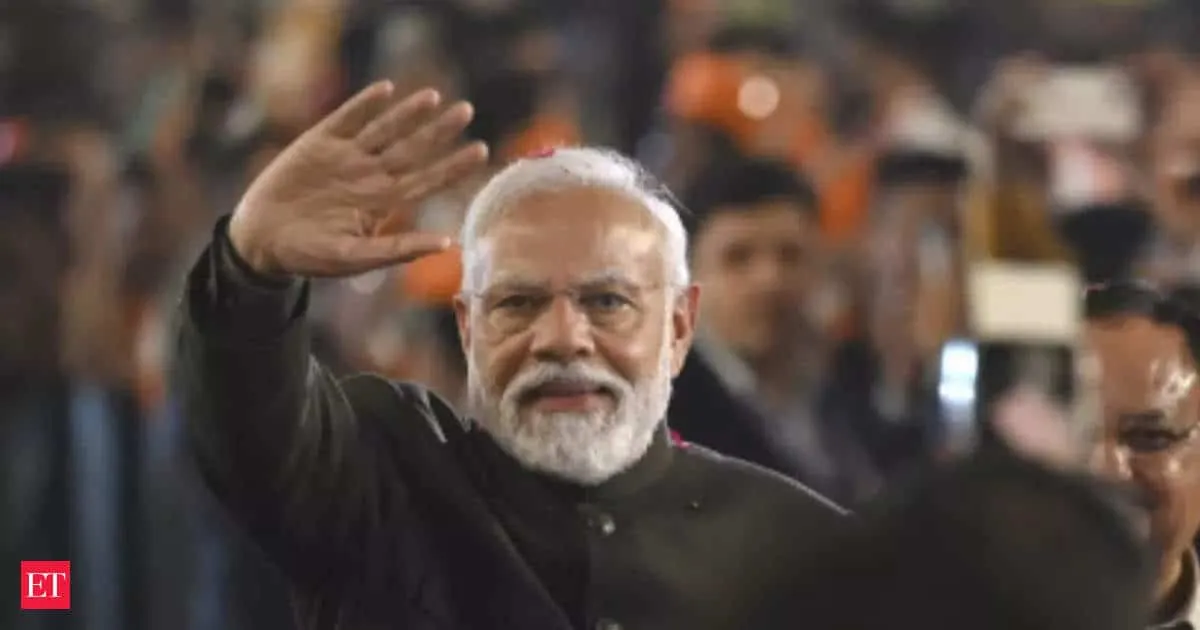

As India approaches a pivotal electoral phase, the debate around employment and job creation remains central to public discourse. While opposition parties raise concerns about unemployment, Prime Minister Narendra Modi presents compelling evidence of India’s flourishing job market. Highlighting significant growth in tax filings, formal sector employment, startup ecosystems, and manufacturing, Modi underscores the government’s commitment to creating sustainable jobs and fostering economic self-reliance. This article delves into the multifaceted dimensions of India’s employment growth, reflecting on data, government initiatives, and future prospects, as articulated by PM Modi.
Rising Employment Indicators: A Quantitative Overview
Prime Minister Narendra Modi emphasizes that multiple employment indicators demonstrate India’s progressive job creation. One of the most striking metrics is the surge in individual taxpayers filing returns, which has more than doubled from 3.36 crore in 2013-14 to 8.18 crore in 2023-24. This growth reflects not only increased income levels but also a broadening formal economy where more citizens contribute to the tax base.
The Employee Provident Fund Organisation (EPFO) data further corroborates this trend. Over six crore new EPFO subscribers have been added in the last seven years, signaling a significant rise in formal sector employment, particularly among the youth. This formalization of jobs ensures social security benefits for workers, marking a positive development in the quality of employment.
Additionally, the Periodic Labour Force Survey (PLFS) reveals an increase in the worker population participation rate to over 56% between 2017 and 2023. Unemployment rates have simultaneously dropped to a historic low of 3.2%, underscoring a robust labor market. These statistics collectively paint a picture of an expanding and inclusive job market under Modi’s tenure.
Viksit Bharat: A Vision for Inclusive Growth and Opportunities
PM Modi’s vision of 'Viksit Bharat' or Developed India is a cornerstone of his employment narrative. He envisions a nation where social barriers, economic status, or birth circumstances do not limit individual aspirations. According to Modi, every Indian should have the freedom and opportunity to dream big and achieve success, fostering an inclusive growth environment.
This vision translates into policies and initiatives aimed at empowering marginalized communities, youth, and women, enabling them to participate actively in the economy. By promoting skill development, entrepreneurship, and digital literacy, the government is working to dismantle traditional barriers to employment and economic participation.
Ultimately, Viksit Bharat represents an India where economic growth is sustained, poverty is eradicated, and prosperity is shared. Modi’s emphasis on inclusive development seeks to create a workforce that is diverse, skilled, and empowered, driving the nation towards greater socio-economic equity.
The Startup Ecosystem: Catalyzing Job Creation and Innovation
India’s startup ecosystem has witnessed an unprecedented boom over the past decade, a development PM Modi highlights as a major contributor to job creation. From a handful of startups in 2014, the country now boasts nearly 1.37 lakh startups in 2024, making it the third-largest startup economy worldwide.
This vibrant startup culture has given rise to over 100 unicorns, reflecting strong investor confidence and innovative potential. Startups are not only generating direct employment but also creating ancillary jobs in sectors like technology, logistics, marketing, and finance, multiplying their impact on the job market.
The government’s supportive policies, such as the Startup India initiative and Mudra loan scheme, have empowered entrepreneurs by providing easier access to finance and regulatory support. Over the last ten years, Modi’s administration has focused not just on job seekers but also on nurturing job creators, fostering an entrepreneurial ecosystem that fuels economic growth and employment.
Manufacturing Sector: Driving Employment and Self-Reliance
Manufacturing has been a key focus area for job creation under PM Modi’s leadership, particularly through the 'Make in India' initiative. The transformation of the mobile manufacturing industry exemplifies this progress. Where once India had only two mobile manufacturing units and imported over 90% of its phones, today there are more than 200 manufacturing units, making India the world’s second-largest mobile phone exporter.
Similarly, traditional sectors like toy manufacturing have experienced a renaissance. Local artisans, once overlooked, are now gaining global recognition, with toy imports declining by 52% and exports rising by 239% since 2014. This growth not only preserves indigenous crafts but also creates sustainable livelihoods.
The semiconductor industry is another emerging pillar of manufacturing-led employment. Rapid strides in semiconductor manufacturing reflect India’s ambition to become a global technology hub. These developments align with the broader Aatmanirbhar Bharat (self-reliant India) vision, emphasizing domestic production and reducing import dependence, thereby generating quality jobs across the value chain.
Government Schemes Empowering Entrepreneurs and Small Businesses
The government has implemented several schemes aimed at empowering micro, small, and medium enterprises (MSMEs), which are critical for job creation. The Mudra loan scheme, for instance, provides loans up to Rs 10 lakh to non-corporate, non-farm small businesses, enabling entrepreneurs to start or expand ventures without excessive financial burdens.
This financial inclusion has led to the establishment of millions of small enterprises that contribute significantly to employment, especially in rural and semi-urban areas. By facilitating easier access to credit, the government has fostered a culture of entrepreneurship, reducing reliance on traditional employment avenues.
Complementing financial aid, skill development programs and digital platforms have been launched to enhance the capabilities of small business owners. These initiatives ensure that MSMEs remain competitive and sustainable, thus contributing to long-term job creation and economic resilience.
Youth Employment and Skill Development Initiatives
Recognizing the demographic dividend that India possesses, the Modi government has prioritized youth employment through comprehensive skill development programs. Schemes such as Skill India aim to equip millions of young people with industry-relevant skills, improving their employability in diverse sectors.
The integration of digital technology in education and vocational training has expanded opportunities beyond traditional classrooms. Online platforms and collaborations with private industry facilitate flexible, accessible learning, tailored to evolving job market demands.
Additionally, government emphasis on apprenticeships and on-the-job training bridges the gap between education and employment. These initiatives not only provide immediate job opportunities but also prepare the youth for future challenges, making India’s workforce more agile and competitive globally.
Innovation and Research & Development Driving Future Jobs
Innovation has become a central pillar in India’s job creation strategy. PM Modi highlights that startups have registered over 12,000 patents, and the country received a record 90,300 patent applications last year alone. This surge in intellectual property filings indicates a growing culture of research and development (R&D).
Government support for R&D, through funding and infrastructure, has empowered startups and established companies to innovate in sectors such as technology, pharmaceuticals, and renewable energy. These innovations create high-value jobs requiring specialized skills, contributing to the quality of employment.
By fostering a knowledge-driven economy, India aims to transition from traditional job creation to generating roles that are sustainable, future-ready, and globally competitive. This strategy aligns with the broader vision of making India a hub for cutting-edge technology and innovation.
Challenges and the Road Ahead for Employment in India
Despite significant progress, challenges remain in ensuring equitable job growth across all sectors and regions. Informal employment, underemployment, and skill mismatches continue to affect parts of the workforce, requiring targeted interventions to bridge gaps.
The government’s focus on digital inclusion, rural development, and infrastructure expansion aims to decentralize economic opportunities, bringing jobs closer to underserved populations. Continued policy innovation and public-private partnerships will be essential to sustain momentum.
Looking ahead, India’s employment growth will depend on balancing rapid industrialization with environmental sustainability, enhancing education quality, and fostering an entrepreneurial culture. PM Modi’s vision of a Viksit Bharat provides a roadmap for inclusive, resilient, and dynamic job creation in the coming decades.
Conclusion
Under Prime Minister Narendra Modi’s leadership, India has made remarkable strides in job creation across multiple sectors, supported by data-driven indicators and transformative government initiatives. The vision of Viksit Bharat encapsulates an inclusive, opportunity-rich economy where every citizen can aspire to success. With a robust startup ecosystem, manufacturing revival, and focus on skill development and innovation, India is well-positioned to harness its demographic dividend and emerge as a global employment powerhouse. While challenges persist, sustained policy efforts and economic reforms continue to pave the way for a resilient and prosperous job market that benefits all strata of society.
Originally reported by economictimes.indiatimes.com. Adapted for our readers.