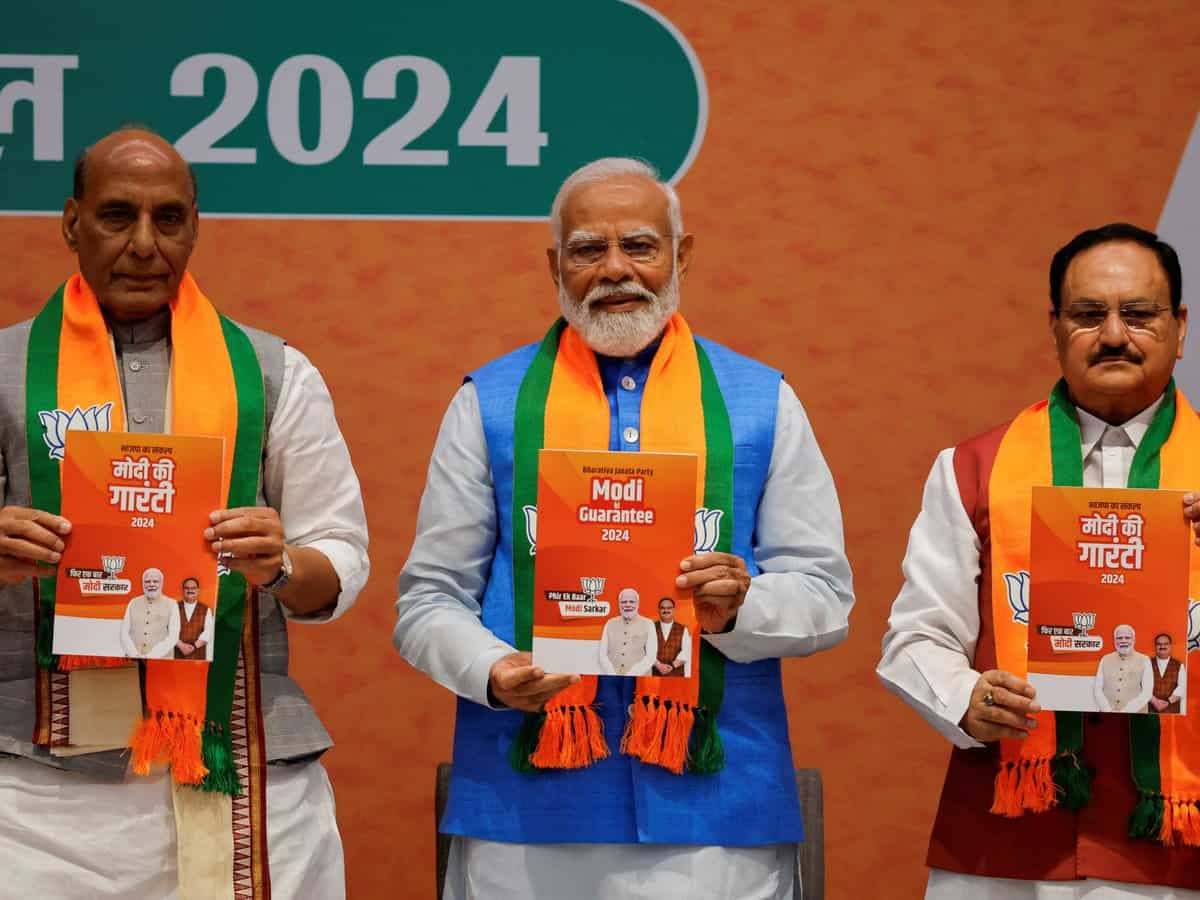

As India gears up for its marathon general election starting April 19, Prime Minister Narendra Modi’s Bharatiya Janata Party (BJP) has released its much-anticipated manifesto titled 'Modi’s Guarantee.' The manifesto outlines ambitious plans to create jobs, boost infrastructure, expand welfare schemes, and introduce a uniform civil code to promote gender equality across the nation. With the country’s population exceeding 1.4 billion and a youthful demographic eager for economic opportunities, these promises aim to address pressing voter concerns like unemployment, inflation, and rural distress. This article delves into the manifesto’s major commitments, the socio-political implications of the common civil code, and the challenges Modi’s government faces in its pursuit of a third term.
Job Creation and Economic Growth as Cornerstones
Central to the BJP’s manifesto is a strong emphasis on job creation, a critical issue for India’s vast youth population. The party pledges to generate millions of employment opportunities by attracting domestic and foreign investments, fostering entrepreneurship, and strengthening the manufacturing and service sectors. Modi’s government aims to expand India’s economy from its current $3.7 trillion to a staggering $5 trillion by 2027, positioning the country as a global economic powerhouse.
The manifesto underscores the importance of improving the quality of life through sustainable economic growth. It highlights initiatives to enhance skill development and vocational training, ensuring that the workforce is equipped to meet industry demands. By focusing on sectors like information technology, renewable energy, and infrastructure, the BJP intends to create a diversified job market that can absorb the increasing number of job seekers.
Despite India’s impressive economic growth in recent years, unemployment remains a top voter concern. Surveys reveal that 27 percent of voters consider unemployment their primary issue, followed closely by inflation and rural distress. Addressing these challenges will be pivotal for the BJP as it seeks a third consecutive term, making job creation not just an economic priority but a political imperative.
Infrastructure Development: Building India’s Future
Infrastructure development features prominently in the BJP’s manifesto, with promises to expand roads, railways, airports, and digital connectivity. The party envisions a modern India with world-class infrastructure that can support rapid urbanization and economic growth. Investments in infrastructure are expected to stimulate job creation and improve the overall business environment.
The manifesto also highlights the importance of rural infrastructure, aiming to improve access to clean water, sanitation, and electricity. By enhancing rural connectivity and facilities, the BJP plans to bridge the urban-rural divide and uplift millions living in underserved regions. These efforts are designed to reduce migration pressures on cities and promote balanced regional development.
Digital infrastructure is another key focus area, with commitments to expand internet access and promote digital literacy across the country. The BJP sees the digital economy as a critical driver of future growth and job creation, enabling India to harness the potential of emerging technologies and innovation.
Expanding Welfare Programs for Inclusive Growth
The BJP manifesto promises to broaden the reach of welfare schemes to ensure social security and health benefits for all citizens, especially the vulnerable. One notable pledge is to extend free health insurance coverage to all Indians above 70 years of age, enhancing access to healthcare for the elderly population. This aligns with the government’s broader goal of improving public health infrastructure and outcomes.
Another significant welfare initiative involves increasing the availability of piped cooking gas connections to every household. This move aims to improve living standards, reduce pollution from traditional cooking fuels, and promote health and environmental benefits. Such welfare expansions are designed to reinforce the party’s commitment to inclusive development and social justice.
The manifesto also emphasizes financial inclusion through schemes that support small businesses, farmers, and marginalized communities. By providing direct benefits and facilitating access to credit, the BJP seeks to empower citizens economically and reduce poverty, thereby fostering a more equitable society.
The Promise of a Common Civil Code
One of the most significant and controversial promises in the BJP’s manifesto is the introduction of a common civil code (UCC). The party argues that a uniform set of laws governing personal matters such as marriage, divorce, and inheritance is essential for achieving gender equality and protecting the rights of all women across India’s diverse religious communities.
Currently, India’s personal laws vary according to religious customs, resulting in disparities in women’s rights. For example, Hindu inheritance laws provide equal rights to sons and daughters, whereas Muslim daughters receive only a fraction of what male heirs inherit. The BJP’s call for a UCC seeks to standardize these laws, ensuring equal treatment under the law regardless of religion.
While proponents view the UCC as a progressive reform, critics fear it could threaten India’s secular fabric by interfering with religious freedoms. Minority communities, especially Muslims, worry that the code might erode their cultural identity and autonomy. The BJP’s manifesto carefully navigates this sensitive issue by emphasizing gender justice while avoiding direct references to specific religions.
Political Context and the Road to the 2024 Election
Prime Minister Narendra Modi is widely expected to secure a record-equalling third term, riding on a decade-long record of economic growth, infrastructure projects, and welfare expansions. His leadership is characterized by a blend of development-focused governance and assertive Hindu nationalism, which continues to polarize public opinion.
The 2024 general election, spanning seven phases from April 19 to June 1, is one of the largest democratic exercises globally. With over 900 million eligible voters, the election outcomes will shape India’s political trajectory for years to come. Modi and the BJP face the challenge of addressing persistent issues like unemployment, inflation, and rural distress amid rising political competition.
Surveys indicate that while Modi retains significant popularity, voter concerns about economic hardships and social inequalities remain high. The BJP’s manifesto attempts to address these issues through ambitious promises, but the party must also contend with criticism over its handling of minority rights and democratic freedoms.
Gender Equality and Women’s Rights in the Manifesto
The BJP manifesto places strong emphasis on gender equality, linking it directly to the introduction of the common civil code. The party argues that uniform laws will eliminate discriminatory practices that currently disadvantage women in various communities, thereby promoting social justice and empowerment.
Beyond legal reforms, the manifesto includes commitments to improve women’s safety, health, and economic participation. Initiatives to increase women’s access to education, skill development, and entrepreneurship are highlighted as vital components of the party’s vision for an inclusive India.
However, critics caution that legal changes alone may not suffice without broader societal shifts. They emphasize the need for comprehensive measures addressing cultural norms, violence against women, and equal representation in political and economic spheres. The manifesto’s success in advancing women’s rights will depend on effective implementation and societal acceptance.
Challenges and Criticisms Facing the BJP
Despite its ambitious promises, the BJP faces significant challenges both politically and socially. Critics argue that the party’s Hindu nationalist agenda risks undermining India’s secular democracy, citing incidents of communal violence and restrictions on dissent. The proposed common civil code is viewed by some as an attempt to impose majority norms on minority communities.
Economic challenges such as unemployment and inflation continue to affect millions, particularly in rural areas. While the manifesto promises job creation and welfare expansions, skeptics question the feasibility of these goals given global economic uncertainties and domestic constraints.
Media freedom and civil liberties have also been areas of concern, with reports of shrinking space for independent journalism and activism. The BJP’s approach to governance and public discourse will likely remain a focal point of debate during and after the election.
Looking Ahead: India’s Path to 2047
The BJP’s manifesto articulates a long-term vision of transforming India into a developed nation by 2047, marking 100 years of independence. This vision encompasses economic prosperity, social equity, technological advancement, and a strong national identity.
Achieving this ambitious goal will require sustained efforts in infrastructure development, education, innovation, and governance reforms. The manifesto’s promises reflect an attempt to set the foundation for this future, addressing immediate voter concerns while outlining a roadmap for progress.
As India stands at a critical juncture, the coming election will determine not only the direction of its government but also the pace and nature of its development. The BJP’s manifesto offers a glimpse into the party’s priorities, but the realization of these promises will depend on political will, public support, and effective policy execution.
Conclusion
The BJP’s 2024 election manifesto presents a comprehensive agenda combining economic development, social welfare, and legal reform. By promising job creation, infrastructure expansion, and a common civil code, the party aims to address core voter concerns while advancing its vision for a modern, equitable India. However, the manifesto also highlights the delicate balance between reform and cultural sensitivities, especially regarding religious laws and minority rights. As India embarks on this pivotal election, the success of these promises will depend on the government’s ability to navigate complex social dynamics and implement policies effectively. The coming months will be decisive in shaping India’s political landscape and its aspirations for the future.
Originally reported by aljazeera.com. Adapted for our readers.