
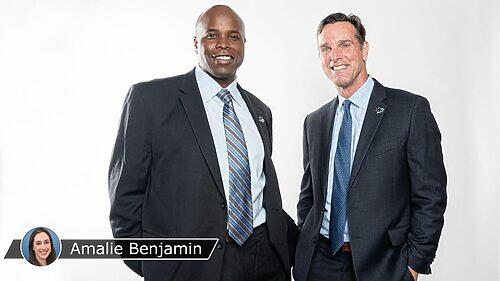

When David Quinn and Mike Grier sat down at their first press conference as coach and general manager of the San Jose Sharks, their shared Boston University background became an immediate talking point. Yet beyond the nostalgia of their Terrier days lies a deeper lesson for professionals navigating today's freelance and consulting landscape: the power of shared philosophy, mutual respect, and relationship-driven leadership. In an era where remote work dominates and client trust is paramount, understanding how these hockey leaders built their partnership provides a practical framework for freelancers and consultants aiming to build sustainable careers. Their story isn't just about hockey—it's about how alignment in values and approach can create resilience during transitions, a skill equally vital when managing multiple clients, adapting to remote work trends, or positioning yourself in competitive global markets.
The Foundation of Shared Philosophy
Quinn and Grier's connection began long before their NHL reunion, rooted in their time at Boston University under legendary coach Jack Parker. What started as casual hockey conversations during summer workouts evolved into a profound alignment in how they view the game, player development, and team dynamics. This mirrors the consultant-freelancer relationship where technical skills alone aren't sufficient—clients seek partners whose approach to problem-solving, communication, and values aligns with their own. For independent professionals, this means moving beyond showcasing credentials to articulating your core philosophy: How do you approach challenges? What principles guide your client interactions? When these fundamentals match a client's organisational culture, collaboration becomes more intuitive and productive.
The Sharks leadership emphasises that their connection isn't about avoiding disagreement but about having a common starting point for constructive dialogue. Quinn noted their 'respectful disagreements' stem from seeing the game 'in a very similar way.' For freelancers, this translates to welcoming client feedback as a refinement tool rather than a threat. When you and your client share underlying principles about quality, timelines, or communication styles, differences in execution become opportunities for growth rather than sources of friction. This is particularly crucial in remote work settings where non-verbal cues are limited and misunderstandings can escalate quickly.
Building this alignment takes intentionality. Just as Quinn and Grier spent years observing each other's approaches—Quinn watching BU practices, Grier engaging in hockey discussions—freelancers can cultivate philosophical alignment by asking probing questions during client onboarding: 'What does success look like for you?' 'How does your team prefer to communicate?' 'What values are non-negotiable in your work?' These conversations establish the trust foundation that makes navigating inevitable challenges smoother.
Relationship-Driven Leadership in Practice
Quinn's teaching philosophy centres on being 'relationship-driven,' stating plainly: 'If you do not have a connection to the individuals that you're leading… you are not going to get the most out of them.' This principle cuts across industries and work arrangements. For consultants managing remote teams or freelancers juggling multiple client projects, investing in genuine connections isn't soft skill fluff—it's a performance multiplier. When clients feel understood and valued, they're more likely to share honest feedback, advocate for your services internally, and extend contracts beyond the initial scope.
The Sharks' approach extends beyond the NHL roster to their AHL affiliate, where Quinn hired John McCarthy—a former player under Quinn's BU coaching—to lead the Barracuda. This deliberate creation of coaching continuity across organisational levels mirrors how successful freelancers build ecosystems around their work. Consider developing trusted subcontractor networks or collaborating with complimentary specialists whose working styles you know well. When you bring in someone you've previously collaborated with, as Quinn did with McCarthy, you reduce onboarding friction and increase predictability—valuable traits when managing complex, multi-stakeholder projects common in consulting engagements.
Practical application for independent professionals includes: scheduling regular check-ins that go beyond project updates to discuss professional goals; remembering personal details that show you see clients as people, not just revenue streams; and creating feedback loops where clients feel safe sharing concerns early. In the gig economy, where reputation travels fast, these relationship investments compound over time, turning one-off projects into ongoing partnerships.
Navigating Transition with Realistic Optimism
Both Quinn and Grier acknowledge the Sharks' rebuilding phase won't be easy—missing the playoffs for three seasons, losing key veterans, and facing scoring challenges. Yet their outlook balances realism with determination: 'We're going to push, try and make the playoffs. If we don't, we know we'll have been competitive all season long.' This mindset offers a vital lesson for freelancers and consultants operating in volatile markets. Success isn't always binary (made the playoffs/didn't); it's also about measurable progress, effort integrity, and laying groundwork for future wins.
For independent professionals, this translates to setting nuanced success metrics beyond immediate income. Did you develop a new skill during a challenging project? Did you strengthen a client relationship that may yield future work? Did you maintain professional standards even when circumstances were difficult? Quinn's insight about incremental improvement—'If we can get everybody to be just a little bit better… that's the difference between making the playoffs and not'—applies powerfully to freelancer growth. Small, consistent upgrades in your technical abilities, communication clarity, or business processes compound significantly over time.
This perspective also combats the perfectionism that can paralyse independent workers. You don't need to transform a client scoring 2.5 goals per game into a 40-goal threat overnight. Focus instead on helping clients (and yourself) execute existing capabilities 5-10% better. In consulting terms, this might mean refining a report's actionability, improving meeting facilitation, or streamlining a process by eliminating one redundant step. These modest gains, replicated across projects, build your reputation for reliable, incremental value—exactly what clients seek in uncertain economic climates.
What this means
The Boston University bond between Quinn and Grier offers more than a feel-good sports story—it provides a transferable blueprint for thriving in today's freelance and consulting landscape. Their emphasis on shared philosophy, relationship-driven leadership, and realistic optimism through transitions speaks directly to the challenges and opportunities facing independent professionals globally. Whether you're based in Lagos, London, or working remotely for clients across time zones, the principles remain constant: align on fundamentals with your clients, invest in genuine connections, measure progress by your own growth metrics, and understand that sustainable success is built incrementally. In an economic climate where adaptability is currency, these hockey-tested approaches to trust, communication, and steady improvement offer freelancers and consultants a practical path toward resilient, fulfilling careers. The next time you engage with a client, consider not just what you'll deliver, but how you'll connect—because as Quinn and Grier discovered years ago on those BU summer mornings, the strongest professional foundations are often forged in the seemingly small moments of mutual understanding.
Originally reported by ceesty.com. Adapted for our readers with AI assistance.


