
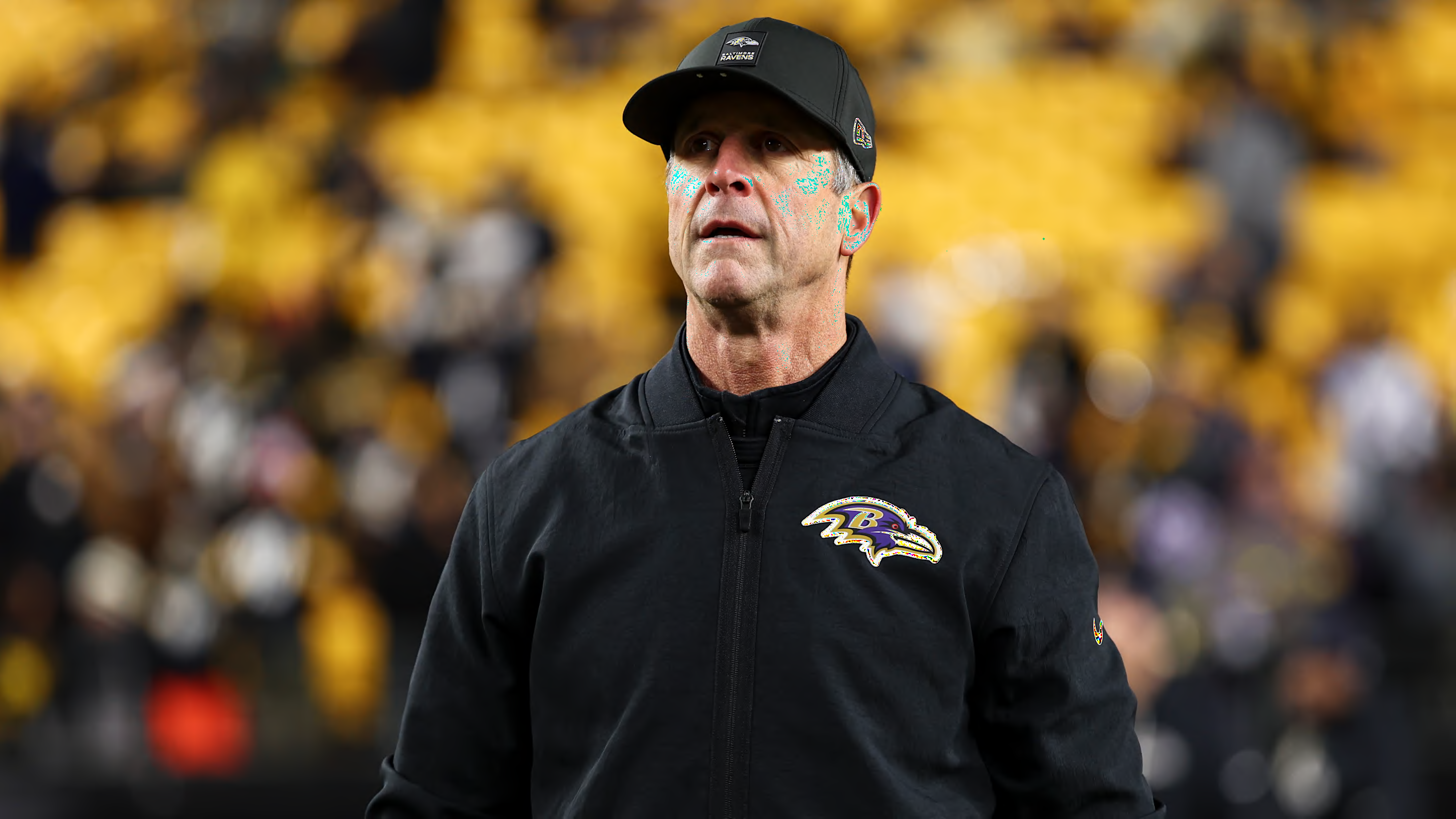

Imagine making plans with a friend, only for a more appealing invitation to land the same day. That tension is likely familiar to newly hired New York Giants head coach John Harbaugh and new Atlanta Falcons head coach Kevin Stefanski. The Buffalo Bills fired Sean McDermott on Monday following the Divisional Round, suddenly making the chance to coach Josh Allen and a potential Super Bowl contender available. The situation is not that simple, though. General manager Brandon Beane is staying in Buffalo, and many view him as at least part of the problem—if not the ringleader—behind a questionably built roster. Still, Allen has spent years trying to break through to the Super Bowl, and it is fair to wonder whether Harbaugh and Stefanski are quietly regretting not waiting, even though no one could have known the job was coming.
Harbaugh and the Giants: A Better Situation Than Buffalo?
When comparing Harbaugh’s fit with the Giants to what he might have found in Buffalo, the level of regret may be lower than it first appears. Both organizations face questions at general manager, with Giants fans hardly united behind Joe Schoen just as Bills fans are skeptical of Beane. However, Harbaugh’s reported power structure in New York largely supersedes the GM, which is a meaningful advantage.
There is even a case that the Giants are more enticing than the Bills right now, despite Buffalo having Josh Allen. Harbaugh would surely enjoy moving from one MVP-winning quarterback to another, but there is no guarantee that rookie Jaxson Dart ever reaches that tier. Meanwhile, New York’s overall core looks better positioned for future success. Dart is a potential franchise quarterback on a rookie contract, and the defense features a promising young line with Abdul Carter, Brian Burns, and Kayvon Thibodeaux for at least another year. Offensively, Malik Nabers and Cam Skattebo provide skill-position talent. The offensive line and secondary clearly need work, yet the Giants also have a defined direction.
By contrast, Buffalo’s path is murkier with Beane still in charge. Allen is phenomenal and has a real argument as the league’s best quarterback. Around him, James Cook is excellent and the offensive line is good but not great. Beyond that, the roster has immense holes. The defense needs a wholesale restructure, and the wide receiver room is among the worst in the league. Harbaugh may briefly imagine what he could do with Allen, but when he honestly compares the two jobs, the Giants opportunity looks like the one he should prefer.
Stefanski and the Falcons: A Clearer Ceiling in Buffalo?
The same logic does not necessarily apply to Kevin Stefanski in Atlanta. The one clear advantage he holds is the division. The NFC South is extremely winnable and has been for years, so the chance to take the division throne is real. Whether the Falcons actually have the pieces to do it is far less certain.
The biggest variable is Michael Penix Jr. Atlanta took a massive risk by drafting him eighth overall immediately after signing Kirk Cousins, and the outcome has not been ideal. Penix has not matched his Washington Huskies form, and legitimate questions remain about whether he can be the long-term answer. The Falcons did invest aggressively in edge rushers last offseason, and their skill positions are far stronger than Buffalo’s. Still, the defense is not fully formed, and the quarterback gap from Allen to Penix is almost incalculable.
For an offensive mind like Stefanski, a proven star at quarterback would have been the superior landing spot. Pairing him with Bijan Robinson and Drake London could be fun and perhaps successful, but quarterback remains the most important position on the field. Because of that, Stefanski’s ceiling for what he can accomplish would likely have been higher in Buffalo than it will be in Atlanta.
Lessons for Evaluating Timing and Opportunity
The dilemma facing Harbaugh and Stefanski illustrates a broader career truth: the most attractive-looking opening is not always the best fit once context is weighed. Harbaugh landed in a situation where his authority, a young quarterback on a cheap contract, and a promising defensive core may outweigh the appeal of coaching an elite passer in a front office many distrust. Stefanski, on the other hand, stepped into a weaker division but also into far greater quarterback uncertainty.
Both cases show that evaluating an opportunity requires looking past the headline attraction. Roster construction, organizational power structure, divisional competition, and the presence—or absence—of a foundational player all shape how high a coach can realistically climb. Timing matters, but so does fit.
What this means
Harbaugh and Stefanski are almost certainly not publicly second-guessing their decisions, but the Bills vacancy invites natural speculation. For Harbaugh, the Giants may actually offer the better blend of control, young talent, and clear direction. For Stefanski, the Falcons provide a winnable division yet also a far riskier quarterback situation. Neither scenario is perfect, and neither proves that waiting would have guaranteed success. The lesson is familiar: the shiniest opportunity is not always the right one, and the most valuable career moves come from judging the full situation rather than chasing a single headline attraction. In a league where quarterback quality, front-office stability, and roster depth determine championships, both coaches may have landed exactly where they needed to be—or close to it.
Originally reported by fansided.com. Adapted for our readers with AI assistance.


