
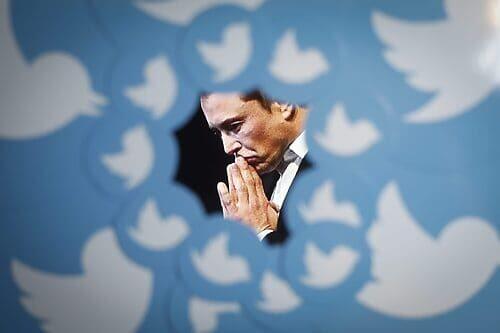

When Elon Musk acquired Twitter, he immediately began restructuring the company, laying off over 3,000 employees in his first week. This was followed by an ultimatum giving remaining staff just under 36 hours to commit to building "a breakthrough Twitter 2.0" or resign. For the approximately 300 Twitter employees working under H-1B visas, this created an especially dire predicament: either accept an uncertain future at the company or risk losing their jobs and having to leave the United States within 60 days. The convergence of rapid workforce reduction, leadership uncertainty, and immigration constraints placed extraordinary pressure on a subset of the workforce whose livelihoods and legal residency were suddenly intertwined with corporate decisions beyond their control.
The H-1B Visa Precarious Position
The H-1B program allows highly skilled foreign workers in fields like architecture, engineering, and economics to work temporarily in the United States. Many major tech companies, including Twitter (now X), Amazon, and Meta, rely on this program to recruit global talent that might otherwise be unavailable domestically. These visas are employer-sponsored, meaning the worker's legal status in the country is directly tied to their continued employment with the sponsoring company.
Under current regulations, H-1B workers who lose their jobs have only 60 days to find a new employer willing to sponsor their visa or must depart the country. This timeline creates immense pressure, particularly during mass layoffs when hundreds of skilled workers simultaneously compete for limited positions. The clock starts ticking immediately upon termination, leaving little room for error in an already competitive job market.
For Twitter's H-1B employees, Musk's rapid workforce reduction and abrupt ultimatum eliminated any meaningful buffer period, forcing life-altering decisions with minimal notice. Unlike colleagues who could weigh options over weeks or months, visa holders faced an accelerated timeline where hesitation risked not just unemployment but potential deportation and separation from families, homes, and communities built in the United States.
This structural vulnerability exists beyond Twitter's walls. The tech industry's reliance on H-1B workers means similar pressures affect immigrant employees across Silicon Valley and beyond whenever companies undergo restructuring, leadership changes, or economic downturns. What played out publicly at Twitter reflects a broader pattern where immigration policy intersects with corporate volatility to create unique challenges for foreign-born talent.
Worker Perspectives and Ethical Dilemmas
Research by David Widder, a PhD student in Computer Science at Carnegie Mellon University, reveals how visa constraints compound workplace ethical concerns. Widder interviewed over 100 software engineers who described feeling unable to voice objections to company practices for fear of retaliation, particularly when those practices conflicted with personal values or professional ethics.
One engineer explained that H-1B workers often "need to find something [a job] within a very short period of time or actually have to leave the country. And when that happens, you end up taking whatever is available." This creates a power imbalance where employees may tolerate unsatisfactory or ethically questionable conditions rather than risk unemployment and deportation. The fear isn't abstract—it's grounded in real consequences affecting housing, healthcare, and family stability.
Widder emphasizes that his research does not blame workers for staying silent but instead examines "why that is hard to do and what sort of systemic factors and unfair factors make that hard to do," highlighting the structural vulnerabilities of the visa system. His work shifts focus from individual courage to collective responsibility, asking how organizations and policymakers might redesign systems to reduce coercive pressures on immigrant workers.
The psychological toll extends beyond immediate job concerns. Employees reported anxiety about speaking up in meetings, reluctance to negotiate for better conditions, and hesitation to pursue professional development opportunities that might be perceived as disengagement. This climate of apprehension, Widder argues, diminishes workplace psychological safety and ultimately harms both employee well-being and organizational effectiveness.
Responses and Organizing Efforts
Despite the pressure, some Twitter employees have sought collective action. In the UK, approximately one-third of the workforce is represented by the trade union Prospect, which has requested meetings with company leadership to discuss employee concerns about the platform's future. This representation reflects different labor protections available in various countries and highlights how geographic location influences workers' ability to organize.
In the United States, former employees have filed a class-action lawsuit alleging that Twitter violated labor and California state laws by failing to provide required advance notice or severance pay to terminated workers. The lawsuit specifically references the Worker Adjustment and Retraining Notification (WARN) Act, which requires employers to provide 60 days' notice before mass layoffs—a provision that would have been particularly relevant for H-1B workers navigating visa timelines.
Widder suggests that recognizing collective power could improve workers' positions, noting that "the work doesn't get done without them" and that solidarity among employees—whether through unionization or mutual support—represents a key avenue for leveraging influence in precarious situations. His research participants emphasized that software systems require constant maintenance and improvement, giving workers inherent leverage that is often overlooked in discussions about replaceability in tech roles.
Beyond formal organizing, informal networks have emerged among visa holders sharing job leads, immigration advice, and emotional support. These ad hoc mutual aid efforts demonstrate how workers adapt to systemic constraints while maintaining dignity and community. Some have explored concurrent filing options or portability provisions that might allow visa transfers under certain conditions, though awareness of such mechanisms varies widely among affected employees.
What this means
The situation at Twitter following Musk's takeover illustrates how immigration policies can amplify workplace power imbalances, particularly during periods of corporate upheaval. For highly skilled workers on temporary visas, employment decisions carry consequences that extend far beyond professional considerations to include family stability, healthcare access, and the ability to remain in their adopted country. While individual workers may feel constrained by these realities, the experiences of Twitter employees highlight both the need for systemic reforms to reduce visa-related precarity and the potential power of collective action when workers recognize their shared interests and mutual dependence on each other's labor.
Originally reported by gestyy.com. Adapted for our readers with AI assistance.


