
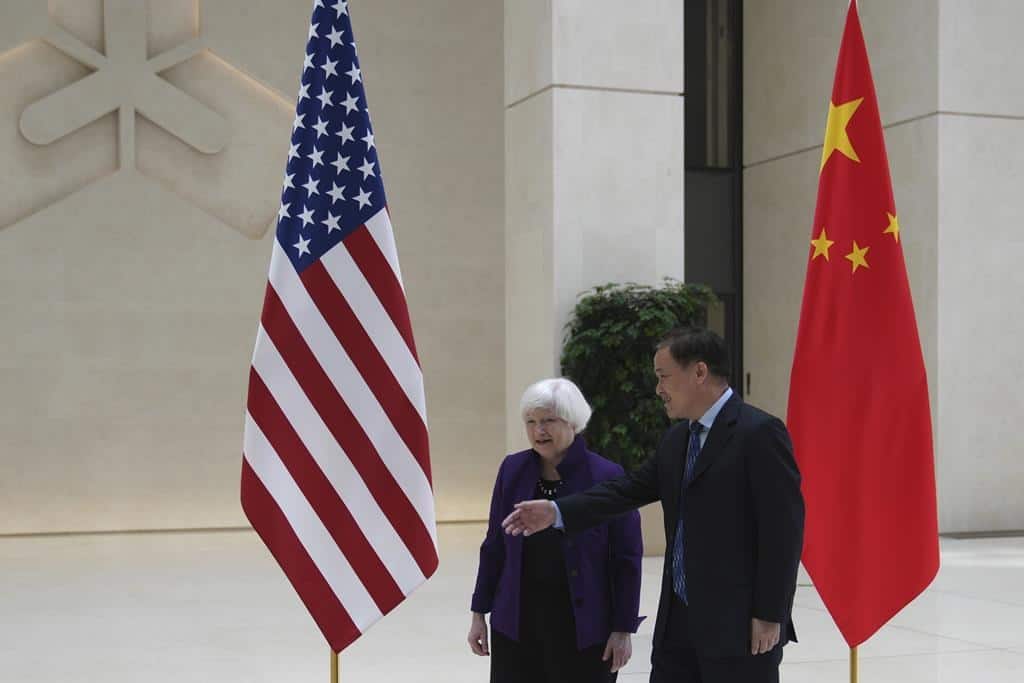

Recent discussions between U.S. Treasury Secretary Janet Yellen and Chinese officials highlight growing concerns over industrial overcapacity and its impact on global markets. While such macroeconomic shifts may feel distant from daily freelance work, they directly influence demand for skills, client budgets, and emerging opportunities. For independent professionals in Nigeria and beyond, understanding these trends isn’t about geopolitics—it’s about spotting where value is shifting and positioning yourself to meet new needs. The gig economy continues to expand, remote work is now standard, and clients increasingly seek specialists who can navigate uncertainty with agility. This guide offers actionable advice on turning global fluctuations into career advantages.
Spotting Opportunity in Industrial Shifts
When governments express concern about overcapacity in sectors like electric vehicles, solar panels, or batteries, it often signals two things for freelancers: declining demand for legacy roles and rising need for advisory, transition, and upskilling services. For instance, as traditional manufacturing faces pressure, consultants who specialise in lean operations, supply chain diversification, or green technology adoption may find new clients. Similarly, freelancers with expertise in grant writing, sustainability reporting, or EU/US compliance standards can help businesses adapt to evolving trade policies.
In Nigeria, where local industries are also adjusting to global competition, there’s growing demand for professionals who can bridge international best practices with regional realities. A freelance business advisor helping a Lagos-based manufacturer access green finance loans or redesign products for export markets is solving real problems created by these very shifts. The key is to monitor not just headlines, but what skills clients are actually seeking in job posts, tender documents, or industry forums.
Practical step: Set up Google Alerts for terms like 'industrial transition', 'supply chain resilience', or 'green skills funding' combined with your sector. Review the results weekly to identify emerging consultancy needs before they become mainstream.
Future-Proofing Your Skill Set
The World Economic Forum consistently highlights analytical thinking, creative problem-solving, and technological literacy as top skills for 2025 and beyond. For freelancers, this means going beyond technical proficiency to cultivate abilities that machines struggle to replicate: stakeholder engagement, ethical judgement, and contextual adaptation. A graphic designer who can facilitate workshops on brand purpose, for example, offers more value than one who only executes visual briefs.
In the Nigerian context, where power reliability and internet access vary, freelancers who build resilience into their service delivery stand out. This might mean offering offline-first consultancy packages, creating low-bandwidth communication protocols, or training clients in asynchronous collaboration tools. Such adaptations aren’t just practical—they become unique selling points in a global marketplace.
Invest time in stacked learning: pair a core skill (like copywriting) with a complementary one (such as basic data visualisation or project management). Platforms like Coursera, edX, and even YouTube host free courses from reputable institutions. Dedicate four hours weekly to deliberate skill-building, treating it as non-negotiable client work.
Mastering Remote Client Management
Remote work has eliminated geographical barriers but introduced new complexities in trust-building and communication. Successful freelancers now treat clarity as a core service. Begin every engagement with a simple agreement outlining scope, deliverables, timelines, and feedback loops—even for short tasks. Use shared digital spaces (like Notion or Google Workspace) to keep work transparent, reducing anxiety on both sides.
Time zone differences, particularly when working with clients in Europe or North America, require proactive scheduling. Instead of waiting for overlap, propose asynchronous updates: a short Loom video explaining progress, followed by written notes for deep review. This respects everyone’s time while maintaining momentum. Many Nigerian freelancers have found that clients appreciate this approach more than rushed late-night calls.
Regularly solicit feedback not just on deliverables, but on your process. Ask: 'What made this collaboration easy? What could we improve next time?' This turns every project into a learning opportunity and strengthens long-term relationships.
Pricing with Confidence in a Volatile Market
Undercutting rates to secure work is a common trap, especially when news of global economic slowdowns circulates. However, sustainable freelancing depends on pricing that reflects your expertise, overheads, and the value you deliver—not just what the market seems willing to pay today. Start by calculating your true hourly rate: add desired income, business costs (software, internet, power backup), taxes, and time for admin/marketing, then divide by billable hours.
When discussing fees, frame the conversation around outcomes. Rather than saying 'I charge £50/hour', try: 'Based on your goal to increase online leads by 30%, my proposed package includes SEO audit, content strategy, and implementation support for a fixed fee of £1,500.' This shifts focus from time to impact, making negotiations more collaborative.
Consider tiered offerings: a basic package for startups, a premium one for established businesses seeking transformation. This allows clients to self-select based on budget while positioning you as a scalable partner. Review and adjust prices quarterly, not just when you feel desperate for work.
Building Resilience in the Gig Economy
The gig economy rewards adaptability but penalises dependence on single income streams. Smart freelancers cultivate what economists call 'optionality'—the ability to pivot quickly when one avenue dries up. This might mean maintaining a mix of retainer clients, project-based work, and passive income sources like templates or mini-courses.
In Nigeria, where currency fluctuations can affect overseas earnings, consider invoicing in stable currencies (USD, EUR, GBP) where possible, or using platforms that offer multi-currency wallets. Simultaneously, strengthen local client relationships to create a buffer against global volatility. A freelancer serving both Abuja-based NGOs and European tech startups has more stability than one relying solely on international markets.
Protect your energy as fiercely as your income. Set boundaries around working hours, take regular breaks, and connect with peer communities—both online and locally. Organisations like the Nigerian Association of Freelancers or global groups on LinkedIn provide not just job leads, but emotional support and shared wisdom during tough periods.
What this means
Global economic conversations, like those between Yellen and Chinese officials, ultimately trickle down to the freelancer’s desk in the form of changing client needs, new compliance demands, or shifting investment patterns. Rather than viewing these forces as uncontrollable headwinds, see them as signals pointing toward where your expertise will next be required. The most successful independent professionals aren’t those who predict the future perfectly, but those who remain curious, adaptable, and committed to delivering genuine value. By grounding your practice in continuous learning, clear client engagement, and smart business habits, you transform uncertainty into opportunity—one thoughtful project at a time.
Originally reported by winnipegfreepress.com. Adapted for our readers with AI assistance.


