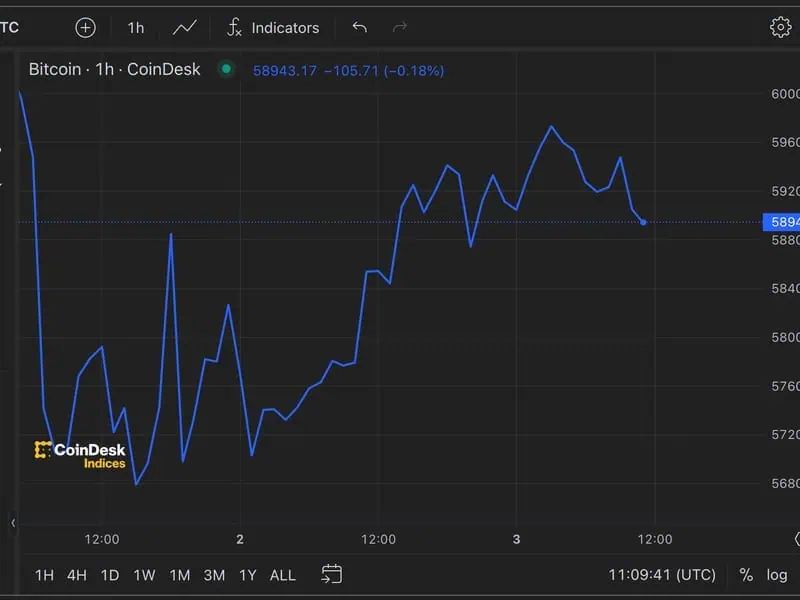

Bitcoin, the world’s leading cryptocurrency by market capitalization, has experienced a tentative price recovery after a sharp post-Federal Reserve sell-off. However, this rebound remains fragile as traders closely watch the U.S. nonfarm payrolls (NFP) report, a critical economic indicator that often influences monetary policy decisions and market sentiment. The NFP data, which reflects the health of the U.S. labor market, has the potential to either reinforce Bitcoin’s recovery or trigger renewed volatility. This article explores the dynamics at play, analyzing how Bitcoin’s price action is intertwined with the U.S. dollar index, Federal Reserve expectations, and broader macroeconomic factors.
Bitcoin’s Recent Price Movement and Post-Fed Volatility
Bitcoin’s price action in the days following the Federal Reserve’s latest policy announcement has been characterized by heightened volatility. Initially, the cryptocurrency experienced a sell-off as investors digested the Fed’s decision to maintain interest rates without signaling an imminent hike. This move reinforced bearish momentum for Bitcoin, largely due to its inverse correlation with the U.S. dollar and risk sentiment.
However, since the sell-off bottomed near $56,500, Bitcoin has staged a modest recovery, climbing above $59,000. This stabilization suggests that sellers have temporarily exhausted their momentum, creating room for buyers to re-enter the market. Despite this positive shift, Bitcoin’s gains remain tentative, largely dependent on upcoming macroeconomic data that could reshape market expectations.
The post-Fed price behavior highlights the cryptocurrency’s sensitivity to monetary policy signals, especially as investors try to anticipate the timing of future interest rate adjustments or potential easing measures. Bitcoin’s price swings illustrate how external economic factors continue to play a pivotal role in its valuation trajectory.
Understanding the U.S. Nonfarm Payrolls Report and Its Market Impact
The U.S. nonfarm payrolls report, released monthly by the U.S. Labor Department, is a key gauge of employment trends outside the agricultural sector. It provides crucial insights into the health of the labor market by reporting the number of jobs added or lost during the previous month. Alongside the unemployment rate and average hourly earnings, the NFP influences investor expectations about economic growth and inflation.
For the upcoming report, economists forecast an addition of approximately 243,000 jobs in April, a slowdown from March’s 303,000. The unemployment rate is expected to remain below 4%, marking a sustained period of labor market strength. Wage growth projections suggest a 0.3% month-on-month rise in average hourly earnings, consistent with the prior month.
Because employment data directly impacts Federal Reserve policy decisions, the NFP report is keenly watched by financial markets. Strong payroll figures may reinforce the Fed’s commitment to higher interest rates to combat inflation, while weaker data could prompt speculation about easing measures. Consequently, the report often triggers significant movements in currency, equities, and cryptocurrency markets.
The Dollar Index and Its Influence on Bitcoin's Price Dynamics
Bitcoin’s price is closely linked to movements in the U.S. dollar index (DXY), which measures the greenback’s strength against a basket of major fiat currencies. A stronger dollar typically exerts downward pressure on Bitcoin and other risk assets, as it reduces the relative appeal of alternative stores of value and limits liquidity.
Following the Federal Reserve’s recent policy update, the dollar index weakened by over 1%, retreating to around 105.20. This decline was spurred by Fed Chair Jerome Powell’s indication that a rate hike is not the next likely move, which tempered expectations for further tightening.
This softer dollar environment has supported Bitcoin’s partial price recovery, as market participants anticipate that a less aggressive Fed stance could boost risk appetite. However, the dollar’s trajectory remains vulnerable to the outcome of the NFP report, which could either sustain or reverse the current trend.
Federal Reserve Policy Outlook and Its Implications for Bitcoin
The Federal Reserve’s monetary policy decisions are a major driver of financial market sentiment, including Bitcoin’s price movements. Market participants closely analyze Fed communications and economic data to infer the timing and magnitude of interest rate changes or liquidity measures.
Currently, futures markets reflect growing expectations for an interest rate cut or liquidity easing by November, a shift from the prior tightening narrative. This change in outlook has contributed to Bitcoin’s recent stabilization and modest price gains, as easing monetary conditions generally favor risk assets.
However, the Fed’s next moves will likely depend heavily on the labor market’s performance, as reflected in the nonfarm payrolls report. A resilient jobs market could delay rate cuts, potentially dampening Bitcoin’s upside, whereas weaker employment data might accelerate easing prospects and bolster the cryptocurrency.
Market Sentiment and Speculative Positioning Ahead of the Jobs Report
Investor sentiment ahead of the nonfarm payrolls release is cautiously optimistic, with Bitcoin exhibiting signs of price stability. This calm contrasts with the heightened speculative positioning seen in the U.S. dollar, where futures data indicate a significant concentration of long positions against other G10 currencies.
According to market strategists, the dollar’s net speculative positioning is at its highest level since June 2019, suggesting that there is considerable room for a short squeeze if U.S. economic data disappoints. Such a scenario could trigger a rapid decline in the dollar, benefiting Bitcoin and other risk assets.
This dynamic underscores the importance of the jobs report as a market catalyst. Should employment figures fall short of expectations, bearish momentum for the dollar may intensify, potentially accelerating Bitcoin’s price recovery. Conversely, stronger-than-expected data could reinforce dollar strength and pressure cryptocurrency prices.
Bitcoin’s Correlation with Risk Assets and Global Liquidity Conditions
Bitcoin’s price often moves in tandem with broader risk assets such as equities and commodities, particularly during periods of shifting global liquidity conditions. The cryptocurrency’s appeal as a speculative and alternative asset grows when liquidity is abundant and market sentiment favors risk-taking.
The U.S. dollar’s strength or weakness plays a central role in shaping global liquidity. A robust dollar tightens liquidity worldwide, constraining capital flows into risk assets including Bitcoin. Conversely, dollar weakness tends to ease liquidity conditions, supporting higher valuations for cryptocurrencies.
Given this interplay, the upcoming nonfarm payrolls report is critical not only for the U.S. economy but also for the global financial system. Its influence on the dollar and Fed policy will ripple through markets, determining whether Bitcoin can sustain its recent gains or face renewed selling pressure.
Strategic Considerations for Bitcoin Investors Ahead of the NFP Data
Investors and traders should approach the upcoming nonfarm payrolls report with a balanced strategy, recognizing the potential for increased volatility surrounding the release. Bitcoin’s price could react sharply in either direction depending on how the data aligns with market expectations.
Risk management is paramount, as sudden shifts in sentiment may lead to rapid price swings. Position sizing, stop-loss orders, and diversification can help mitigate downside risks while allowing participation in potential upside moves.
Additionally, monitoring related indicators such as the dollar index, Federal Reserve communications, and futures markets can provide valuable context for interpreting the NFP report’s impact. Staying informed on macroeconomic developments will be critical for navigating Bitcoin’s price trajectory in the near term.
Conclusion
Bitcoin’s path forward is intricately linked to the upcoming U.S. nonfarm payrolls report, a pivotal economic event that could validate or challenge the cryptocurrency’s recent recovery. As markets digest employment data and adjust expectations for Federal Reserve policy, Bitcoin’s price may experience heightened volatility. Investors must remain vigilant and informed, understanding that the interplay between labor market health, dollar strength, and monetary policy will continue to shape Bitcoin’s performance. Ultimately, the NFP report stands as a critical test for Bitcoin’s resilience in a complex macroeconomic environment.
Originally reported by coindesk.com. Adapted for our readers.