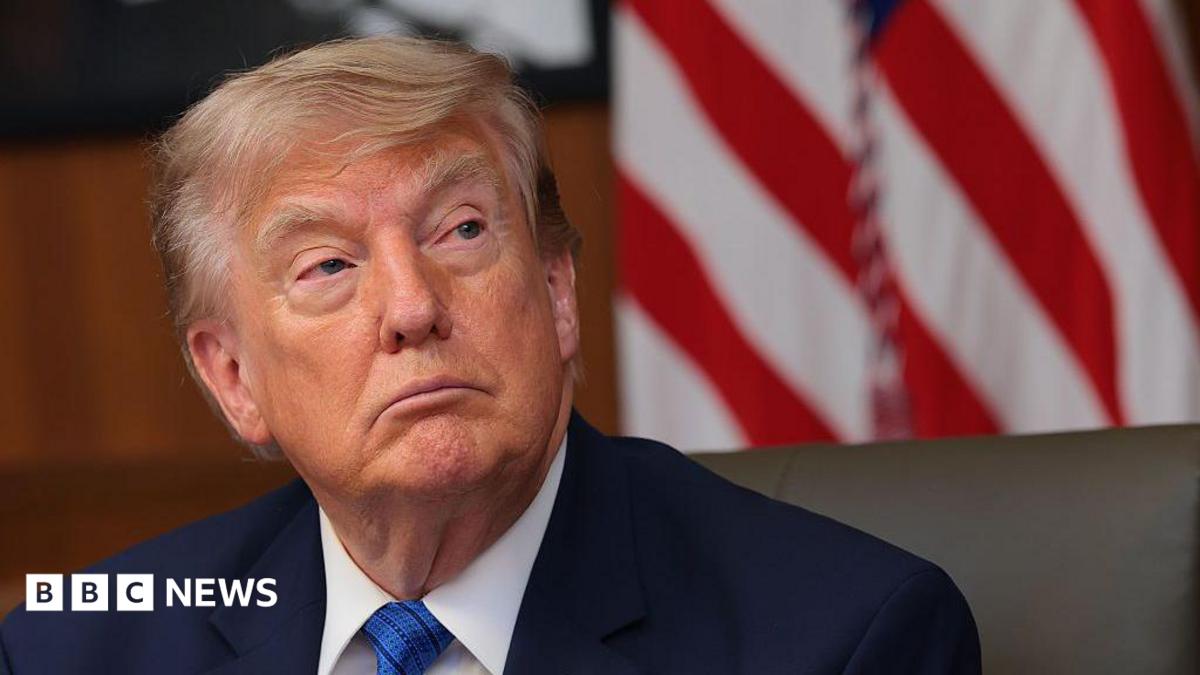
In recent days, President Donald Trump has experienced a series of setbacks that underscore the growing difficulties he faces within his own circle of supporters and the broader political landscape. From legal reversals involving a high-profile vandalism case to political pushback against his nominee for attorney general, and ongoing complications in the war with Iran, Trump’s attempts to assert control over these issues have met with resistance. These developments reveal a president grappling with the limits of his influence and the realities that even loyal allies are unwilling or unable to fully endorse his personal battles.
Legal Reality Challenges Trump’s Narrative on Reflecting Pool Vandalism
One of the most striking recent developments involves the case of former Olympian David Hearn, who was initially charged with felony destruction of property for allegedly damaging the Reflecting Pool near the Washington Monument. The prosecution, led by U.S. Attorney Jeanine Pirro, a staunch Trump ally and former Fox News host, was ultimately dropped after a detailed court filing attributed the damage to a botched installation rather than intentional vandalism.
This decision directly contradicted President Trump’s public assertions, which had embraced the vandalism explanation. Trump expressed frustration and disappointment with Pirro’s reversal, publicly criticizing her decision on his social media platform, Truth Social, and during Oval Office remarks, stating she "folded like an umbrella."
The case highlights a tension between Trump’s preference for alternative narratives and the evidentiary standards required in legal proceedings. Pirro’s move to drop the charges, based on the evidence and information from the Department of Interior, demonstrates that even loyal allies must sometimes confront legal realities that undermine the president’s preferred version of events.
Political Pushback on Attorney General Nominee Reflects Senate Realities
Another significant challenge for Trump has emerged in the political arena with the nomination of Todd Blanche, his former criminal defense attorney, for the permanent role of attorney general. Blanche’s nomination faced opposition from two Republican senators, John Cornyn of Texas and Thom Tillis of North Carolina, who joined Democrats in blocking the confirmation.
The senators’ primary concern centered on Blanche’s association with a proposed $1.8 billion fund intended to compensate individuals claiming to have been victims of politicized government prosecutions. Critics, including Tillis who labeled it a "payout pot for punks," feared the fund could be used to compensate those prosecuted for their roles in the January 6 Capitol riot.
Despite Trump’s insistence on pushing the fund through Congress and his intention to keep Blanche as acting attorney general, the political reality in the Senate forced Blanche to withdraw the fund proposal. He subsequently provided letters addressing the senators’ concerns, which helped ease opposition and allowed his nomination to proceed.
Trump’s reaction to these developments was notably muted; he admitted to not reviewing the letters himself and expressed uncertainty about the details of the agreement. This episode illustrates the limits of presidential influence when confronted with institutional checks and the necessity of compromise, even among loyalists.
Complications in the Iran War Undermine Trump’s Diplomatic and Military Strategy
Beyond legal and political setbacks, Trump is also contending with the complex and volatile situation surrounding the war with Iran. The president has accused Iranian officials of duplicity amid fluctuating reports of negotiations and threats of military action.
Most recently, Trump claimed he had called off what he described as the largest military attack since World War II at the request of Iranian officials and Arab intermediaries. However, he later criticized Iran for denying any direct negotiations, accusing them of misrepresenting the status of talks.
This pattern of on-again, off-again diplomacy and conflicting narratives is familiar from earlier phases of the conflict. Public opinion polls consistently show growing American disapproval of the war and skepticism about Trump’s ability to achieve his objectives.
The war’s unpopularity is reflected in Trump’s declining approval ratings, which recent surveys place at around 33%. This figure is historically low for a second-term president, comparable only to Richard Nixon’s ratings before his resignation. Despite this, Trump dismisses such polls as fabricated by the "Fake News Media," maintaining confidence in his standing with voters.
Political Implications Ahead of Midterm Elections
The setbacks Trump faces in legal, political, and military arenas carry significant implications for the upcoming congressional midterm elections. Historically, Trump has demonstrated resilience at the ballot box, even when public opinion polls have been unfavorable.
However, the combination of legal reversals, political opposition within his own party, and the ongoing challenges of the Iran conflict may erode his influence and the Republican Party’s prospects. If Republicans underperform in the midterms, it could mark a critical turning point in Trump’s second term and his broader political legacy.
The president’s insistence on pursuing contentious initiatives, such as the anti-weaponization fund and his public criticism of allies who diverge from his narrative, suggests a willingness to engage in prolonged battles that may further strain his relationships and political capital.
Ultimately, the midterm elections will serve as a key barometer of Trump’s political strength and the extent to which his personal battles resonate with or alienate the broader electorate.
What this means
President Donald Trump’s recent experiences reveal the complexities and constraints of wielding power in a politically divided and legally rigorous environment. While he continues to assert his preferred narratives and push contentious policies, the resistance from even his most loyal allies underscores the limits of his influence. The legal dismissal of the Reflecting Pool vandalism case, the political pushback against his attorney general nominee, and the ongoing difficulties in managing the war with Iran collectively illustrate a president confronting hard realities. As the midterm elections approach, these developments will not only shape Trump’s political fortunes but also test the resilience of his leadership amid growing challenges. Observers and stakeholders alike will be watching closely to see whether Trump can navigate these obstacles or whether these setbacks mark a turning point in his administration and legacy.
Source: Analysis: Trump fumes as top allies back down on his personal battles via www.bbc.co.uk.
This article was curated with AI assistance and reviewed according to Tamfis editorial settings.