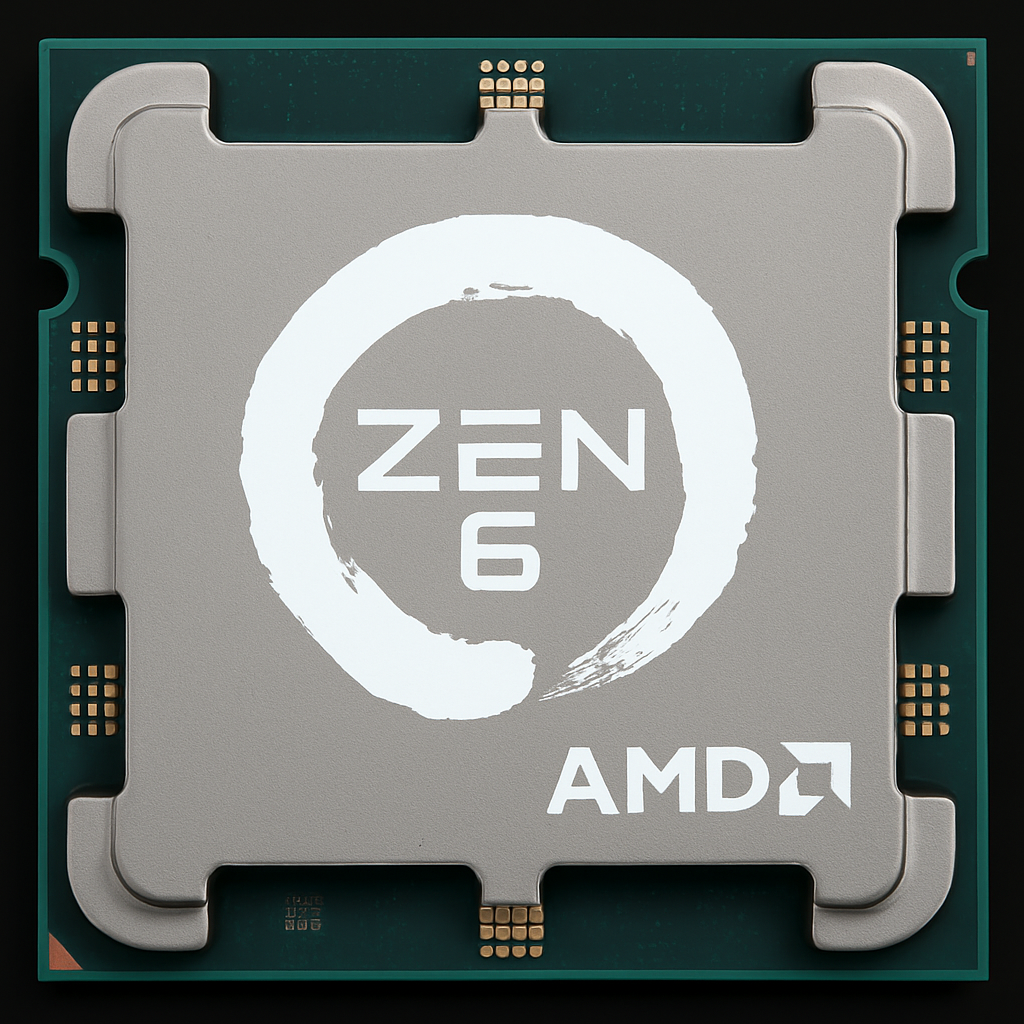

The semiconductor industry is on the brink of a significant breakthrough with AMD’s next-generation Zen 6 architecture. Reports indicate that AMD is ambitiously targeting clock speeds of 7GHz or more for its upcoming desktop processors, a milestone that would mark a new high in x86 CPU performance. These advancements are primarily attributed to the Olympic Ridge SKUs, which will utilize TSMC’s advanced N2X manufacturing node. This article delves into the details surrounding this development, exploring what it means for the future of desktop computing, the technology behind it, and how it positions AMD in the ongoing competition with Intel.
Understanding AMD’s Zen 6 Architecture
AMD’s Zen 6 architecture represents one of the most ambitious leaps in the company’s CPU design history. Building upon the successes of Zen 4, Zen 6 aims to deliver substantial improvements in performance, efficiency, and clock speed. The architecture is expected to refine core design elements, including enhanced instruction pipelines, better branch prediction, and optimized cache hierarchies. These enhancements collectively contribute to higher IPC (instructions per cycle) and overall responsiveness.
A key highlight of Zen 6 is its deployment across various market segments, from high-end desktop processors to server-grade EPYC chips and mobile APUs. This versatility underscores AMD’s strategy to leverage the architecture’s efficiency gains across a broad product portfolio. The use of different manufacturing nodes for these variants allows AMD to tailor performance and power consumption to specific use cases effectively.
Additionally, Zen 6 is expected to integrate advanced AI and machine learning capabilities, reflecting the growing importance of these workloads in modern computing. Support for new instructions and improved hardware accelerators could provide a competitive edge in emerging applications, further solidifying AMD’s position in the CPU market.
The Significance of the 7GHz Clock Speed Target
Achieving a 7GHz clock speed on a desktop CPU is a remarkable engineering feat, considering the thermal and power constraints associated with such high frequencies. For AMD, this target signals a bold push to reclaim leadership in raw CPU speed, an area traditionally dominated by Intel. If successful, Zen 6 processors would set new records for the fastest clocked x86 CPUs ever released by AMD.
High clock speeds translate directly to improved single-threaded performance, which remains crucial for gaming, content creation, and many professional applications. By surpassing the 5.7GHz peak of current Zen 4 processors, AMD could deliver performance gains that significantly narrow or surpass the gap with Intel’s Raptor Lake Refresh series, known for their high-frequency capabilities.
However, it is important to note that clock speed alone does not define overall CPU performance. Factors such as core count, architecture efficiency, and thermal management also play vital roles. Nonetheless, the 7GHz target is a clear indicator of AMD’s aggressive roadmap and commitment to pushing the boundaries of desktop CPU performance.
Olympic Ridge and TSMC’s N2X Process Technology
The Olympic Ridge codename refers to AMD’s high-end Zen 6 desktop processors designed to utilize TSMC’s N2X process node. This manufacturing technology represents an enhanced iteration of TSMC’s 2 nm process, offering improved transistor density, power efficiency, and switching speeds compared to previous nodes such as N4P and N3P.
Transitioning to N2X is a significant milestone for AMD, marking the third major node advancement since Zen 4. Each node shrink has historically brought substantial gains in power efficiency and clock potential, enabling AMD to push frequencies higher without proportional increases in power consumption or heat generation.
The N2X process also facilitates better integration of complex chiplets and advanced packaging techniques, which are crucial for maintaining signal integrity and reducing latency at such high clock speeds. This technological synergy between architecture and manufacturing is essential for realizing the ambitious 7GHz goal.
Comparing Zen 6 with Previous Generations and Intel’s Offerings
AMD’s progression from Zen+ through Zen 4 has seen remarkable improvements, with each generation benefiting from smaller process nodes and architectural refinements. Zen 6 continues this trend but aims to leap ahead by tackling the challenging 7GHz frequency barrier. This is a stark contrast to earlier generations where clock speed improvements were more incremental.
Intel’s recent Raptor Lake Refresh processors have set high standards in clock speeds, with some models reaching frequencies close to 6GHz. AMD’s potential 7GHz Zen 6 chips would not only surpass Intel’s offerings in raw speed but also leverage architectural improvements to deliver competitive or superior performance across various workloads.
While Intel focuses on hybrid architectures combining performance and efficiency cores, AMD’s approach with Zen 6 emphasizes pure performance cores optimized for high-frequency operation. This differentiation could influence user preferences depending on application requirements and power efficiency considerations.
Zen 6 Variants Beyond Desktop: APUs and Server Processors
While Olympic Ridge targets the desktop segment with its ultra-high clock speeds, other Zen 6 variants will cater to mobile and server markets. The Medusa Point APUs for laptops and the Venice-class EPYC processors for data centers will primarily use the more mature N2P or N3P nodes. These variants are expected to focus on balanced performance and power efficiency rather than peak clock speeds.
Mobile APUs like Medusa Halo are anticipated to reach clock speeds between 6.2GHz and 6.5GHz, representing a significant uplift over current-generation mobile processors. This increase will translate to better gaming experiences and enhanced productivity on portable devices, without compromising battery life excessively.
Server-grade Zen 6 processors will prioritize scalability, multi-threaded performance, and energy efficiency. Although they may not hit the 7GHz mark, improvements in architecture and manufacturing processes will enable AMD to maintain strong competitiveness in the enterprise CPU market, addressing workloads that benefit from high core counts and throughput.
Challenges in Achieving and Sustaining 7GHz Clock Speeds
Reaching 7GHz on a desktop CPU involves overcoming significant engineering challenges, particularly in thermal management and power delivery. High frequencies exponentially increase heat output, necessitating advanced cooling solutions and robust motherboard designs to maintain stability and longevity.
Silicon variability and yield rates also become critical factors at such aggressive clock targets. Ensuring a sufficient number of chips can reliably operate at 7GHz without defects or excessive power consumption requires precise manufacturing controls and binning strategies.
Moreover, software and firmware optimizations must accompany hardware advancements to fully exploit the benefits of higher clock speeds. AMD’s engineers will need to fine-tune memory controllers, voltage regulators, and scheduling algorithms to ensure consistent performance gains across diverse applications.
Implications for the Desktop CPU Market and Consumers
If AMD successfully launches Zen 6 processors capable of exceeding 7GHz, the desktop CPU market could witness a significant shift. Consumers seeking the highest possible performance for gaming and professional workloads may gravitate towards these new chips, intensifying competition with Intel’s flagship offerings.
Such advancements could also drive innovation in cooling technologies, motherboard features, and power supply designs as OEMs and enthusiasts adapt to the demands of ultra-high-frequency CPUs. This ripple effect might lead to improved overall system performance and reliability.
From a pricing perspective, AMD’s new lineup may command premium prices initially, reflecting the complexity and performance gains of Zen 6. However, this could also stimulate competitive pricing strategies across the industry, ultimately benefiting consumers with more options and better value.
Conclusion
AMD’s pursuit of a 7GHz Zen 6 desktop processor underscores the company’s commitment to pushing technological boundaries and delivering cutting-edge performance. By harnessing TSMC’s N2X process and refining its architecture, AMD is poised to set new records in CPU speed, challenging Intel’s dominance and catering to the needs of power users and enthusiasts. While challenges remain, the potential impact of Zen 6 extends beyond raw clock speeds, promising advancements across efficiency, AI integration, and multi-platform scalability. As the launch approaches, the industry and consumers alike eagerly anticipate a new era of desktop computing excellence driven by AMD’s relentless innovation.