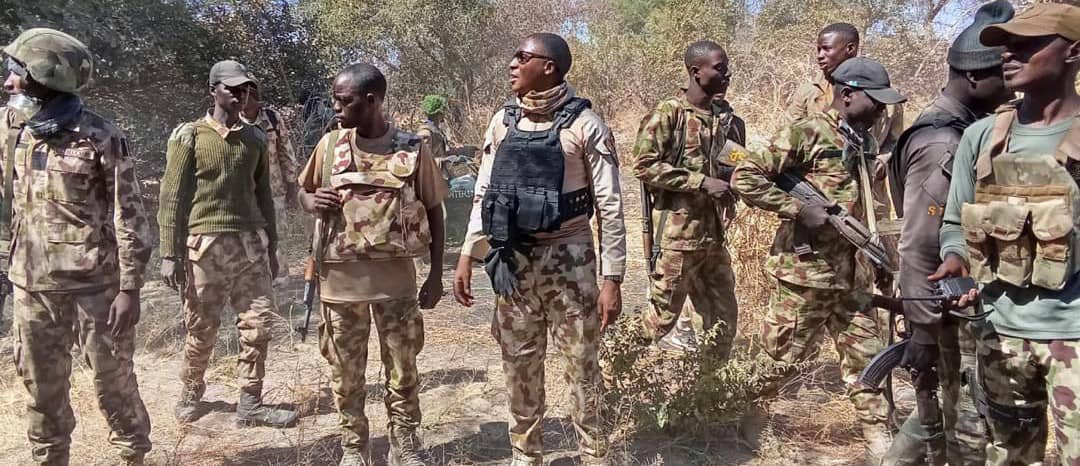

In recent years, banditry and insurgent activities have posed severe security challenges in parts of Nigeria, particularly along the borders of Nasarawa and Benue states. These criminal elements have exploited the porous border routes linking these states to launch attacks on farming communities and evade capture. Responding decisively, the Nigerian Army, through Operation Whirl Stroke, has effectively blocked these escape routes, curbing the movement of bandits and restoring peace. This article delves into the strategic military efforts, challenges faced, and the implications of these operations on local security and community resilience.
Background: Security Challenges in Nasarawa and Benue Border Areas
The border regions between Nasarawa and Benue states have long been plagued by banditry and violent attacks targeting farming communities. The difficult terrain and sparse population have made it easy for armed groups to operate with impunity, exploiting the porous borders for swift escapes after raids. Communities in Guma Local Government Area of Benue have been particularly vulnerable, experiencing repeated assaults that disrupted daily life and economic activities.
Prior to the military intervention, these attacks resulted in significant loss of lives, destruction of property, and displacement of residents. Many farmlands were abandoned due to fear of ambushes, leading to food insecurity and economic hardship. The bandits’ use of cross-border routes between Nasarawa and Benue enabled them to evade law enforcement efforts, complicating security operations and undermining public confidence.
Recognizing the severity of the situation, the Nigerian Army launched Operation Whirl Stroke (OPWS) with a focus on restoring peace and stability in these troubled areas. The operation aimed to dismantle bandit networks, secure vulnerable communities, and block the escape corridors that had facilitated criminal activities.
Operation Whirl Stroke: Strategic Military Deployment
Operation Whirl Stroke was initiated as a targeted military campaign to counter the growing threat of banditry in Nasarawa and Benue states. The deployment of the Commanding Officer, COAS Intervention Battalion XI, Lt. Col. Donatus Otobo, marked a turning point in the security dynamics of the region. The battalion was strategically positioned in Guma Local Government Area from July 12, 2025, to spearhead counterinsurgency efforts.
From the outset, the troops encountered fierce resistance, facing over ten attacks on their very first day. Despite these challenges, sustained military pressure, aggressive patrols, and tactical ambushes gradually disrupted bandit operations. The battalion’s mandate extended beyond direct combat to securing key border routes and working closely with sister units operating in Nasarawa to create a seamless security net.
Lt. Col. Otobo emphasized that the battalion’s presence and operations have pushed bandits out of most of their operational zones, achieving approximately 80% security coverage within their area of responsibility. This success is attributed to coordinated intelligence sharing and a comprehensive approach to border security.
Tactical Blocking of Nasarawa–Benue Escape Routes
The Nasarawa–Benue border features several routes that bandits exploited to launch attacks and retreat quickly. Guma Local Government Area shares boundaries with Awe, Keana, and Doma local government areas in Nasarawa, which were identified as primary infiltration points. The rugged terrain and deserted border communities provided cover for bandits, complicating security efforts.
The Nigerian Army’s approach involved deploying troops along these critical routes to prevent bandits from moving freely. Continuous day-and-night patrols, setting up ambush points, and leveraging local intelligence disrupted the flow of criminal activities. The blocking of these escape corridors has been a key factor in reducing the frequency and intensity of attacks.
Brigadier-General David Nwakonobi, Commanding Officer, Sector 2 of Operation Whirl Stroke, highlighted the importance of joint operations and collaboration with other security agencies to deny bandits safe havens. This multi-agency coordination ensures that criminals cannot exploit gaps between jurisdictions or evade capture by crossing state lines.
Impact on Local Communities and Economic Activities
Before the military intervention, residents in the Nasarawa–Benue border areas faced severe restrictions on movement due to the threat of bandit attacks. Farmlands, particularly around the Nasme axis, were largely abandoned, leading to declining agricultural productivity and food shortages. Traders and farmers lived in constant fear, which stalled local economies.
The establishment of military presence and the blocking of bandit escape routes have restored confidence among the local populace. Civilians now move more freely, enabling farmers to return to their lands and traders to resume commercial activities. This revival is critical for the socio-economic recovery of the region and the well-being of its residents.
Moreover, the reduction in violent incidents has improved the overall security environment, encouraging displaced persons to return home and participate in community rebuilding efforts. The military’s efforts have thus not only enhanced security but also contributed to stabilizing livelihoods.
Challenges Faced by the Nigerian Army in Securing the Border
Securing the Nasarawa–Benue border has not been without difficulties. The terrain is characterized by dense vegetation, hills, and isolated settlements, which provide natural cover for bandits. These geographical factors complicate surveillance and rapid response by security forces.
The bandits’ familiarity with the area and their use of hit-and-run tactics have necessitated constant vigilance and adaptation by the military. The initial days of deployment saw repeated ambushes and attacks, testing the resolve and capability of the troops on the ground.
Furthermore, logistical challenges such as maintaining supply lines, communication, and coordination among multiple units operating across state borders have required robust planning and support. The Nigerian Army credits the Chief of Army Staff’s logistical backing as instrumental in overcoming these hurdles.
Role of Intelligence and Inter-Agency Collaboration
Intelligence gathering and sharing have been pivotal in the success of Operation Whirl Stroke. The Nigerian Army has worked closely with other security agencies, including the police and local vigilante groups, to gather actionable information about bandit movements and hideouts.
The recent arrest of a suspected criminal who crossed from Nasarawa into Benue to attack communities underscores the effectiveness of coordinated intelligence efforts. Such cooperation helps preempt attacks and disrupt bandit networks before they can mobilize.
Maintaining a strong intelligence network is essential for sustaining security gains and adapting to evolving threats. Continuous collaboration ensures that no single agency operates in isolation, thereby enhancing overall operational efficiency.
Future Outlook and Sustaining Security Gains
While significant progress has been made in blocking bandit escape routes and securing the Nasarawa–Benue border, sustained efforts are necessary to consolidate these gains. The Nigerian Army plans to expand operations across the entire Guma local government area and maintain a persistent presence to deter resurgence.
Community engagement and development initiatives will also play a vital role in long-term stability. Providing economic opportunities and addressing grievances that may fuel insecurity are complementary to military efforts.
The commitment of the Chief of Defence Staff and the Chief of Army Staff to supporting intervention battalions signals a continued focus on eradicating banditry in the region. With persistent pressure and multi-agency cooperation, the hope is to transform these flashpoints into secure, thriving communities.
Conclusion
The Nigerian Army’s strategic blocking of the Nasarawa–Benue escape routes marks a decisive step in combating banditry and restoring peace in one of Nigeria’s most volatile regions. Through Operation Whirl Stroke, sustained military operations, intelligence-driven tactics, and inter-agency collaboration have significantly reduced attacks, secured border communities, and revived local economies. While challenges remain, the continued commitment of security forces and government support offers hope for lasting stability and development. The successful containment of bandit movements not only safeguards lives but also strengthens the foundation for a peaceful and prosperous future in Nasarawa and Benue states.