

In a landmark decision, former President Donald Trump has been convicted on all 34 impeachment counts related to his alleged misconduct during his tenure. The verdict, delivered by a Manhattan jury, underscores a pivotal moment in U.S. history as Trump becomes the first former president to be found guilty of such charges. Central to the case was the concealment of a $130,000 payment to adult film actress Stormy Daniels, who claimed to have had a sexual encounter with Trump in 2006. This article delves into the details of the trial, the reactions from both supporters and critics, and what lies ahead for Trump and American politics.
Historic Verdict: Trump’s Conviction on All Impeachment Counts
The Manhattan jury’s decision to convict Donald Trump on all 34 counts of falsifying business records marks a historic precedent in American jurisprudence. No former president has ever faced such comprehensive legal condemnation before, signaling a dramatic shift in accountability at the highest levels of power.
The charges stemmed from allegations that Trump deliberately falsified documents to conceal a hush payment made to adult film actress Stormy Daniels. This payment, amounting to $130,000, was purportedly intended to keep Daniels from revealing a sexual relationship with Trump during the critical period leading up to the 2016 presidential election.
Judge Juan Merchan firmly rejected Trump's motion for acquittal, affirming the strength of the prosecution’s case. The verdict not only highlights the legal consequences of the former president’s actions but also ignites intense debate about the intersection of politics and justice.
The Stormy Daniels Payment: Central to the Case
At the heart of the trial was the payment made to Stormy Daniels, whose real name is Stephanie Clifford. Daniels alleged that she had a consensual sexual encounter with Trump in 2006, an accusation that Trump has consistently denied. The hush money was allegedly paid to secure her silence during the 2016 presidential campaign.
Prosecutors argued that this payment was intentionally hidden from public scrutiny by falsifying business records, a violation of New York state law. The concealment aimed to protect Trump’s image and electoral prospects, raising serious ethical and legal questions about campaign conduct.
Daniels herself reported receiving death threats following the revelation of the alleged affair, underscoring the high stakes and personal risks involved. Her testimony and evidence played a crucial role in persuading the jury of Trump’s guilt.
Political Reactions: Division Deepens Across the Aisle
The verdict has polarized the political landscape. Democrats hailed the jury’s decision as a triumph of justice, emphasizing the importance of upholding the rule of law regardless of political stature. They see the conviction as a necessary step to prevent future abuses of power.
Conversely, many Republicans condemned the verdict as a politically motivated attack. House Speaker Mike Johnson described the day as 'shameful,' asserting that Trump was the victim of a biased judicial process. This division reflects the broader cultural and partisan rifts gripping the nation.
Trump himself vehemently denied wrongdoing, labeling the verdict as 'disgraceful' and 'false.' He pledged to continue fighting the charges and maintained that the ultimate judgment would come from voters in the upcoming presidential election.
Trump’s Response and Future Legal Proceedings
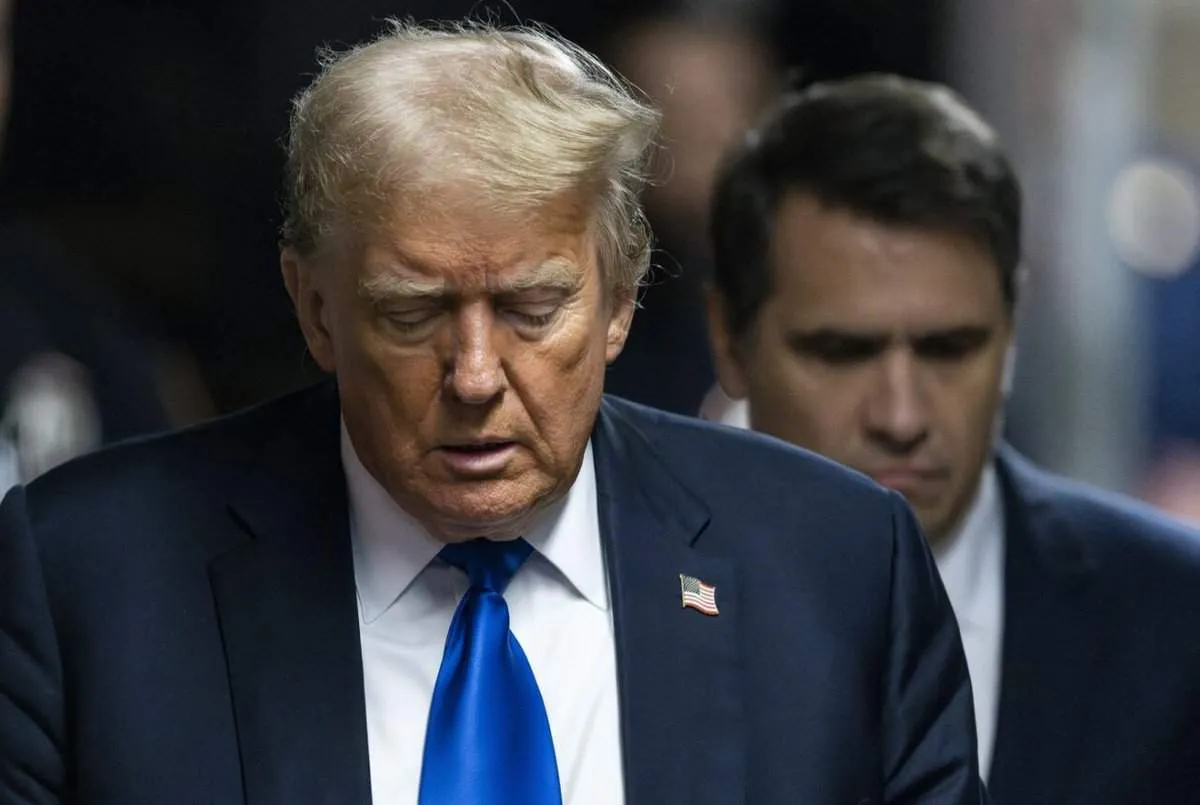
Following the verdict, Donald Trump appeared visibly upset but composed as he left the courtroom with his son Eric. He reiterated his innocence and decried the verdict as a miscarriage of justice, asserting that the American people would deliver the real verdict at the polls on November 5, 2024.
Trump’s legal team has indicated plans to appeal the conviction, arguing procedural errors and political bias influenced the trial. However, with sentencing scheduled for July 11, 2024, the former president faces the possibility of prison time or hefty fines, marking a precarious future.
Despite the conviction, Trump remains the presumptive Republican nominee for the 2024 presidential election after other candidates withdrew. This unprecedented situation raises complex questions about eligibility and the political ramifications of a convicted candidate running for office.
President Biden’s Reaction and Democratic Perspectives
President Joe Biden responded to the verdict by emphasizing the importance of electoral accountability. He stated that the only way to prevent Trump from returning to the Oval Office is through the democratic process at the ballot box, underscoring the ongoing political struggle.
Biden’s campaign communications director, Michael Tyler, warned of the dangers a second Trump term could pose to American democracy, citing potential increases in chaos, erosion of liberties, and political violence. The administration is rallying support to ensure voter turnout in the upcoming election.
Democrats view the conviction as a reaffirmation of justice and a warning against the abuse of power. They argue that Trump’s actions threatened the integrity of the electoral process and that holding him accountable is essential for restoring public trust.
Public and Media Response: A Nation Divided
The verdict sparked intense reactions from the public and media alike. Supporters of Trump gathered outside the courthouse, some expressing disbelief and anger, while others voiced unwavering loyalty. Conversely, many Democrats and independent observers celebrated the decision as a victory for justice.
Media coverage has been extensive, with outlets highlighting both the legal intricacies of the case and the broader political implications. The trial has dominated headlines, reflecting its significance in shaping the narrative of contemporary American politics.
Social media platforms saw a surge in discussions, with hashtags related to the verdict trending nationwide. The polarized responses underscore the deep divisions within the country, highlighting the challenges of political reconciliation moving forward.
Implications for the 2024 Presidential Election
The timing of the conviction, just months before the Republican National Convention, adds complexity to the 2024 presidential race. Trump’s position as the leading Republican candidate is now shadowed by his criminal conviction, raising questions about voter perceptions and party dynamics.
Legal experts debate the potential impact on Trump’s campaign, with some suggesting the conviction could either galvanize his base or alienate moderate voters. The election’s outcome could hinge on how the public weighs the legal findings against political loyalty.
The Republican Party faces a dilemma in balancing support for Trump with concerns about electability and public image. Meanwhile, Democrats hope to leverage the verdict to mobilize voters wary of a Trump resurgence, intensifying the stakes of the upcoming electoral battle.
Looking Ahead: Sentencing and Political Fallout
Sentencing is scheduled for July 11, 2024, a date that will likely dominate political discourse in the weeks leading up to the Republican National Convention. The severity of the sentence could have profound effects on Trump’s campaign and the broader political landscape.
Legal analysts predict that the sentencing phase will be closely scrutinized, with potential appeals prolonging the legal saga. The outcome may influence public opinion and the strategies of both major political parties as they prepare for the general election.
Ultimately, this case represents a defining moment in American democracy, challenging norms and testing the resilience of institutions. How the nation navigates the aftermath will shape the future of political accountability and the rule of law in the United States.
Conclusion
The conviction of former President Donald Trump on all 34 impeachment counts marks an unprecedented chapter in American history. This verdict not only holds a former president accountable for alleged illegal actions but also intensifies the nation’s political polarization. As Trump prepares for sentencing and potential appeals, the 2024 presidential race enters uncharted territory with a convicted candidate at its forefront. The coming months will test the resilience of America’s democratic institutions and the electorate’s resolve to shape the country’s future through the ballot box.
Originally reported by gandul.ro. Adapted for our readers.