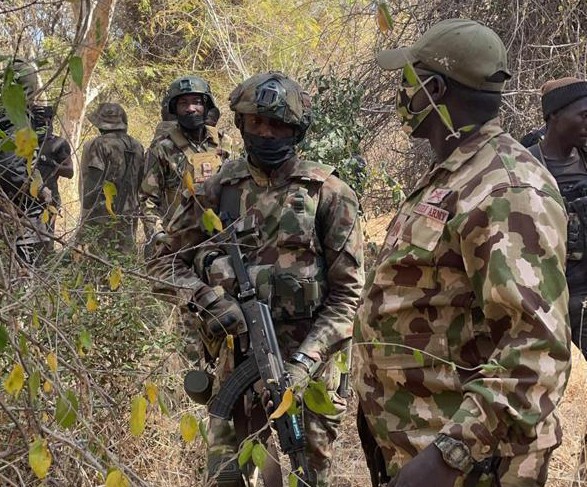

The Nigerian Armed Forces launched an extensive series of coordinated operations across the country in January 2026, targeting terrorist networks, criminal gangs, and kidnappers. These operations resulted in the elimination of top terrorist commanders, the arrest of 452 suspects, and the rescue of 284 abducted victims. The successes underscore the military’s commitment to restoring peace and security, leveraging improved intelligence sharing, joint ground and air tactics, and strong collaboration with local security groups. This article provides a comprehensive overview of the January operations, highlighting key achievements across different operational theatres and the strategic impact on national security.
Sustained Operational Pressure Yields Significant Results
Throughout January 2026, Nigerian military troops maintained relentless pressure on terrorist and criminal elements nationwide. The sustained operations involved coordinated ground assaults, air strikes, and intelligence-driven raids that disrupted terrorist command structures and logistics networks.
Major General Michael Onoja, Director of Defence Media Operations, emphasized that the successes were a direct result of improved intelligence coordination and the resilience of troops operating under challenging conditions. These efforts led to the neutralization of several high-value targets and the arrest of hundreds of suspects.
The military’s approach combined offensive operations with humanitarian efforts, ensuring the safe resettlement of displaced persons and enabling improved access for aid organizations. This holistic strategy has strengthened the military’s impact and enhanced community trust in affected regions.
North East Theatre: Decisive Strikes Against Boko Haram and ISWAP
In the volatile North East region, troops of Operation HADIN KAI intensified their offensive against Boko Haram, ISWAP, and Jama’atu Ahlis Sunna Lidda’awati wal-Jihad (JAS) insurgents across Borno, Yobe, and Adamawa states. Ground forces worked in close coordination with the Air Component and local security groups to deny terrorists freedom of movement.
Fierce firefights led to the elimination of five top terrorist commanders and three lieutenants, significantly disrupting insurgent leadership. Dozens of fighters were neutralized, while multiple informants and logistics suppliers were arrested, weakening the operational capabilities of these groups.
Air interdiction missions targeted terrorist hideouts in the Northern Tumbus and Timbuktu Triangle, where senior ISWAP commanders and fighters were neutralized and their equipment destroyed. These combined efforts facilitated the safe return of displaced communities and improved humanitarian delivery to conflict-affected areas.
North West Operations: Combating Banditry and Kidnapping
Operation FANSAN YAMMA troops sustained offensive operations across Katsina, Zamfara, Sokoto, Kaduna, Niger, Kebbi, Jigawa, Kano, Kogi, Kwara, and parts of the Federal Capital Territory. These efforts targeted bandits, kidnappers, and criminal networks destabilizing the region.
During the month, 52 suspects were arrested, and 100 kidnapped victims were rescued, marking a significant reduction in criminal activities. The military also recovered arms, ammunition, vehicles, and livestock stolen by bandits, further crippling their operational resources.
Close air support missions, particularly in Shiroro Local Government Area of Niger State, played a crucial role in neutralizing terrorists following distress calls from ground troops. The synergy between air and ground forces enhanced the effectiveness of clearance operations.
North Central Region: Tackling Extremism and Kidnapping
In the North Central zone, Operations ENDURING PEACE and WHIRL STROKE recorded notable successes across Plateau, Benue, Nasarawa, Taraba, Kogi, and Kwara states. Troops neutralized numerous extremists, arrested over 80 suspects, and rescued dozens of kidnapped individuals.
A significant achievement was the arrest of Amadu Adamu, a notorious kidnap kingpin, in Jama’a Local Government Area of Kaduna State. His capture is expected to disrupt the kidnapping networks operating in the region.
The operations also focused on community engagement and intelligence gathering, which improved the military’s ability to preempt attacks and dismantle criminal syndicates. This proactive approach contributed to the stabilization of several volatile areas.
South-South Theatre: Combating Oil Theft and Illegal Refining
The South-South region witnessed major gains against crude oil theft and illegal refining activities during January 2026. Troops of Operation DELTA SAFE recovered over 210,300 litres of stolen crude oil, along with significant quantities of Automotive Gas Oil, Dual Purpose Kerosene, and Premium Motor Spirit.
In addition to these recoveries, 53 illegal refining sites were destroyed, and 81 oil thieves were arrested. These operations not only curbed economic losses but also contributed to environmental protection and the safety of local communities.
The military’s crackdown on oil theft underscores its commitment to securing Nigeria’s critical natural resources and supporting lawful economic activities in the oil-producing regions.
South East Operations: Addressing Security Threats and Cross-Border Patrols
Operation UDO KA troops responded effectively to security threats across Abia, Anambra, Ebonyi, Enugu, and Imo states. Their efforts resulted in the arrest of numerous suspects and the rescue of kidnapped victims, enhancing regional stability.
The operation also witnessed the surrender of over 80 militants, reflecting the growing impact of military pressure on insurgent groups. This development aids in reducing hostilities and fostering peace in the South East.
Cross-border patrols along the Bakassi waterways led to the rescue of eight Cameroonian nationals, highlighting the military’s role in securing Nigeria’s borders and protecting vulnerable populations from cross-border criminal activities.
Humanitarian Impact and Community Resilience
Beyond the tactical victories, the January operations prioritized humanitarian outcomes by facilitating the safe return of displaced persons and improving access for relief agencies. This approach helped rebuild community trust and foster resilience among affected populations.
The military’s collaboration with local security groups and community leaders enhanced intelligence gathering and operational effectiveness, creating a supportive environment for sustained peace efforts.
The integration of security and humanitarian objectives demonstrates the Nigerian Armed Forces’ comprehensive strategy to not only defeat terrorist and criminal elements but also to restore normalcy and promote development in conflict-affected regions.
Conclusion
The January 2026 military operations represent a landmark achievement in Nigeria’s ongoing fight against terrorism, banditry, kidnapping, and economic sabotage. The elimination of key terrorist commanders, mass arrests of suspects, and rescue of hundreds of abducted victims underscore the effectiveness of coordinated, intelligence-driven military strategies. Furthermore, the proactive integration of humanitarian initiatives has fostered community resilience and improved security environments across diverse regions. As the Nigerian Armed Forces continue to build on these successes, their unwavering commitment to restoring peace and stability remains a beacon of hope for the nation’s future.
Originally reported by prnigeria.com. Adapted for our readers.