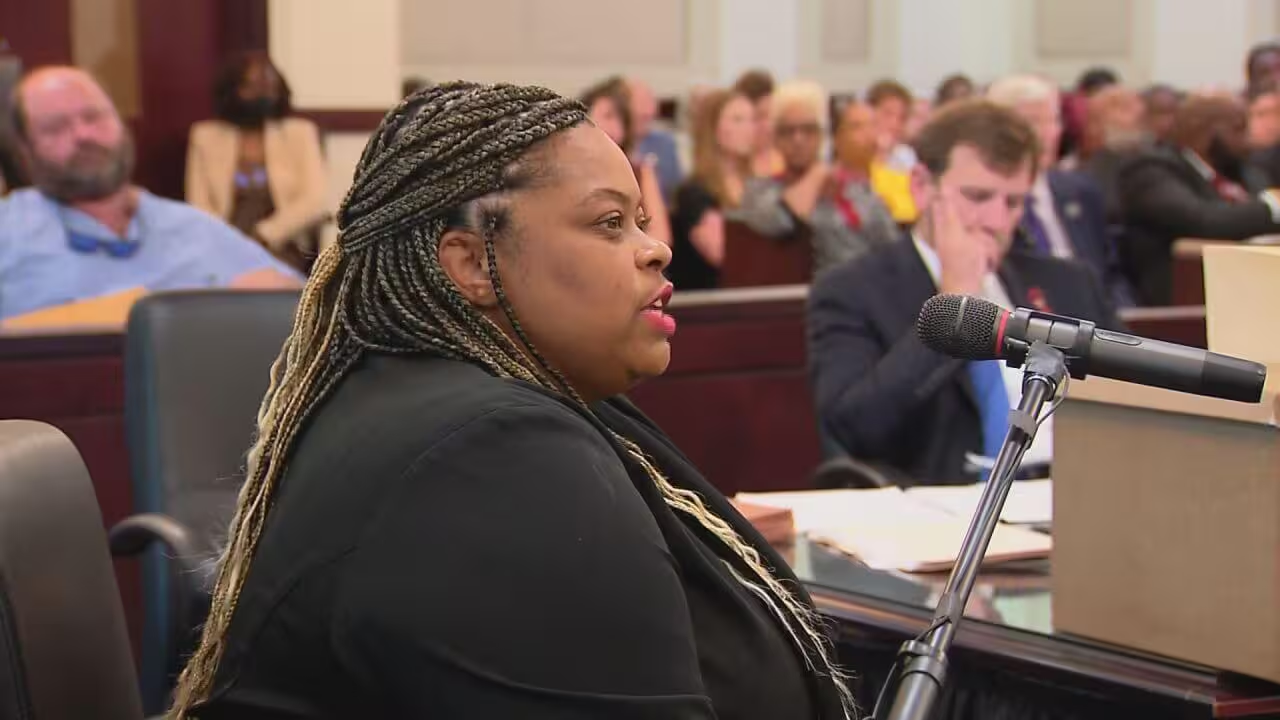

When Nakeda Wilhoite took the stand in a Nashville courtroom in August 2024, her testimony wasn’t just about a tragic criminal case—it offered a stark reflection of the pressures faced by modern freelancers and consultants. Juggling multiple roles as a case manager, bonding agent, and GPS monitoring service provider, Wilhoite found herself at the centre of a system failure with devastating consequences. While the legal outcome remains pending, her experience highlights universal challenges for independent professionals: unclear responsibilities, overlapping loyalties, and the courage required to speak up when things go wrong. For freelancers and consultants in Nigeria and beyond, this case isn’t just a headline—it’s a case study in professional boundaries, communication, and the importance of systems that support, rather than overwhelm, those doing the work.
The Reality of Wearing Multiple Hats
Wilhoite’s situation is familiar to many freelancers and consultants: she was employed full-time by the Tennessee Department of Children’s Services while simultaneously running her own GPS monitoring business and working as a bonding agent for Brooke’s Bail Bonding. This kind of portfolio career—common in Nigeria’s growing gig economy and increasingly normalised globally—offers flexibility and income diversity but also creates complex accountability structures. When roles overlap, it becomes harder to define where one responsibility ends and another begins. For independent professionals, the lesson is clear: multiplicity of work is viable only when boundaries are explicit, documented, and regularly reviewed. Without them, even well-intentioned efforts can lead to confusion, missed signals, and professional exposure.
When Systems Fail, Individuals Bear the Burden
A key revelation in the hearing was that a clerical error at Davidson County Jail meant Rivers was released without his bond conditions being properly communicated. Wilhoite stated she only learned of the geographic restriction the day before meeting Rivers—despite working for a company that had issued his bond. This points to a systemic breakdown: information silos, inadequate handover processes, and assumptions about who knows what. For freelancers and consultants, especially those working remotely or across time zones, this underscores the need to verify critical information independently. Never assume a client or partner has shared all relevant details. Implement personal checks—such as requesting written briefings, confirming timelines in writing, and maintaining your own tracking systems—to reduce reliance on flawed external processes.
Knowing Your Limits and Speaking Up
When Wilhoite realised Rivers intended to live in Mississippi—contrary to his bond conditions—she admitted she wasn’t sure she had the authority to act. Her hesitation, while understandable, became a focal point of judicial frustration. Judges questioned why law enforcement wasn’t contacted despite knowledge of a violation. This moment speaks directly to a core competency for consultants and freelancers: the ability to recognise when a situation exceeds your mandate and to escalate appropriately. In client work, knowing when to say ‘I need to involve someone else’ or ‘This requires specialist input’ is not a weakness—it’s a hallmark of professional maturity. Build clear escalation paths into your contracts and retainers, and don’t wait for a crisis to define them.
The Cost of Ambiguity in Client Relationships
Brooke Harlan, owner of Brooke’s Bail Bonding, said she had ‘long talks’ with Wilhoite and her staff to make corrections after the incident—but the damage was already done. This reactive approach mirrors a common pitfall in freelance and consulting engagements: addressing issues only after they escalate. Preventative clarity is far more effective. At the outset of any engagement, define roles, responsibilities, reporting lines, and boundaries in writing. Use simple tools like RACI charts (Responsible, Accountable, Consulted, Informed) or one-page agreements to eliminate ambiguity. For Nigerian freelancers working with international clients, this is especially vital—differences in legal frameworks, communication norms, and expectations can easily lead to misunderstanding if not proactively managed.
Building Resilience in High-Pressure Roles
Wilhoite’s testimony revealed she was managing immense pressure: monitoring a high-risk individual while balancing demanding roles in public service and private enterprise. The emotional toll of such work is often overlooked in discussions about the gig economy. Freelancers and consultants must recognise that resilience isn’t just about endurance—it’s about sustainable practice. This includes setting realistic workloads, scheduling regular breaks, seeking peer support, and knowing when to step back. In Nigeria, where infrastructure challenges and economic volatility can amplify work stress, building personal resilience strategies is not optional—it’s essential for long-term career sustainability. Consider mentorship, professional associations, or even informal networks to share burdens and gain perspective.
Pricing, Negotiation, and the Value of Clarity
While the case doesn’t directly address fees, it implicitly highlights why charging appropriately matters. When professionals are underpaid or overstretched, corners get cut—sometimes unintentionally. Proper pricing allows you to limit workload, invest in tools (like reliable GPS monitoring software or secure communication platforms), and say no to engagements that stretch you too thin. In negotiations, frame your rates not just as compensation for time, but as investment in quality, reliability, and risk mitigation. Clearly communicate what your fee includes—and what it doesn’t. This sets expectations, reduces scope creep, and protects both you and your client from misunderstandings that could have serious consequences.
What this means
The Bricen Rivers case is, at its heart, a story about systems, people, and the gaps between them. For freelancers and consultants, it offers a powerful reminder that professionalism isn’t just about delivering results—it’s about how you navigate complexity, communicate under pressure, and protect your integrity when faced with conflicting demands. Whether you’re advising startups in Lagos, managing remote projects for clients in London, or building a portfolio career across Nigeria’s vibrant gig economy, the principles remain the same: clarity, courage, and self-awareness are your most valuable assets. By learning from moments like this—not to assign blame, but to strengthen practice—you can build a career that’s not only successful, but sustainable and resilient in the face of whatever comes next.
Originally reported by courttv.com. Adapted for our readers with AI assistance.