
Independent professionals often assume that high-pressure succession planning only concerns large federations and corporate boards. Yet the current turmoil inside the Nigeria Football Federation (NFF) over appointing a new Super Eagles coach shows what happens when leadership delay, weak succession planning and performance-based accountability collide. The stakes are footballing, but the lessons are universal. For freelancers, consultants and gig workers in Nigeria and beyond, the NFF's predicament is a prompt to review client pipelines, contingency plans and reputation management before a crisis forces your hand.
The Source of the Pressure
A top NFF official has warned that failure to qualify for the 2026 World Cup, jointly hosted by the United States, Canada and Mexico, will cost the federation's leading figures their jobs. "Nigeria can go on to win the AFCON next year in Morocco, but if we fail to qualify for the 2026 World Cup, the NFF board is gone!," the official said. The statement underscores how a single high-stakes deliverable can overshadow every other achievement.
The pressure is intensified by history. NFF president Ibrahim Gusau's predecessor, Amaju Pinnick, could not stand for a third term after the Super Eagles failed to qualify for the 2022 World Cup in Qatar. Gusau himself has called the Super Eagles the biggest brand of Nigerian football and acknowledged that their results largely determine whether an administration succeeds or fails. The federation is therefore operating under a performance-based contract where one missed target can rewrite the entire narrative.
Succession Planning Is Not Optional
Jose Peseiro's departure was not a surprise. Gusau made it clear in Abidjan that the Portuguese coach would not continue as Super Eagles head coach even after leading the side to the Africa Cup of Nations final. His contract ran out at the end of February, and the federation had months of warning. Yet, more than eight weeks after Nigeria failed to win a fourth AFCON title, the NFF was still "cooking in their kitchen the perfect replacement for Peseiro."
The search has also been marked by intrigue and shifting candidates. Despite public endorsement by former NFF president Amaju Pinnick, Finidi George is reportedly out of the reckoning for the head coach role. For freelancers and consultants, this is a familiar trap: knowing a key client contract will end, but failing to line up the next engagement. Whether you are a marketing consultant, software developer or financial adviser, a healthy practice keeps at least one warm prospect for every major contract approaching renewal. Waiting until the final whistle to scout replacements is how income gaps begin.
Seize Early Windows Before They Close
The NFF missed a valuable opportunity to blood a new coach during friendly matches in Morocco last month. The source notes describe it as a "misstep" and "an opportunity lost" that the new coach was not in place for those fixtures. Those friendlies would have allowed the incoming manager to assess players, test systems and build momentum before the competitive June qualifiers.
Consultants and gig workers face the same dynamic. When a client offers a low-risk onboarding project, a trial assignment or a chance to shadow an existing team, accepting promptly can shape the entire relationship. Delaying until you feel "ready" often means the brief has changed, the budget has moved elsewhere, or a competitor has captured the trust you hoped to build. Momentum in freelance work is fragile; early windows matter more than perfect conditions.
When a Campaign Goes Off Track, Recovery Must Be Immediate
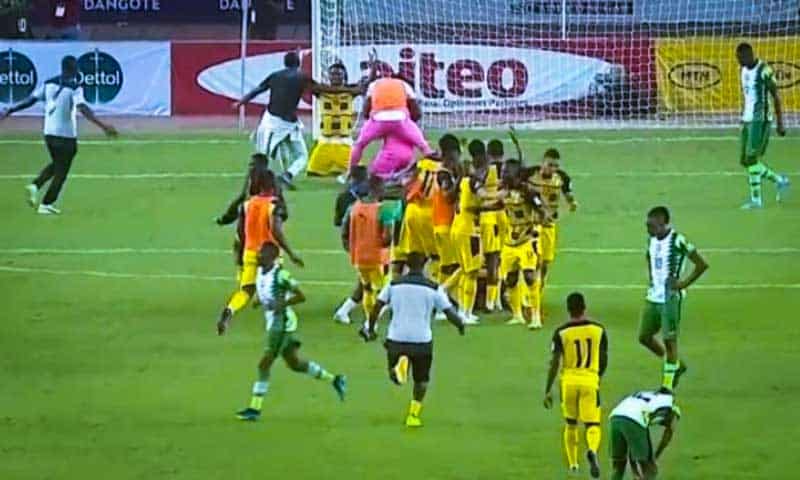
The Super Eagles' World Cup qualifying campaign is already wobbling. Under Peseiro, Nigeria could only scrape two draws in the opening two rounds of qualifiers. The next fixtures in June, at home against South Africa and away in Benin, are now described as must-win matches if the team is to get the campaign back on course. The new coach, whenever appointed, will have almost no margin for error.
For independent professionals, this translates into client management discipline. If an early milestone underwhelms, the next two interactions must over-deliver. A delayed first draft, a missed discovery call or a budget overrun can often be repaired, but only if you respond with speed, honesty and a clear recovery plan. Clients rarely fire consultants for one mistake; they fire them for the silence and drift that follow it.
Protect the Brand That Pays Your Bills
Gusau's framing of the Super Eagles as Nigeria football's biggest brand is worth noting. The team's reputation is not merely a matter of national pride; it is the asset upon which administrators, sponsors, broadcasters and stakeholders rely. Allowing that brand to drift through prolonged uncertainty weakens its value even before results turn sour.
For freelancers and consultants, your personal brand works the same way. In the Nigerian gig economy and the wider global market for remote talent, clients hire people they trust before they hire people they have simply heard of. Every delayed response, vague proposal or public complaint chips away at the reputation that attracts premium rates. Treat your freelance identity as a brand asset: define your niche, publish useful insights, keep your portfolio current and communicate consistently.
Skill-Building and Badge Credibility Still Matter
Finidi George is reportedly out of the running partly because he did not process the requisite coaching badges and did not pass his audition after taking charge. The lesson is blunt but fair: credentials and demonstrated competence are filters that clients and institutions use to reduce risk. In a crowded consulting market, certifications, case studies and visible results are the equivalents of coaching badges.
This is especially relevant for Nigerian freelancers competing globally. Remote work platforms and international clients increasingly look for proof of skill, not just self-description. Investing in recognised training, documenting outcomes and asking for testimonials after successful engagements are not bureaucratic chores; they are the scaffolding that supports higher fees and better briefs. The gig economy rewards those who can prove, not merely promise, their value.
What this means
The NFF's hunt for a new Super Eagles coach is fundamentally a story about accountability, timing and brand stewardship. Those same pressures shape freelance and consulting careers every day. Whether you are negotiating your next retainer in Lagos, pitching remotely to a client in London, or building a side hustle into a full-time practice, the disciplines remain unchanged: plan transitions before they become crises, take early chances to build trust, recover quickly from setbacks, and protect the reputation that earns your premium. Football administrations and independent professionals may operate on very different scales, but the principles that keep both in work are remarkably alike. Make the NFF's current anxiety your own early warning system, not your future reality.
Originally reported by thetalk.ng. Adapted for our readers with AI assistance.