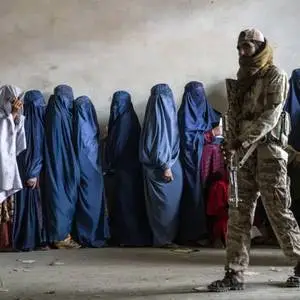

Since the Taliban's return to power in Afghanistan in August 2021, the lives of Afghan women and girls have been subjected to unprecedented restrictions. Despite initial promises of moderation, the Taliban swiftly reinstated severe limitations on women's freedoms, including bans on education, employment, and public presence. Two leading human rights organizations, Amnesty International and the International Commission of Jurists (ICJ), have released a groundbreaking report condemning these actions as systematic gender persecution and crimes against humanity. This article delves into the nature of these restrictions, their legal ramifications, and the international community's response to what has been termed a 'war on women.'
The Taliban's Return and the Reinstatement of Harsh Restrictions
The Taliban regained control of Afghanistan in August 2021, coinciding with the withdrawal of US and NATO forces after two decades of conflict. Initially, the group pledged a more moderate governance approach compared to their previous rule in the late 1990s. However, these assurances quickly faded as the Taliban began imposing stringent restrictions on women and girls.
Women were barred from most public spaces, prohibited from working in many sectors, and girls were denied education beyond the sixth grade. These policies mirror the Taliban’s earlier regime, which enforced a strict interpretation of Sharia law that severely curtailed women's rights and freedoms.
Such measures have led to widespread condemnation globally, highlighting the stark regression in women’s rights in Afghanistan and raising alarms about the human rights implications under the Taliban’s rule.
Human Rights Organizations Label Restrictions as Crimes Against Humanity
Amnesty International and the International Commission of Jurists (ICJ) have jointly released a comprehensive report titled 'The Taliban’s War on Women: The Crime Against Humanity of Gender Persecution in Afghanistan.' The report identifies the Taliban’s actions as systematic gender-based persecution that meets the criteria for crimes against humanity under the International Criminal Court (ICC) statutes.
The report underscores that the Taliban’s crackdown includes imprisonment, enforced disappearances, torture, and other forms of ill-treatment specifically targeting women and girls. These actions, according to the report, are not isolated incidents but part of a widespread and organized campaign of gender persecution.
Santiago A. Canton, ICJ’s Secretary-General, emphasized the gravity and systematic nature of these abuses, calling for the ICC to incorporate these crimes into its ongoing investigations and for countries worldwide to pursue universal jurisdiction to hold the Taliban accountable.
Systematic Oppression: The Impact on Afghan Women and Girls
The Taliban’s restrictions have drastically affected Afghan women’s participation in public life, employment, and education. Many women have been forced out of their jobs, including in sectors like health and education, which are critical for community well-being.
Education bans for girls above grade six have led to a generation deprived of formal schooling, severely limiting future opportunities. This educational deprivation not only violates fundamental rights but also undermines Afghanistan’s long-term social and economic development.
Furthermore, women who have protested these restrictions face harsh retaliation, including arbitrary arrests, enforced disappearances, torture, and coercion to cease activism. Such repression silences dissent and perpetuates a culture of fear and oppression.
Forced Marriages and Gender-Based Violence Under Taliban Rule
The report from Amnesty International documents disturbing cases of forced marriages, where women and girls are compelled to marry Taliban members against their will. Those who resist often face abduction, intimidation, threats, and physical torture.
One highlighted case involves a 15-year-old girl in Takhar province who was forced into marriage despite her family’s objections. Another case details a 33-year-old female journalist and social activist forcibly married to a Taliban commander shortly after the Taliban’s takeover.
These acts constitute severe violations of human rights and demonstrate the Taliban’s use of gender-based violence as a tool to control and suppress women, further entrenching their systemic persecution.
International Legal Framework and Calls for Accountability
The ICC’s Rome Statute explicitly classifies gender-based persecution as a crime against humanity, encompassing acts like imprisonment, torture, and enforced disappearances targeted at a specific gender group. Amnesty and ICJ argue that the Taliban’s actions fall within this legal framework.
Both organizations have urged the ICC to incorporate these gender-based crimes into its Afghanistan investigations and called upon states to exercise universal jurisdiction to prosecute those responsible. This legal approach aims to ensure that perpetrators cannot evade justice due to the Taliban’s control over the country.
The international community faces a pressing obligation to respond effectively, dismantling the system of gender oppression and upholding international legal standards to protect Afghan women and girls.
Broader Human Rights Violations Beyond Gender-Based Persecution
While the focus remains on the gender-based persecution of women and girls, the Taliban’s human rights abuses extend beyond gender lines. Monitoring groups report extrajudicial killings, arbitrary arrests, enforced disappearances, and torture targeting former government officials, journalists, activists, and minority groups.
Journalists and members of the LGBTQ community have been particularly vulnerable to Taliban repression, facing threats, violence, and censorship. Such widespread abuses contribute to an atmosphere of fear and undermine freedom of expression and civil society.
These violations highlight the broader human rights crisis in Afghanistan, indicating that the Taliban’s governance is marked by systematic oppression across multiple societal dimensions.
Global Response: Advocacy, Sanctions, and Humanitarian Efforts
The international community has condemned the Taliban’s policies through diplomatic statements, sanctions, and calls for human rights compliance. However, tangible actions to pressure the Taliban remain limited due to geopolitical complexities and concerns over humanitarian access.
Humanitarian organizations continue to provide aid, such as food rations and medical assistance, but face operational challenges under Taliban restrictions. Afghan women and girls often rely on these services amid escalating economic hardships exacerbated by the Taliban’s policies.
Advocacy groups emphasize the need for coordinated global efforts that combine humanitarian support with robust pressure on the Taliban to restore women’s rights and uphold fundamental freedoms.
The Urgent Need for Sustained International Engagement
The situation of Afghan women under Taliban rule demands sustained and multifaceted international engagement. Legal accountability, diplomatic pressure, and humanitarian support must be synchronized to effectively address the ongoing abuses.
There is a critical need for global solidarity to amplify the voices of Afghan women and activists, ensuring they are not silenced or forgotten amid political negotiations and security concerns.
As Amnesty International’s Secretary-General Agnès Callamard noted, dismantling the system of gender oppression in Afghanistan is a moral imperative. Failure to act risks entrenching a legacy of violence and discrimination that will affect generations to come.
Conclusion
The Taliban’s severe restrictions on Afghan women and girls represent a grave violation of human rights and a calculated campaign of gender persecution. Recognized by leading human rights groups as crimes against humanity, these abuses demand urgent international attention and action. Legal mechanisms like the International Criminal Court and universal jurisdiction provide pathways to accountability, but global political will is crucial to enforce these measures. Supporting Afghan women’s rights is not only a matter of justice but also a prerequisite for peace and stability in Afghanistan. The world must unite to dismantle the Taliban’s system of oppression and ensure a future where Afghan women and girls can live with dignity, freedom, and equality.