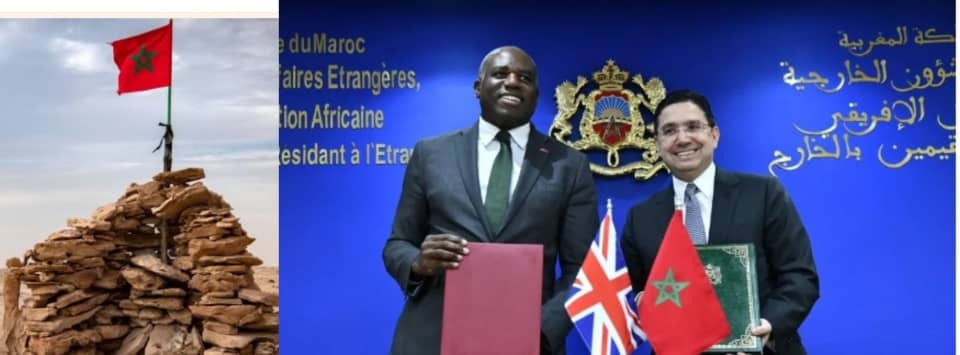

The Western Sahara dispute has remained one of the most protracted and complex territorial conflicts in North Africa for decades. At the heart of the conflict lies competing claims between Morocco and the Sahrawi people, represented by the Polisario Front, over sovereignty and self-determination in the region. Recently, the United Kingdom has taken a significant diplomatic step by endorsing Morocco’s autonomy plan for Western Sahara, describing it as the most credible and pragmatic path to peace. This endorsement, formalized in a joint communiqué signed by UK Secretary of State David Lammy and Morocco’s Foreign Minister Nasser Bourita, signals a shift in international support and underscores the UK’s commitment to a peaceful and stable North Africa. This article explores the details, implications, and broader context of the UK’s backing of Morocco’s autonomy proposal, analyzing its potential impact on the conflict’s resolution and regional dynamics.
Historical Background of the Western Sahara Conflict
Western Sahara, a sparsely populated territory on the northwest coast of Africa, has been the subject of a territorial dispute since Spain’s withdrawal in 1975. Morocco claims sovereignty over the region, while the Sahrawi Arab Democratic Republic (SADR), led by the Polisario Front, seeks independence. The conflict has resulted in decades of diplomatic stalemate and intermittent armed clashes.
The United Nations has been involved in efforts to mediate the conflict, including a proposed referendum on self-determination that has yet to take place. The region remains divided, with Morocco controlling most of the territory and the Polisario Front administering the remainder. The dispute has broader implications for regional security, migration, and economic development in North Africa.
Over the years, various peace proposals have been tabled, but none have achieved a lasting resolution. Morocco’s autonomy plan, first submitted in 2007, offers a framework for self-governance under Moroccan sovereignty, aiming to reconcile competing interests and promote stability.
Details of Morocco’s Autonomy Plan
Morocco’s autonomy plan proposes granting Western Sahara significant self-governing powers while maintaining it as an integral part of the Kingdom. This includes local governance over cultural, economic, social, and environmental affairs, while Morocco retains control over defense, foreign policy, and territorial integrity.
The plan emphasizes development initiatives and infrastructure investments to improve living standards in the region, aiming to integrate Western Sahara economically and socially with the rest of Morocco. It also proposes mechanisms for preserving the Sahrawi identity and culture within a Moroccan framework.
Since its submission, the autonomy plan has been presented as a pragmatic compromise, seeking to balance Sahrawi aspirations with Morocco’s territorial claims. It has received varying reactions internationally but is increasingly recognized as a viable path toward conflict resolution.
The UK’s Official Endorsement and Its Significance
In a joint communiqué signed in Rabat, the UK government officially backed Morocco’s autonomy plan, describing it as the “most credible, viable and pragmatic basis” for resolving the Western Sahara dispute. This marks a significant diplomatic endorsement from a permanent member of the UN Security Council.
The communiqué, signed by David Lammy, UK Secretary of State for Foreign, Commonwealth and Development Affairs, and Morocco’s Foreign Minister Nasser Bourita, highlights the UK’s intention to support the resolution bilaterally, regionally, and internationally. This support extends to economic cooperation, including potential projects in Western Sahara under the UK’s Export Finance commitment.
The UK’s endorsement aligns with similar positions held by the United States, France, and Spain, reflecting a growing international consensus favoring Morocco’s autonomy plan. This shift could accelerate diplomatic momentum toward a sustainable resolution.
Implications for Regional Stability and Integration
The UK’s support for Morocco’s autonomy plan underscores the broader regional importance of resolving the Western Sahara conflict. A peaceful settlement is seen as critical for enhancing stability in North Africa, a region vulnerable to security threats, economic challenges, and migration pressures.
Resolving the dispute would facilitate deeper regional integration by removing a major source of tension among neighboring countries, including Algeria and Mauritania. It would also enable Morocco to strengthen its role as a gateway to Africa’s socio-economic development, benefiting trade and investment flows.
The joint communiqué emphasizes that settling the dispute would not only improve bilateral relations between the UK and Morocco but also contribute to the relaunch of regional cooperation frameworks. This could foster collaboration on security, economic development, and migration management.
Economic Opportunities and UK-Morocco Cooperation
The UK’s endorsement includes a commitment to explore economic cooperation opportunities in Western Sahara, particularly through the UK Export Finance’s £5 billion support package for new business ventures across Morocco. This could open avenues for investment in infrastructure, renewable energy, agriculture, and other sectors.
Morocco’s strategic position as a gateway to African markets makes it a key partner for the UK’s global economic ambitions. Strengthening ties with Morocco aligns with the UK’s post-Brexit strategy to expand trade and investment relationships beyond Europe.
Economic collaboration is expected to support stability by creating jobs and improving living standards in Western Sahara, addressing some root causes of conflict. The UK’s engagement could also encourage other international investors to consider opportunities in the region.
The Role of the United Nations and International Mediation
Both the UK and Morocco reaffirm their support for the United Nations-led peace process, recognizing the central role of the UN Secretary-General’s Personal Envoy, Staffan de Mistura, in facilitating dialogue between the parties. This underscores the importance of multilateral diplomacy in resolving the dispute.
The UK’s commitment to actively support the Personal Envoy and the parties involved highlights its readiness to engage constructively in international efforts. Such engagement is vital to overcoming longstanding obstacles and building trust between Morocco and the Polisario Front.
The joint communiqué stresses that the time for resolution is long overdue, emphasizing a sense of urgency shared by the international community. A successful UN-mediated agreement would provide legitimacy and durability to any settlement reached.
International Reactions and the Growing Momentum for Resolution
The UK’s endorsement of Morocco’s autonomy plan has been welcomed by Moroccan authorities as a validation of their diplomatic strategy and a boost to international legitimacy. It complements similar positions taken by influential countries like the United States, France, and Spain.
This growing international consensus enhances pressure on the Polisario Front and its supporters to engage in constructive negotiations. It also signals a shift in UN Security Council dynamics, potentially influencing future resolutions and peacekeeping mandates.
While challenges remain, including the Polisario Front’s insistence on independence, the widening support for Morocco’s autonomy proposal reflects a pragmatic approach to conflict resolution that balances political realities with aspirations for peace.
Future Prospects and Challenges Ahead
Despite the positive momentum, the path to resolving the Western Sahara conflict remains complex. Key challenges include reconciling divergent positions, ensuring the protection of Sahrawi rights, and securing buy-in from all stakeholders, including regional actors.
The UK’s support adds diplomatic weight but will need to be complemented by sustained engagement from other international players and constructive dialogue between Morocco and the Polisario Front. Confidence-building measures and inclusive negotiations will be essential.
Looking ahead, the resolution of this dispute could serve as a model for addressing similar protracted conflicts in Africa and beyond, demonstrating the efficacy of autonomy arrangements combined with international support for regional stability and development.
Conclusion
The United Kingdom’s endorsement of Morocco’s autonomy plan for Western Sahara marks a pivotal development in the quest to resolve one of Africa’s longest-running territorial disputes. By recognizing the plan as the most credible and pragmatic path forward, the UK has joined a growing international coalition seeking to foster peace, stability, and economic development in the region. This diplomatic backing not only strengthens Morocco’s position but also reinforces the United Nations-led mediation framework, emphasizing the urgency of a settlement. While challenges persist, the combined efforts of Morocco, the UK, the UN, and other global stakeholders provide renewed hope for a peaceful resolution that respects the aspirations of the Sahrawi people while promoting regional integration and prosperity. The coming months will be critical in translating this momentum into tangible progress, with the UK poised to play a constructive role in shaping a stable future for Western Sahara and North Africa.
Originally reported by guardian.ng. Adapted for our readers.