
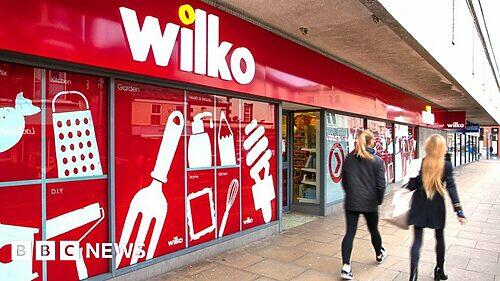

Wilko, a well-known name on the UK High Street since 1930, has recently collapsed into administration after failing to secure emergency funding to sustain its operations. Despite the financial turmoil, the retailer has committed to keeping its 400 stores open for now, safeguarding the jobs of approximately 12,500 employees. This article provides an in-depth look at Wilko’s current predicament, the factors contributing to its decline, the ongoing administration process, and what the future might hold for this stalwart of British retail.
Wilko’s Entry into Administration: What It Means
In a significant development for the UK retail sector, Wilko has officially entered administration after unsuccessful attempts to secure a rescue deal. Administration is a legal process designed to protect companies from creditors while administrators explore options to rescue or restructure the business. For Wilko, this means that PwC has been appointed as the administrator and will lead efforts to find a buyer for the entire company or parts of it.
The immediate effect of administration is that Wilko’s stores remain operational, and there are no immediate job losses or store closures. Staff will continue to receive their wages, providing some reassurance amid uncertainty. However, administration signals severe financial distress, and if no buyer emerges, the company risks store closures and redundancies in the near future.
Jane Steer of PwC acknowledged the unsettling nature of the announcement for Wilko’s employees and the communities where its stores operate. The administration phase offers a window of opportunity to secure investments or buyers capable of revitalizing the business, though the outcome remains uncertain.
The Struggles Behind Wilko’s Financial Collapse
Wilko’s financial difficulties have been mounting for several years, marked by sharp losses and a cash shortage. The retailer attempted to stabilize its finances by borrowing £40 million from Hilco, a restructuring specialist, and by implementing cost-cutting measures such as job reductions and leadership changes. Additionally, Wilko sold a distribution center to alleviate some financial pressures.
Despite these efforts, Wilko’s extensive portfolio of over 400 stores, many located in traditional town centres, became increasingly costly to maintain. Changing consumer behavior, with shoppers gravitating towards out-of-town retail parks and online shopping, eroded footfall in many High Street locations. This shift left Wilko with a large, expensive estate that lacked the necessary investment to modernize and compete effectively.
Competition intensified as discount retailers like B&M and The Range capitalized on the growing demand for bargain shopping amid the cost-of-living crisis. Wilko struggled to adapt its business model and retail offering to this evolving landscape, contributing to its financial woes.
Impact on Employees and Communities
Wilko employs around 12,500 people across its 400 stores, making it a significant employer in many towns and cities. The administration announcement has understandably caused concern among staff and local communities that rely on Wilko as a major retail presence. Fortunately, the company has assured that there will be no immediate job losses and that employees will continue to be paid during the administration process.
However, the specter of potential redundancies and store closures looms if no buyer emerges. The uncertainty has been deeply unsettling for workers, many of whom are members of Wilko’s pension scheme. Reports have indicated that the pension fund faces a sizable deficit, adding another layer of complexity to the company’s financial challenges.
The GMB union criticized Wilko’s management for failing to capitalize on market opportunities, describing the collapse as "entirely avoidable." Union representatives have emphasized the importance of protecting workers’ rights and pensions as the administration process unfolds.
The Role of PwC and the Search for a Buyer
PwC, acting as the appointed administrators, is tasked with managing Wilko’s affairs during this critical period. Their primary objective is to keep the business running while actively seeking investors or buyers interested in acquiring all or part of the company. This approach aims to preserve as many jobs and stores as possible.
Jane Steer of PwC highlighted the ongoing conversations with potential investors and emphasized the complexity of the situation, given the tight timeframe and Wilko’s cash position. The administrators have indicated that while there has been significant interest, no definitive deal could be secured within the initial deadline, necessitating the move into administration.
If no suitable buyer is found, PwC may be forced to implement store closures and redundancies, which would mark a significant blow to the UK High Street. The coming weeks will be crucial in determining whether Wilko can be salvaged or faces a more drastic restructuring.
Challenges Facing Wilko in the Modern Retail Landscape
Wilko’s difficulties are emblematic of broader challenges confronting traditional High Street retailers. Reduced consumer spending, inflationary pressures, and rising operational costs have squeezed profit margins across the sector. Additionally, the shift towards online shopping has accelerated, demanding substantial investment in digital infrastructure and omnichannel capabilities.
Retail analysts have pointed out that Wilko’s failure to invest adequately in modern systems and technology has hindered its ability to compete effectively. Catherine Shuttleworth noted that the company’s large estate and outdated infrastructure required significant investment, which was not forthcoming over the past decade.
Moreover, the competitive landscape has evolved with discount retailers and online platforms gaining market share. Wilko’s traditional business model, reliant on physical stores in High Streets, struggled to keep pace with these changes, leaving it vulnerable during economic downturns.
Market Competition and Consumer Behavior Shifts
The rise of competitors like B&M and The Range has intensified pressure on Wilko, particularly as consumers become more price-conscious amid the cost-of-living crisis. These rivals have successfully positioned themselves as go-to destinations for bargain hunting, drawing customers away from Wilko’s stores.
Consumer preferences have also shifted toward convenience and value, with many shoppers favoring larger retail parks or online options that offer competitive pricing and wider product ranges. Wilko’s predominantly High Street presence has made it harder to capture this evolving demand effectively.
The COVID-19 pandemic further accelerated changes in shopping habits, with increased reliance on e-commerce and reduced foot traffic in traditional retail areas. Wilko’s slower adaptation to these trends contributed to a decline in sales and profitability.
Potential Outcomes and Future Prospects for Wilko
The immediate future for Wilko hinges on the administration process and whether a buyer can be found to rescue the business. If successful, the retailer could emerge with a restructured business model, potentially shedding underperforming stores and investing in digital transformation.
However, failure to secure a rescue deal may result in significant store closures and job losses, making Wilko one of the largest High Street casualties in recent years. Such an outcome would have profound implications for employees, suppliers, and local communities.
Industry experts emphasize that any turnaround will require substantial changes, including modernizing operations, enhancing online capabilities, and adapting to consumer demands. The coming months will be critical for Wilko’s survival and its ability to remain a fixture on the UK High Street.
Conclusion
Wilko’s entry into administration marks a critical juncture for one of the UK’s longstanding High Street retailers. While the company’s commitment to keeping stores open and staff employed offers temporary relief, the underlying financial challenges remain significant. The outcome of the administration process will determine whether Wilko can reinvent itself to survive in a rapidly evolving retail landscape or faces a painful contraction. For employees, customers, and communities, the hope is that a viable rescue deal can be secured to preserve this iconic brand and the thousands of jobs it supports.
Originally reported by corneey.com. Adapted for our readers.