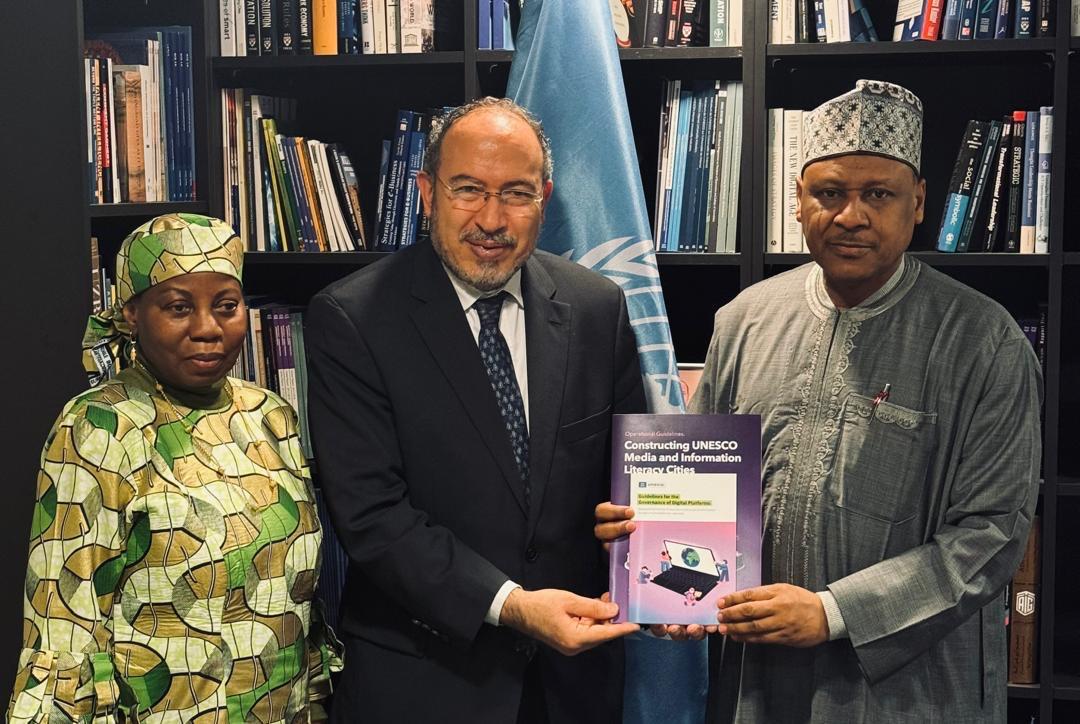

In a landmark development, Nigeria has received endorsements from seven countries and commitments from twenty more to establish the UNESCO Category II Media and Information Literacy (MIL) Institute within its borders. Announced by the Minister of Information and National Orientation, Mohammed Idris, this initiative is poised to position Nigeria as a leading center for media education and literacy, not just for Africa but globally. The institute will operate within the National Open University of Nigeria's premises in Abuja, reflecting Nigeria’s commitment to combating misinformation and fostering media professionalism worldwide.
Nigeria’s Strategic Bid for the UNESCO Media Institute
Nigeria’s bid to host the UNESCO Media and Information Literacy Institute represents a strategic move to enhance its role in global media education. As a Category II institute under UNESCO, it will focus on promoting media literacy, critical thinking, and responsible journalism. The bid aligns with Nigeria’s broader goals of fostering education, media professionalism, and regional leadership in information dissemination.
Minister Mohammed Idris highlighted that the bid has received endorsements from seven sister nations, with about twenty more countries expressing their support. This international backing signals strong confidence in Nigeria’s ability to host and manage the institute effectively, reflecting its growing influence in global media and communication sectors.
The institute’s location within the National Open University of Nigeria (NOUN) in Abuja is strategic, leveraging NOUN’s extensive infrastructure and commitment to open and distance learning. This partnership ensures that the institute can reach a wider audience, including students, media professionals, and policymakers across Africa and beyond.
The Role of the UNESCO Media and Information Literacy Institute
The UNESCO Media and Information Literacy Institute is designed to address the critical global challenge of misinformation, disinformation, and fake news. By promoting media literacy, the institute aims to equip individuals with the skills to critically analyze information, verify sources, and engage responsibly in the digital age.
Media and Information Literacy (MIL) is increasingly recognized as a vital tool in safeguarding democratic values, peace, and security worldwide. The institute will provide training, research, and advocacy programs that strengthen the capacity of media practitioners, educators, and citizens to navigate complex information environments.
Beyond Nigeria, the institute’s mandate extends to Africa and the international community, making it a hub for knowledge exchange and collaboration. It will foster partnerships with governments, civil society, and media organizations to promote ethical journalism and counter harmful narratives that threaten social cohesion.
International Support and Commitments
The strong international support for Nigeria’s bid underscores the global consensus on the importance of the UNESCO Media Institute. Seven countries have formally endorsed the bid, while an additional twenty have pledged their support, demonstrating widespread recognition of Nigeria’s readiness and capability to host the institute.
This coalition of support enhances Nigeria’s diplomatic standing and strengthens the case for final approval by the UNESCO Board. It reflects a shared understanding that Nigeria’s leadership in media literacy can have a transformative impact across multiple regions, especially in Africa.
Such international backing also facilitates resource mobilization, knowledge sharing, and technical assistance, which are critical for the successful establishment and operation of the institute. It positions Nigeria as a collaborative partner in global efforts to promote media literacy and combat misinformation.
Assessment of Nigeria’s Readiness to Host the Institute
A UNESCO delegation recently visited Nigeria to assess the country’s preparedness to host the Media and Information Literacy Institute. The inspection team provided positive feedback, recognizing the robust infrastructure and governance structures already in place, which meet UNESCO’s stringent requirements.
The evaluation team, led by experts such as Mr. Nelson Papi Kolliesuah from Data-Pop Alliance, confirmed that Nigeria’s educational system and institutional frameworks align well with the institute’s objectives and the UN Sustainable Development Goals (SDGs). This alignment is vital for the institute’s integration into global educational strategies.
Minister Idris emphasized that since Nigeria was granted provisional hosting rights, significant progress has been made in collaboration with the National Open University and other stakeholders. The government’s proactive approach ensures that the institute will be well-equipped to commence operations smoothly and effectively.
Government Commitment and Funding
The Nigerian government, under the leadership of President Bola Ahmed Tinubu, has demonstrated strong commitment to the project by securing all necessary funding for the institute’s establishment. This financial backing is crucial for building state-of-the-art facilities, developing curriculum, and recruiting qualified personnel.
Minister Idris highlighted ongoing collaborations between the Ministry of Information and National Orientation, the Federal Ministry of Education, and other relevant agencies to ensure seamless implementation of the project. This inter-ministerial cooperation reflects a unified national vision for media literacy advancement.
The government’s investment also signals Nigeria’s recognition of the institute’s importance in tackling contemporary challenges such as fake news and misinformation, which have far-reaching implications for national security, democracy, and social stability.
Media Literacy as a Tool Against Fake News and Disinformation
Fake news, misinformation, and disinformation are pervasive problems that threaten peace and security globally. Nigeria, like many countries, faces significant challenges in this regard, making the establishment of the UNESCO Media Institute timely and essential.
Minister Idris stressed that media literacy empowers individuals to discern credible information from falsehoods, thereby enhancing societal resilience against manipulative narratives. This is critical for fostering informed citizenry and protecting democratic processes.
The institute will serve as a platform for developing innovative strategies to combat misinformation while respecting press freedom. The Minister clarified that efforts to fight fake news do not equate to censorship but rather promote responsible journalism and freedom with accountability.
Balancing Press Freedom and Responsibility
While combating misinformation is a priority, the Nigerian government remains committed to upholding press freedom as a cornerstone of democracy. Minister Idris emphasized that freedom of expression must be balanced with responsibility to prevent harm to individuals’ rights.
This balanced approach ensures that media practitioners operate within ethical frameworks that respect diversity and human rights while providing accurate and reliable information to the public.
The UNESCO Media and Information Literacy Institute will play a pivotal role in nurturing this balance by training journalists and media professionals on ethical standards, legal frameworks, and the importance of accountability in media practice.
Global Implications and Future Prospects
The establishment of the UNESCO Media and Information Literacy Institute in Nigeria has far-reaching implications for Africa and the global community. It positions Nigeria as a leader in media education and a key player in the fight against misinformation worldwide.
The institute will facilitate international cooperation, research, and capacity-building initiatives that contribute to global peace, security, and democratic governance. It aligns with the United Nations’ Sustainable Development Goals, particularly those focused on quality education, peace, and justice.
Looking ahead, the institute is expected to evolve into a center of excellence that attracts scholars, media professionals, and policymakers from around the world, fostering innovation and collaboration in media literacy and information governance.
Conclusion
Nigeria’s successful bid to host the UNESCO Media and Information Literacy Institute marks a significant milestone in the country’s media and educational landscape. With strong international support, robust government commitment, and a clear strategic vision, Nigeria is set to become a global hub for media literacy. This institute will not only enhance the skills and professionalism of media practitioners but also empower citizens worldwide to navigate the complex information environment responsibly. As misinformation and fake news continue to challenge societies globally, Nigeria’s leadership in this domain offers hope for a more informed, peaceful, and democratic future.
Originally reported by prnigeria.com. Adapted for our readers.