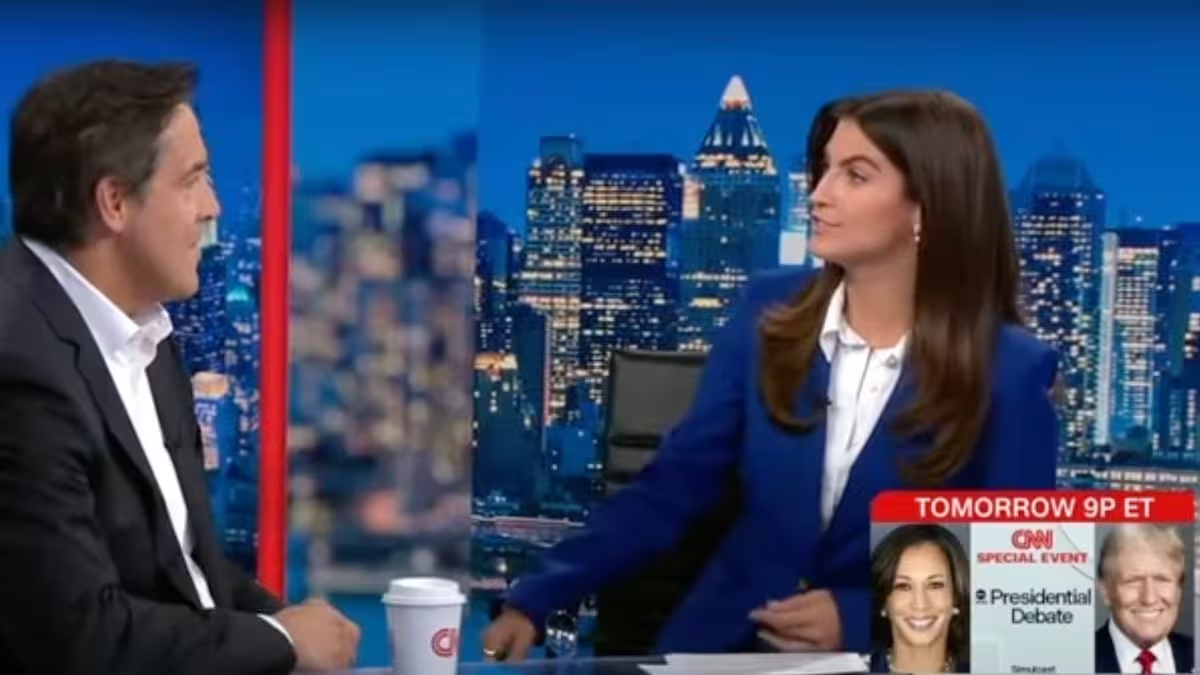

In a revealing first television interview since his exit from Project 2025, Paul Dans, the former director of the conservative initiative, offers fresh perspectives on the ambitious plan aimed at reshaping American governance. His conversation with CNN’s Kaitlan Collins sheds light on the origins, intentions, and controversies surrounding Project 2025, especially amid former President Donald Trump’s public disavowal of the strategy. This article delves deeply into Dans’ insights, the plan’s conservative underpinnings, and the broader political implications as the nation approaches a pivotal election year.
Background and Origins of Project 2025
Project 2025 emerged as a comprehensive conservative blueprint designed to prepare a future administration with a clear roadmap for governance. Initiated well before Donald Trump’s presidential announcement, it sought to unify the conservative movement by bringing together over 110 groups under a shared vision. Paul Dans, who served as the project’s director, describes it as a strategic effort to reengage conservatives nationwide in government roles and policymaking.
The project’s name references the anticipated year of a new conservative presidency, emphasizing readiness and proactive planning. The involvement of numerous former Trump administration officials highlights a continuity of conservative governance ideals, but Dans stresses that the plan itself was not a direct extension of Trump’s campaign. Instead, it represented a broader coalition effort to influence government operations beyond partisan lines.
This coalition approach was intended to overcome traditional conservative infighting by fostering collaboration among diverse factions. The plan was structured not just as a policy manual but as a call to action, inviting conservatives from all corners of the country to participate in restoring what they view as foundational American values and governance principles.
Paul Dans’ Perspective on Trump’s Role
During the CNN interview, Dans addressed the apparent contradiction between his previous enthusiastic endorsements of Project 2025 and Trump’s recent distancing statements. Trump has publicly claimed ignorance of the plan and disavowed any involvement, describing it as something he is not connected to. Dans counters by clarifying that while many key contributors have ties to Trump’s administration, the project itself was independent of Trump’s direct input.
Dans emphasized that the project’s ideas were open to any administration willing to adopt them, including Joe Biden’s, which he noted has implemented certain elements. This assertion challenges narratives that frame Project 2025 solely as a Trump-aligned agenda. Dans stresses the organic nature of the plan as a product of the conservative movement’s collective effort rather than a top-down directive from Trump.
Despite acknowledging only a passing acquaintance with Trump personally, Dans maintains that Project 2025 reflects a broader conservative ethos rather than an individual political agenda. His comments seek to separate the initiative’s substance from the controversies surrounding Trump’s fluctuating endorsements and criticisms.
Controversies and Misconceptions Surrounding Project 2025
Project 2025 has faced significant criticism and misunderstanding, particularly related to its perceived radicalism. Some opponents have interpreted the plan as endorsing extreme rhetoric, including references to a second American Revolution and calls for ‘bloodlessness,’ language that Dans explicitly renounced during his interview. He urged for a lowering of political temperatures and cautioned against inflammatory discourse.
Dans characterized many fears about Project 2025 as misinformation, clarifying that the plan’s core objectives are focused on restoring traditional family values, protecting children, and securing national borders. However, critics point to specific policy proposals within the plan, such as efforts to restrict abortion access by targeting mifepristone and challenging prescription drug pricing via the Inflation Reduction Act, as evidence of its controversial nature.
The tension between the project’s stated goals and public perception highlights the challenge of communicating complex policy initiatives in a highly polarized environment. Dans’ interview attempts to dispel myths while reaffirming the project’s commitment to conservative principles and pragmatic governance.
The ‘Kennedy-esque’ Comparison and Its Implications
One of the most striking aspects of Dans’ interview was his description of Project 2025 as ‘Kennedy-esque.’ This comparison evokes the spirit of President John F. Kennedy’s call for civic engagement and a reinvigoration of American democracy. Dans used the term to underscore the project’s aim to wrest control from what he describes as a ‘permanent government’ or entrenched bureaucracy, returning power to ‘We the People.’
This framing positions Project 2025 not as a threat to democracy but as a corrective to bureaucratic inertia, emphasizing a grassroots-driven approach to governance. By invoking Kennedy’s legacy, Dans appeals to a historical narrative of bold leadership and national renewal that resonates across political lines.
The ‘Kennedy-esque’ label also serves to recontextualize the plan’s ambitions, suggesting a vision for government that is dynamic, participatory, and focused on the public good rather than partisan entrenchment. It reflects the project’s broader messaging strategy to appeal to American ideals of freedom, responsibility, and collective action.
Key Figures and Contributors to Project 2025
Project 2025’s development involved significant input from a range of conservative leaders and former government officials. Among them were six former Trump cabinet secretaries and over 140 staffers, including notable figures like Chris Miller, Peter Navarro, and Johnny McEntee. Their involvement lent the project institutional experience and political weight.
The participation of these individuals underscores the plan’s deep roots in the Republican establishment and its alignment with conservative governance priorities. However, this also complicates the narrative around Trump’s relationship with the project, as many contributors have close ties to his administration despite his public disavowal.
Dans highlighted that the presence of these former officials is natural for any incoming administration seeking to build on previous conservative policies. Their expertise was crucial in shaping the plan’s detailed proposals and operational strategies, reinforcing the project’s credibility within conservative circles.
Public and Political Reactions to Project 2025
Since its unveiling, Project 2025 has sparked a wide range of reactions across the political spectrum. Supporters praise it as a well-organized, forward-looking plan to reinvigorate conservative governance and address pressing national issues. They view it as a blueprint to restore order and traditional values amid perceived governmental overreach.
Conversely, critics argue that the plan’s policy proposals could undermine democratic norms and exacerbate social divisions. The emphasis on restricting abortion rights and challenging established drug pricing mechanisms, among other policies, has drawn sharp rebuke from liberal and moderate observers.
The public discourse around Project 2025 reflects broader national tensions regarding the future direction of the United States. The project has become a focal point in debates over the role of government, the balance of power, and the interpretation of constitutional principles in contemporary policymaking.
Implications for the 2024 Presidential Election
As the 2024 presidential election approaches, Project 2025 is likely to be a significant topic of discussion, especially during debates and campaign events. CNN anchor Kaitlan Collins’ interview with Paul Dans was partly motivated by the need to clarify the project’s role and influence ahead of the upcoming presidential debates.
The project’s association with conservative governance and its detailed policy proposals could serve as a litmus test for candidates’ commitment to specific ideological goals. However, the mixed messaging from Trump and other conservative leaders about the plan complicates its electoral impact.
Dans’ interview attempts to frame Project 2025 as a unifying and constructive force within conservatism, distancing it from divisive rhetoric and emphasizing its practical goals. How voters and candidates respond to this narrative may shape the political landscape in the months leading up to the election.
Future Outlook and Potential Developments
Looking ahead, the future of Project 2025 remains uncertain, especially following Dans’ departure and Trump’s public distancing. The initiative’s ability to influence policy and political discourse will depend on how effectively its supporters can communicate its vision and counteract misinformation.
The project’s emphasis on restoring conservative principles and reducing bureaucratic influence suggests it may continue to inspire grassroots activism and policy proposals, regardless of its official organizational status. Its coalition of over 110 groups indicates a sustained network of conservative engagement.
Ultimately, Project 2025’s legacy will be shaped by its tangible impact on governance and the degree to which it can reconcile internal conservative differences. Dans’ recent interview provides valuable insight into the project’s intentions and challenges, offering a foundation for ongoing discussion in American political circles.
Conclusion
Paul Dans’ first television interview since leaving Project 2025 offers a nuanced perspective on a complex and often misunderstood conservative initiative. By distancing the project from Donald Trump’s direct influence while highlighting its broad coalition and pragmatic goals, Dans attempts to reframe the narrative around Project 2025. His characterization of the plan as ‘Kennedy-esque’ underscores its ambition to reinvigorate American governance by empowering citizens and curbing bureaucratic dominance. As the nation moves closer to the 2024 presidential election, understanding the intentions and controversies of Project 2025 will be crucial for voters and political observers alike. Whether the plan can transcend political polarization and realize its vision remains an open question, but its presence in the public discourse is undeniable.