
The prolonged and volatile conflict between Iran and Israel has captured global attention, especially following a 12-day war that severely impacted regional stability. During this period, Iran’s Supreme Leader, Ayatollah Ali Khamenei, remained notably absent from public view, fueling speculation about his safety and strategic positioning. His recent first public appearance marks a critical moment in the conflict, providing insight into Iran’s internal dynamics and future trajectory. This article delves into the circumstances surrounding Khamenei’s return, the ongoing war’s developments, and the broader geopolitical ramifications.
The Context of Khamenei’s Absence During the Iran-Israel War
Ayatollah Ali Khamenei, Iran’s Supreme Leader and the country’s highest authority, notably stayed out of public sight during the initial stages of the 12-day war between Iran and Israel. His absence was widely interpreted as a security precaution amid escalating threats, particularly after the United States intensified its involvement by targeting Iran’s nuclear sites.
Reports indicated that Khamenei spent much of this period in a secure bunker near his residence in Tehran, reflecting the heightened risk environment surrounding him. Given his pivotal role in directing Iran’s political and military strategies, his invisibility from the public eye sparked speculation about the internal state of Iran’s leadership and the gravity of the conflict situation.
The war itself was marked by intense exchanges, including missile strikes and targeted attacks on nuclear facilities, which raised the stakes for all parties involved. Khamenei’s absence underscored the unpredictable nature of the conflict and Iran’s attempts to safeguard its leadership while continuing to project strength.
Khamenei’s First Public Appearance: Significance and Symbolism
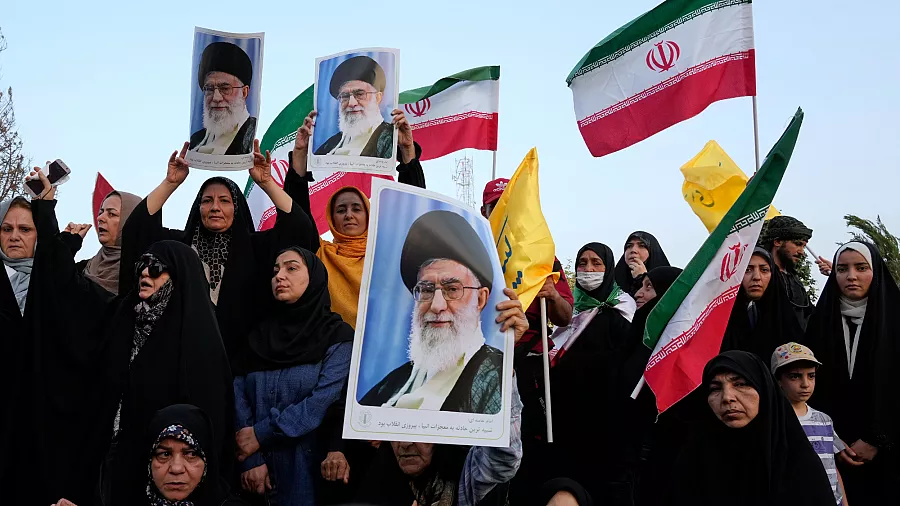
On the eve of Ashoura, a significant day in the Shiite Islamic calendar commemorating the martyrdom of Prophet Muhammad’s grandson Hussein, Khamenei made his first public appearance since the conflict began. Attending a mourning ceremony in Tehran, his presence was broadcast by Iran’s state media, signaling a deliberate message of resilience and continuity.
The ceremony itself, held at a mosque adjacent to his office and residence, was marked by intense security and was attended by high-ranking officials, including the Parliament speaker. Khamenei’s visible participation, waving and acknowledging the chanting crowd, was a carefully orchestrated event to reinforce his authority and the regime’s stability amid wartime pressures.
Ashoura’s religious and cultural significance added layers of meaning to Khamenei’s appearance. The event highlighted themes of sacrifice, resistance, and unity, resonating deeply with the Iranian public and Shiite communities worldwide. By aligning his return with this solemn occasion, Khamenei reinforced the narrative of Iran’s steadfastness in the face of external aggression.
The Iran-Israel War: Key Developments and Military Actions
The conflict between Iran and Israel escalated rapidly, with Israel launching airstrikes against Iranian nuclear facilities, defense systems, and military personnel. These strikes were motivated by Israel’s concerns over Iran’s nuclear ambitions, which it perceives as existential threats.
In retaliation, Iran launched more than 550 ballistic missiles at Israel, many of which were intercepted by Israeli defense systems. Despite the interceptions, the missile barrage caused casualties and infrastructure damage, further intensifying the conflict’s human and material toll.
The war resulted in over 900 deaths and thousands of injuries on the Iranian side alone, with considerable damage to nuclear sites. The conflict also disrupted international efforts to monitor Iran’s nuclear program, as Tehran suspended cooperation with the International Atomic Energy Agency (IAEA), complicating global diplomatic and security calculations.
Geopolitical Implications of Khamenei’s Public Return
Khamenei’s public reemergence amid the conflict carries significant geopolitical weight. It signals Iran’s intent to maintain a posture of defiance and control despite external military pressures and internal vulnerabilities. This move also serves as a message to both domestic and international audiences that Iran’s leadership remains united and unyielding.
The timing, coinciding with a major religious event, enhances the symbolic value of his appearance, reinforcing Iran’s ideological narrative against perceived adversaries, particularly Israel and the United States. This could influence regional alliances and the strategic calculations of neighboring countries.
Furthermore, Khamenei’s return may affect ongoing diplomatic efforts related to Iran’s nuclear program and broader negotiations with Western powers. His presence underscores the regime’s resilience but also highlights the complexities involved in seeking a peaceful resolution to the conflict.
The Role of Religious Ceremonies in Iranian Political Messaging
Religious ceremonies like Ashoura play a crucial role in Iran’s political landscape, serving as platforms for reinforcing ideological narratives and rallying public support. Khamenei’s attendance at such events is not merely spiritual but also a strategic act that strengthens his connection with the populace.
The symbolism surrounding Ashoura, which commemorates martyrdom and resistance, parallels the themes Iran projects in its conflict with Israel. The use of black funeral tents, red flags symbolizing blood, and ritualistic mourning practices contribute to a powerful visual message of sacrifice and perseverance.
These ceremonies also help consolidate the regime’s legitimacy by linking its political struggles to religious tradition, thereby mobilizing nationalistic and religious fervor. In times of crisis, such as during the Iran-Israel war, these events become even more critical in maintaining social cohesion and political stability.
Security Concerns and the Protection of Iran’s Supreme Leader
The war heightened security concerns surrounding Khamenei, prompting unprecedented protective measures, including his extended stay in a fortified bunker. The threat environment was exacerbated by U.S. military actions targeting nuclear sites and public warnings issued via social media by then-President Donald Trump.
These threats underscored Khamenei’s vulnerability despite his high-ranking position, highlighting the risks faced by Iran’s leadership amidst escalating hostilities. The extensive security protocols reflected the regime’s recognition of the Supreme Leader’s centrality to Iran’s political and military command structure.
Khamenei’s eventual public appearance, therefore, also served to reassure the Iranian public and allies that the leadership remains intact and operational, dispelling rumors about his wellbeing and reinforcing confidence in the government’s stability.
International Reactions to Khamenei’s Appearance and the Conflict
Khamenei’s public return was closely watched by international observers, with various governments and analysts interpreting it as a signal of Iran’s enduring resolve. Western nations, particularly the U.S., viewed the appearance as an indicator that Iran was consolidating its internal position despite military setbacks.
The conflict’s broader international ramifications include increased tensions in the Middle East, disruptions in global energy markets, and complications in diplomatic negotiations regarding Iran’s nuclear activities. Khamenei’s reemergence adds another layer to these dynamics, potentially hardening Iran’s stance in future talks.
Regional actors, including Gulf states and Israel, remain vigilant, recognizing that the Supreme Leader’s visibility could precede shifts in Iran’s strategic posture. The international community continues to monitor developments closely, balancing concerns over escalation with efforts to encourage dialogue.
Looking Ahead: Potential Outcomes and Future Developments
The Iran-Israel war and Khamenei’s recent public appearance set the stage for a complex and uncertain future. While a ceasefire has been established, questions remain about the durability of peace and the possibility of renewed hostilities.
Iran’s suspension of cooperation with the IAEA complicates the prospects for nuclear negotiations, raising concerns about transparency and non-proliferation. Khamenei’s leadership will be pivotal in shaping Iran’s strategic choices in response to ongoing pressures.
Moving forward, the international community’s ability to engage with Iran diplomatically, alongside internal pressures within Iran, will determine whether the current stalemate evolves into lasting peace or further conflict. Khamenei’s role as both a spiritual and political figure will remain central in navigating these challenges.
Conclusion
Iran’s Supreme Leader Ayatollah Ali Khamenei’s first public appearance since the outbreak of the Iran-Israel war marks a significant juncture in an already volatile conflict. His return amid the Ashoura ceremony not only underscores the intertwining of religious tradition and political authority in Iran but also signals the regime’s determination to project strength despite military and diplomatic challenges. As the region grapples with the aftermath of the war and the ongoing complexities surrounding Iran’s nuclear program, Khamenei’s leadership will remain a decisive factor in shaping Iran’s future trajectory. The international community must carefully navigate this evolving landscape to promote stability and prevent further escalation.