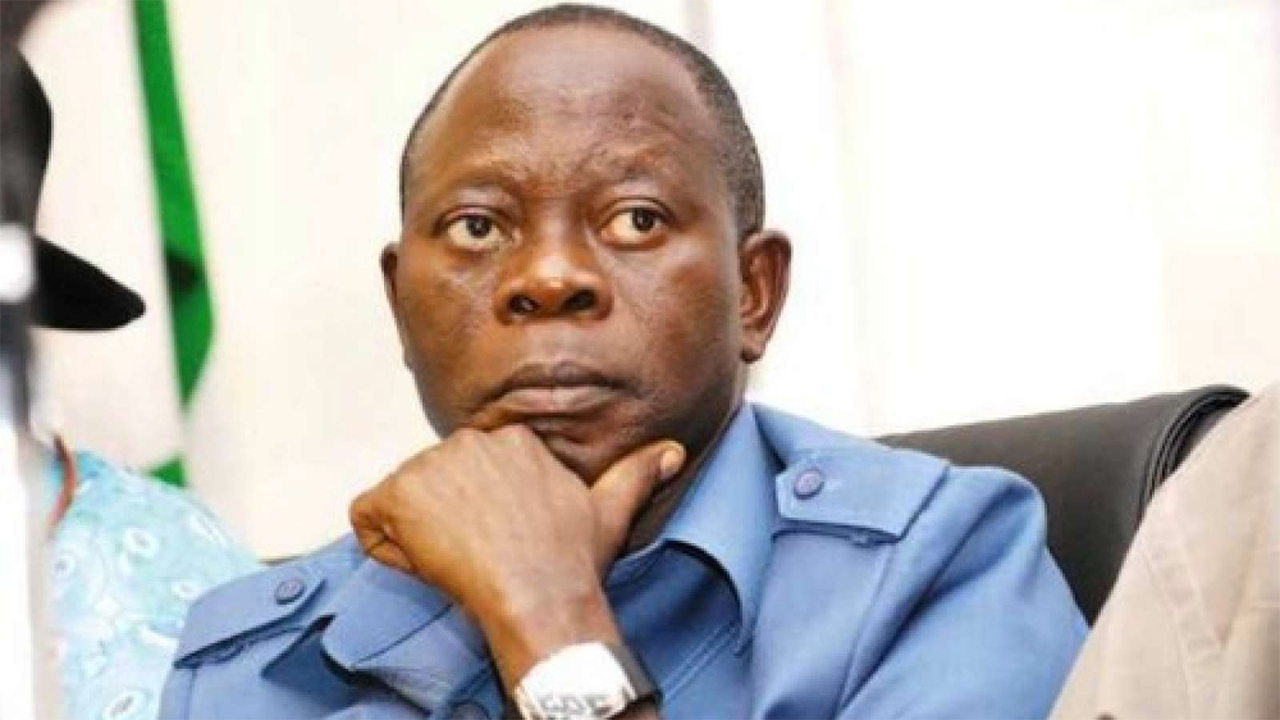

The ongoing dispute between Senator Adams Oshiomhole and the Catholic Archdiocese of Benin City over the ownership and funding of the St. Philomena College of Nursing has sparked significant public attention. At the heart of the controversy lies accusations of political partisanship, ethnic bias, and misrepresentation. Oshiomhole, a former governor of Edo State and current senator representing Edo North, has publicly criticized the Church’s leadership for allegedly allowing political interests to influence their stance on the nursing school issue. This article delves deeply into the background, key events, and broader implications of this unfolding controversy, providing a comprehensive perspective on the intersection of politics, religion, and education in Edo State.
Background of the Nursing School Dispute
The dispute centers on the ownership and funding of the St. Philomena College of Nursing, located within the premises of St. Philomena Catholic Hospital in Benin City, Edo State. The Catholic Archdiocese claims full ownership and management of the institution, asserting it is not government-owned or funded. However, Senator Adams Oshiomhole has challenged this narrative, suggesting a lack of transparency and political motivation behind the Church’s statements.
The controversy intensified after Oshiomhole’s interview on Arise TV, where he referenced a nursing school in Benin City in connection with a recent visit by former Anambra State Governor Peter Obi. Oshiomhole assumed the facility visited was the government-owned School of Nursing and Midwifery on Sapele Road, which is fully funded and managed by the Edo State Government. This assumption became the catalyst for the Catholic Archdiocese’s strong rebuttal.
The Catholic Church, through its Director of Social Communications, Rev. Fr. Jude Orah, issued a statement refuting Oshiomhole’s claims and labeling them falsehoods. This exchange has brought to the forefront questions about the roles of religious institutions in political discourse and the potential impact of ethnic and partisan biases on public communication.
Senator Oshiomhole’s Accusations of Partisanship
Senator Oshiomhole has accused the Benin Catholic Archdiocese leadership of harboring partisan biases, especially due to their continued support for Peter Obi, the Labour Party presidential candidate in the 2023 elections. He suggests that the Church’s reaction to his interview was colored by political and ethnic loyalties rather than objective clarification.
Oshiomhole described the tone and content of the Archdiocese’s response as reflecting “bellyache,” implying that the Church’s leadership was hurt by Peter Obi’s electoral defeat. He further criticized the Church for allowing political considerations to influence its spiritual role, noting that such partisanship undermines the moral authority expected of religious institutions.
The senator emphasized that his initial reference to a nursing school was an honest error made without malice. He expressed disappointment that the Church chose to escalate the issue into a narrative of deliberate misinformation, interpreting his mistake through a lens of political bias rather than seeking clarification or engaging constructively.
Ethnic Dimensions and Political Context
The dispute is deeply intertwined with ethnic and political dynamics within Edo State and the wider Nigerian context. Archbishop Augustine Obiora Akubeze of the Roman Catholic Archdiocese of Benin City hails from Ogbaru, Anambra State, the same region as Peter Obi. This ethnic connection has led to accusations of bias by Oshiomhole, who is from Edo State.
Oshiomhole highlights that some priests within the Archdiocese allegedly used the pulpit to support Peter Obi’s political ambitions during the 2023 campaign, turning religious platforms into partisan stages. This blurring of spiritual leadership and political advocacy has contributed to tensions between the Church and political figures like Oshiomhole.
The ethnic undertones of the dispute reflect broader challenges in Nigerian politics, where ethnicity often influences political alliances and public perceptions. The controversy thus serves as a microcosm of how ethnic identity and political affiliation can complicate interactions between religious institutions and government officials.
The Role of the Catholic Church in Edo State Politics
The Catholic Church in Edo State has historically played a significant role not only as a religious institution but also as a moral compass and social influencer. Its interventions in political matters have often been viewed as attempts to uphold ethical standards and promote social cohesion.
However, recent events suggest that the Church’s political engagements have become more contentious, with allegations of partisanship and bias challenging its reputation for neutrality. The nursing school dispute exemplifies the difficulties religious institutions face in balancing spiritual leadership with involvement in political discourse.
Oshiomhole’s critique of the Church’s approach underscores the risks when religious bodies are perceived as partial or politically motivated. It raises important questions about the appropriate boundaries between faith institutions and political affairs in Edo State and Nigeria at large.
Oshiomhole’s Historical Relationship with the Catholic Church
Senator Oshiomhole’s relationship with the Catholic Church in Benin City is complex and spans many years. During his tenure as governor of Edo State, he played a mediating role during a turbulent period marked by accusations of ethnic bias in priest postings within the Archdiocese, which led to protests and divisions among the faithful.
Oshiomhole’s intervention was instrumental in restoring peace and preserving unity within the Church, demonstrating his commitment to religious harmony and respect for the institution. This history adds depth to his current criticisms, as they come from someone who has previously supported the Church during crises.
The former governor’s stance reflects a disappointment not with the Church as a faith institution but with what he perceives as a departure from its moral and spiritual responsibilities, particularly regarding political neutrality and ethnic inclusiveness.
Implications for Church-State Relations in Edo State
The nursing school dispute has significant implications for the broader relationship between religious institutions and the government in Edo State. It highlights the challenges that arise when political differences infiltrate religious spaces, potentially undermining mutual respect and collaboration.
Oshiomhole’s public accusations could strain the historically cooperative relationship between the state government and the Catholic Church, affecting joint efforts in social services, education, and community development. The conflict underscores the need for clear communication and boundaries to prevent politicization of religious institutions.
Moving forward, both parties may need to engage in dialogue to rebuild trust and reaffirm their distinct roles. Ensuring that religious bodies remain spaces for spiritual guidance rather than political contestation will be crucial for maintaining social cohesion in Edo State.
Public Reaction and Media Coverage
The dispute has attracted widespread media coverage and public debate, reflecting the sensitive nature of religion and politics in Nigeria. Various stakeholders, including political analysts, religious leaders, and members of the public, have weighed in on the controversy, often highlighting the dangers of mixing faith with partisan politics.
Some commentators argue that the Church’s response was necessary to protect its reputation and clarify misunderstandings, while others sympathize with Oshiomhole’s call for a less politicized spiritual space. The polarized reactions illustrate the deep divisions within Edo State society along political and ethnic lines.
Media outlets continue to monitor developments closely, emphasizing the importance of responsible reporting that fosters understanding rather than exacerbating tensions. The nursing school controversy serves as a case study in the complex interplay between religion, ethnicity, and politics in contemporary Nigeria.
Path Forward: Restoring Harmony and Trust
Resolving the dispute requires a commitment from both Senator Oshiomhole and the Catholic Archdiocese of Benin City to engage in open, respectful dialogue. Acknowledging misunderstandings and addressing concerns without resorting to accusations can help de-escalate tensions and promote reconciliation.
Both parties could benefit from establishing clear communication channels and mechanisms for resolving future disagreements amicably. Emphasizing shared values such as community development, education, and spiritual growth may create common ground for cooperation.
Ultimately, restoring harmony between political leaders and religious institutions is essential for the social stability and progress of Edo State. By prioritizing mutual respect and the separation of political interests from spiritual leadership, the community can move beyond divisive disputes toward a more unified future.
Conclusion
The dispute between Senator Adams Oshiomhole and the Catholic Archdiocese of Benin City over the St. Philomena College of Nursing reveals the intricate connections between religion, politics, and ethnicity in Edo State. While the controversy has exposed underlying tensions and partisanship, it also presents an opportunity for reflection and reconciliation. Both parties stand to gain from fostering dialogue that respects religious neutrality while acknowledging political realities. Ultimately, restoring trust between political leaders and religious institutions will be vital for the social harmony and development of Edo State, ensuring that education and faith can continue to serve as unifying pillars within the community.
Originally reported by guardian.ng. Adapted for our readers.