
Climate change poses an undeniable threat to cities across the United States, with extreme weather events, rising temperatures, and environmental degradation increasingly impacting urban populations. Mayors stand at the frontline of these challenges, responsible for crafting policies that can mitigate climate risks and promote sustainability. However, a 2022 survey of U.S. mayors reveals a tension between their desire to take significant climate action and the political risks such measures may entail. This article delves into the findings of the Menino Survey of Mayors, uncovering why many city leaders hesitate to implement transformative climate policies despite understanding their importance.
The Urgency of Climate Action Among Mayors
The 2022 Menino Survey of Mayors, a comprehensive poll involving 118 mayors from cities with populations over 75,000, found overwhelming consensus that climate change is a pressing issue. Approximately 90% of respondents agreed that human activity significantly contributes to climate change, reflecting a broad acknowledgment of the science behind global warming.
Nearly all mayors surveyed expressed concern about the impact of climate change on their cities, with only 3% dismissing the severity of climate risks. This near-unanimous worry highlights the growing awareness among local leaders that climate change is not a distant threat but a current and escalating challenge.
Moreover, 73% of mayors agreed that cities must be willing to expend resources and accept costs to combat climate change. This consensus indicates a readiness, at least in principle, to prioritize climate initiatives even in the face of budgetary constraints and competing priorities.
Political Constraints and Fear of Voter Backlash
Despite their concern for climate change, many mayors expressed apprehension about implementing aggressive policies that might alienate voters. The survey revealed that while mayors favor less controversial measures such as transitioning to electric city vehicles and supporting solar power, they shy away from more contentious policies like banning gas stoves or gas-powered lawn equipment.
One mayor candidly shared the desire to ban leaf blowers but admitted a lack of sufficient public support to pursue such a measure. Another progressive mayor acknowledged that restricting oil and gas usage was the 'right thing to do' but confessed that political realities prevented action.
This fear of political fallout is particularly pronounced during election cycles, where officials tend to avoid policies that could be labeled as overreaching or unpopular. The delicate balance between environmental leadership and political survival often results in incremental rather than transformative climate action at the local level.
Partisan Divides Shape Climate Policy Preferences
Partisan differences strongly influence mayors’ approaches to climate change. While 87% of Democratic mayors advocate for significant financial investments in climate initiatives, only 43% of Republican mayors share this view. This gap reflects broader national political divides on climate policy and public spending priorities.
Democratic mayors are more likely to support a wide range of climate measures, including solar-ready building codes, local funding for private home energy upgrades, and restrictions on fossil fuel use. Republican mayors tend to oppose regulations on gas stoves, heating, and lawn tools, and resist policies aimed at reducing car usage such as congestion fees or increased parking costs.
Interestingly, some climate actions enjoy bipartisan support. For example, 75% of mayors from both parties back replacing municipal vehicles with fuel-efficient alternatives. This common ground suggests that practical, less intrusive climate measures may be more politically feasible across the spectrum.
Mayors’ Most Effective Climate Tools and Limitations
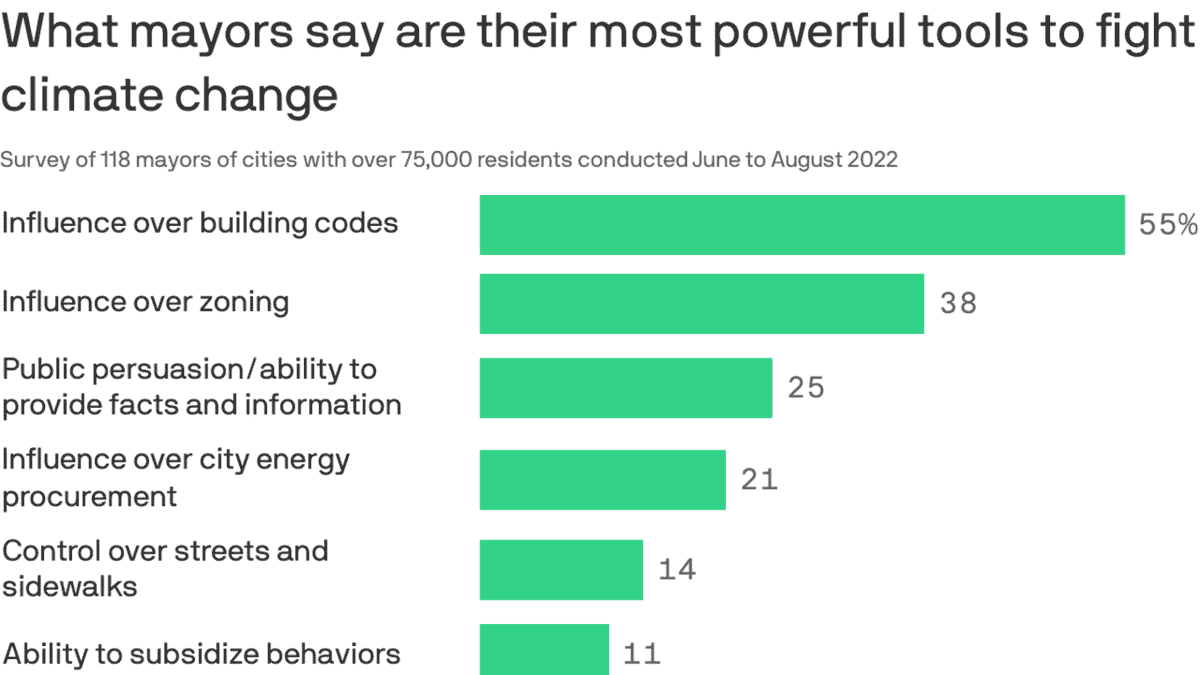
Mayors identify their influence over building codes as their most potent tool to combat climate change, with 55% citing this authority. By mandating energy-efficient standards and solar readiness in new construction, cities can reduce emissions and promote sustainable development systematically.
Zoning authority is another key lever, mentioned by 38% of respondents, enabling mayors to encourage denser, transit-oriented development that reduces reliance on cars. Additionally, 25% of mayors see their power of public persuasion as a valuable asset to raise awareness and build community support for climate initiatives.
However, only 8% of mayors view their authority to ban or restrict behaviors—such as driving or gas appliance usage—as an effective tool. This limited capacity reflects both political hesitancy and legal constraints, underscoring why mayors often prefer indirect measures over outright prohibitions.
The Role of Public Support and Sacrifices in Climate Progress
Public opinion plays a critical role in shaping mayors’ climate agendas. The survey showed that 55% of mayors believe meaningful progress on climate issues will require residents to make real sacrifices, such as changing consumption habits or accepting increased costs. However, 26% disagreed, indicating some mayors hope to achieve results without significant public inconvenience.
The tension between necessary sacrifices and political feasibility creates a challenging environment for leaders. Mayors must balance urging communities toward sustainable behaviors while maintaining voter approval, a delicate act that influences the scope and pace of climate policies.
Building public understanding and support is therefore essential. Mayors often leverage their public platforms to educate citizens about climate risks and the benefits of sustainable practices, aiming to cultivate a constituency willing to embrace change.
Bipartisan Support for Electrification of Municipal Fleets
One clear area of consensus among mayors is the transition to electric vehicles for municipal fleets. Both Democratic and Republican mayors strongly support purchasing electric school buses, fire trucks, and public works vehicles, recognizing the environmental and operational benefits.
Electrification reduces greenhouse gas emissions and operating costs over time, aligning with fiscal responsibility and climate goals. This shared priority demonstrates that practical, cost-effective solutions can transcend partisan divides.
Investing in electric vehicles also signals leadership and commitment to sustainability, helping mayors foster positive public relations without triggering significant political backlash.
Challenges Ahead: Balancing Ambition with Political Reality
The overarching challenge for mayors is reconciling their ambition to fight climate change with the political realities that govern their actions. Constraints such as limited budgets, voter opposition, and partisan polarization restrict the scope of possible interventions.
David Glick, co-author of the Menino Survey, summarizes this dilemma: mayors are eager and committed to local climate action but are simultaneously constrained by politics and resources. This duality means that while many mayors envision bold policies, most settle for incremental progress.
Addressing these challenges requires innovative leadership, coalition-building, and community engagement to expand political support for effective climate solutions. Mayors must navigate complex trade-offs to protect their cities and their political futures.
Conclusion
The 2022 Menino Survey of Mayors reveals a nuanced portrait of local leadership confronting the climate crisis. While U.S. mayors overwhelmingly recognize the urgency of climate change and express commitment to action, political realities often temper their ambitions. Fear of voter backlash, partisan polarization, and limited authority constrain the scope of policies they feel able to pursue. Nonetheless, mayors continue to find common ground in practical measures like electrifying municipal fleets and updating building codes. Moving forward, successful climate action will depend on expanding public support, fostering bipartisan cooperation, and empowering mayors with the tools and political capital necessary to implement transformative change. The path ahead is challenging, but the stakes for cities and their residents could not be higher.