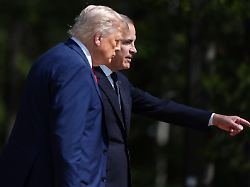

The 2025 G7 Summit in the Canadian Rocky Mountains was marked by an unexpected development when former US President Donald Trump left the conference earlier than scheduled. Originally planned to attend until Tuesday evening, Trump departed Monday night after the leaders’ dinner, citing urgent developments in the Middle East as the reason. This premature exit has sparked widespread discussion about its diplomatic significance and the potential impact on ongoing international relations, especially amid rising tensions between Israel and Iran. This article provides a comprehensive overview of the event, examining the context, reactions, and broader geopolitical consequences.
Context and Setting of the 2025 G7 Summit
The 2025 G7 Summit, hosted in the scenic Canadian Rocky Mountains near Kananaskis, brought together leaders from the world's seven largest advanced economies. The summit was designed to foster cooperation on global economic policies, climate change, and international security. Canada’s Prime Minister Mark Carney welcomed the delegates, emphasizing the importance of unity in addressing pressing global challenges.
Among the attendees was former US President Donald Trump, who was expected to participate fully in the summit’s agenda until its scheduled conclusion on Tuesday evening. The event also featured guest appearances by key figures such as Ukrainian President Volodymyr Zelenskyy, who sought further support in Ukraine's ongoing conflict with Russia.
The atmosphere during the initial sessions was reportedly cooperative and constructive, with diplomatic engagements reflecting a shared commitment to resolving global issues. However, the unfolding crisis in the Middle East soon cast a shadow over the proceedings, influencing key decisions and diplomatic interactions.
Trump’s Early Departure: Official Explanation and Timing
On Monday evening, shortly after the traditional family photo of the G7 leaders, the White House announced that Donald Trump would be departing the summit prematurely. His spokeswoman, Karoline Leavitt, cited escalating developments in the Middle East as the primary reason for his early exit. Originally, Trump was scheduled to remain until Tuesday evening to complete the summit’s agenda.
Trump himself addressed the media at the photo session, expressing regret over leaving early. He thanked the Canadian hosts and affirmed the positive relations he maintained with other summit participants. He emphasized that his departure was not meant as an insult or slight to the other leaders, stating, “I would have liked to stay, but you probably see what I see, and I have to get back as soon as possible.”
The timing of the departure, immediately following the leaders’ dinner, underscored the urgency of the situation in the Middle East. Despite leaving early, Trump reiterated his belief that the summit had been productive, highlighting the accomplishments made during his time there.
Middle East Crisis: The Catalyst Behind the Departure
The situation in the Middle East, particularly the escalating conflict between Israel and Iran, was the key factor prompting Trump’s early return to the United States. Since Friday, tensions had intensified, with Israel conducting strikes on targets within Iran, and Iran responding with drone and rocket attacks against Israel. This military exchange raised fears of a broader regional conflict.
In the midst of these developments, Trump issued a startling call on his Truth Social platform, urging residents of Tehran to evacuate immediately. Tehran, with a population exceeding ten million, is the political and cultural heart of Iran, making such a warning highly significant and unprecedented for a former US president.
The Pentagon concurrently announced plans to increase the US military presence in the region, with Defense Secretary Pete Hegseth ordering the deployment of additional resources to strengthen American defense positions. However, officials stressed that the US had not yet engaged militarily in the conflict, underscoring the delicate balance of power and the risk of escalation.
Reactions from Global Leaders and Summit Participants
Canada’s Prime Minister Mark Carney publicly expressed understanding and support for Trump’s decision to cut short his participation in the summit. Carney acknowledged the gravity of the Middle East crisis and thanked Trump for his attendance, emphasizing that the safety and security concerns justified the early departure.
Other G7 leaders reportedly received the news with mixed emotions. While some expressed disappointment over missing further collaboration with Trump, especially on economic and security issues, many also recognized the necessity of responding to unfolding international emergencies. The summit continued without major disruptions, maintaining its focus on key global challenges.
Notably, Trump’s early exit resulted in the cancellation of a planned meeting with Ukrainian President Volodymyr Zelenskyy. Zelenskyy had hoped to secure additional support and discuss arms procurement from the United States. The absence of this meeting was seen as a missed opportunity to reinforce G7 solidarity with Ukraine amid its ongoing conflict with Russia.
Diplomatic Implications of Trump’s Premature Exit
Trump’s early departure from the G7 Summit carries significant diplomatic implications. On one hand, it highlights the prioritization of urgent national security concerns over international multilateral engagements. This decision may signal a shift in US foreign policy focus, emphasizing direct responses to immediate threats rather than prolonged diplomatic negotiations at global forums.
Additionally, the absence of the US president during critical summit discussions could affect the cohesion and collective decision-making within the G7. The group’s ability to present a united front on issues such as economic recovery, climate action, and geopolitical stability partly depends on active participation from all members, particularly the United States.
Moreover, the missed opportunity for dialogue with Ukraine’s president may complicate the coordination of Western support for Kyiv. Given the ongoing conflict with Russia, consistent diplomatic engagement and military assistance remain vital. Trump’s early exit might delay or disrupt planned initiatives aimed at bolstering Ukraine’s defense capabilities.
The Role of Social Media and Public Messaging
Trump’s use of his Truth Social platform to urge Tehran residents to evacuate was a notable moment in the unfolding crisis. This direct communication bypassed traditional diplomatic channels and conveyed a sense of urgency and alarm. Such messaging can influence public perception and international relations by signaling a potential shift toward more aggressive posturing.
Social media has increasingly become a tool for political leaders to shape narratives and mobilize public opinion. In this case, Trump’s warning to Tehran may have been intended to pressure Iran’s leadership or prepare the global community for possible US actions. However, it also risks escalating tensions if perceived as provocative or alarmist.
The broader impact of social media in diplomatic crises underscores the need for careful messaging. While rapid communication can inform and alert, it also demands responsibility to avoid misunderstandings or unintended consequences during sensitive geopolitical moments.
Future Prospects and Potential Developments
The premature departure of Donald Trump from the G7 Summit leaves several questions about the future trajectory of US engagement in international affairs. Observers will be watching closely to see how the administration balances urgent security concerns with long-term diplomatic commitments within multilateral frameworks.
The escalating conflict in the Middle East may prompt increased US military involvement or diplomatic initiatives aimed at de-escalation. How the US navigates this complex environment will influence its relationships with allies and adversaries alike, as well as the stability of the broader region.
Meanwhile, the G7’s agenda will continue to evolve in response to global challenges. The absence of the US president for part of the summit may necessitate renewed efforts to align member states’ policies and maintain momentum on shared objectives, including economic recovery, climate change mitigation, and geopolitical security.
Summary of Key Takeaways from Trump’s Early Exit
Donald Trump’s decision to leave the 2025 G7 Summit prematurely was driven by urgent developments in the Middle East, specifically escalating hostilities between Israel and Iran. This underscores the priority given to national security concerns over multilateral diplomatic engagements.
The early departure disrupted planned meetings, including a pivotal discussion with Ukrainian President Zelenskyy, highlighting potential challenges in coordinating international support for ongoing conflicts.
Global leaders expressed understanding, while the US military announced an increase in regional deployments, reflecting heightened tensions and the possibility of further escalation.
Trump’s use of social media to urge Tehran residents to evacuate was a significant, unprecedented move that added a new dimension to the crisis and demonstrated the evolving role of digital platforms in international diplomacy.
Conclusion
Donald Trump’s early departure from the 2025 G7 Summit in Canada marks a significant moment reflecting the dynamic interplay between global diplomatic forums and urgent national security concerns. While the summit continued without major disruption, the absence of the US president during critical discussions and the heightened tensions in the Middle East underscore the fragile nature of international relations in times of crisis. As the situation evolves, the world will be watching closely to see how the United States and its allies navigate these challenges, balancing immediate threats with the pursuit of long-term global cooperation.