
Bangladesh has been gripped by widespread protests and violent clashes over the government’s quota system in civil service recruitment. The quota, which reserves a significant portion of government jobs for freedom fighters’ families and other groups, has long been a contentious issue, especially among the youth facing high unemployment. Following a turbulent period marked by street demonstrations, clashes with law enforcement, and a nationwide curfew, the Supreme Court of Bangladesh has issued a decisive ruling to revoke the majority of these quotas. This article explores the background, the protests, the legal journey, and the implications of this historic decision on Bangladesh’s socio-political landscape.
Background of Bangladesh’s Government Job Quota System
Bangladesh’s government job quota system was originally designed to honor and support specific groups, most notably the families of freedom fighters from the 1971 war of independence. Under this system, approximately 30% of civil service positions were reserved for these individuals and their relatives. Additional quotas existed for ethnic minorities, women, and disabled persons, aiming to promote inclusivity and social justice.
However, over time, the quota system became a subject of intense debate. Critics argued that it disproportionately favored certain groups, particularly relatives of veterans, many of whom are connected to the nation’s political elite. This perceived nepotism sparked resentment among the broader population, especially young job seekers who viewed the quotas as barriers to merit-based employment.
The system’s significance is heightened by Bangladesh’s high unemployment rates among educated youth. Government jobs are highly coveted due to their stability, benefits, and social status. Thus, the quotas have been a flashpoint for broader frustrations regarding fairness, opportunity, and governance.
The Wave of Anti-Quota Protests and Civil Unrest
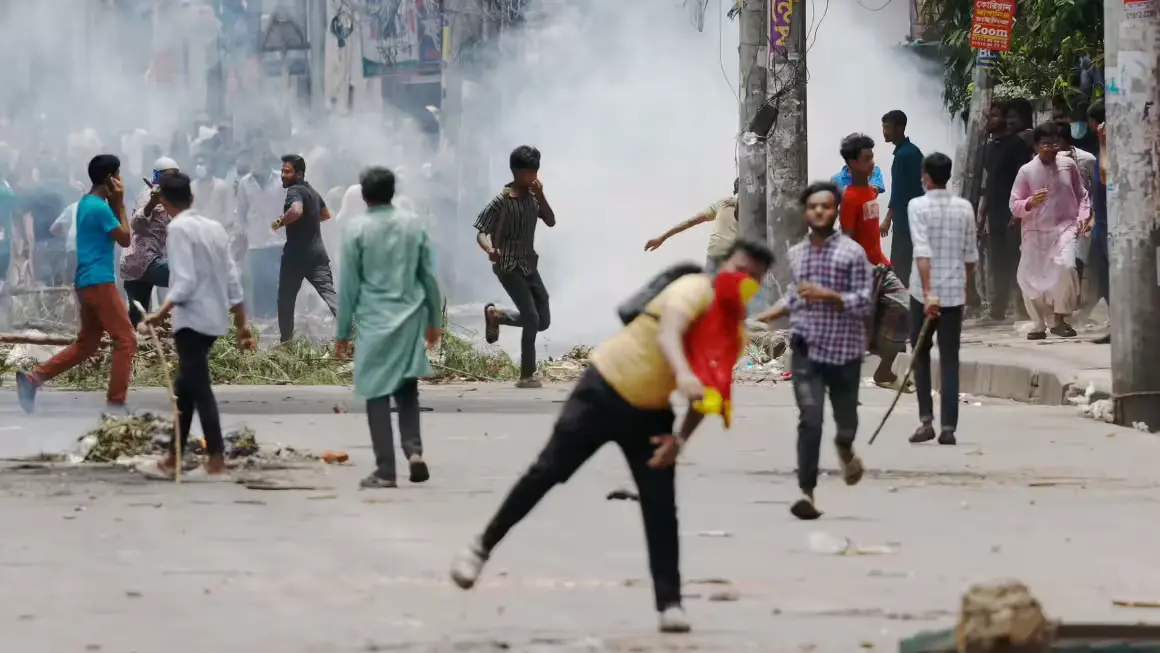
The controversy surrounding the quota system reached a boiling point in mid-2024, when students and young professionals launched mass protests across Dhaka and other major cities. Demonstrators demanded the abolition of most quotas, calling for recruitment based solely on merit. The protests grew rapidly, drawing thousands to university campuses and public spaces despite government attempts to suppress them.
Violent clashes erupted between protesters and security forces, including the Border Guard Bangladesh and police. Reports indicated dozens of fatalities and hundreds of injuries as confrontations escalated. The unrest led to nationwide curfews and a government-imposed internet blackout intended to control the flow of information and quell mobilization.
The protests also sparked a polarized public debate. While many sympathized with the protesters’ calls for fairness, others defended the quotas as a necessary tribute to the sacrifices of freedom fighters and as a tool for social equity. The polarization underscored the complex interplay between historical legacy and contemporary demands for justice.
Legal Battles: From High Court to Supreme Court
The legal trajectory of the quota system has been turbulent. In 2018, the civil service quota system was initially scrapped following earlier protests. However, in June 2024, the High Court reinstated the quotas, ruling their removal unconstitutional, which reignited public discontent and protests.
In response to the ongoing unrest, the Supreme Court of Bangladesh temporarily suspended the quotas on July 10, 2024, to review the case in detail. This suspension provided a brief respite amid the turmoil but left the future of the quota system uncertain.
On July 21, 2024, the Supreme Court delivered a landmark verdict overturning the High Court’s reinstatement. The ruling declared that 93% of government jobs will be allocated purely on merit, while maintaining limited quotas: 5% for freedom fighters and their kin, 1% for ethnic minorities, and 1% for third gender and physically disabled individuals. This nuanced decision sought to balance meritocracy with historical and social considerations.
Details of the Supreme Court’s Ruling and Its Immediate Impact
The Supreme Court’s ruling effectively dismantled most of the longstanding quota system, opening the vast majority of government jobs to merit-based competition. This was hailed by student leaders and legal representatives as a final and just resolution to the contentious issue. Shah Monjurul Hoque, a lawyer representing the students, described the verdict as a definitive solution that respects both meritocracy and minority rights.
The decision also mandated that 5% of jobs remain reserved for freedom fighters and their families, acknowledging their historical contribution without disproportionately privileging them. The quotas for ethnic minorities and marginalized groups were maintained at minimal levels to ensure inclusivity and representation.
Following the verdict, law enforcement and government officials expressed hope that the ruling would restore peace and discourage further violence. Bangladesh’s Attorney General, A.M. Amin Uddin, emphasized that the government would investigate and prosecute those responsible for inciting unrest and violence during the protests.
Government Response and Security Measures Amid Protests
In the wake of escalating protests, the Bangladesh government imposed a curfew in Dhaka and several other cities starting July 19, 2024. The curfew was extended multiple times, including during the Supreme Court hearings, to maintain law and order. Soldiers were deployed to patrol the streets alongside police forces in an effort to prevent further clashes.
To curb the spread of information and coordination among protesters, the government enforced a near-complete internet blackout and mobile service restrictions. This blackout lasted for more than 48 hours, significantly reducing online activity to about 10% of normal levels, according to monitoring organizations like NetBlocks.
Despite these measures, sporadic violence and unrest continued, prompting warnings from international bodies. The United States raised its travel advisory for Bangladesh, cautioning travelers about the risks posed by civil unrest, crime, and terrorism. The government’s heavy-handed response was controversial but deemed necessary by authorities to stabilize the situation.
Societal and Political Implications of the Quota Rollback
The Supreme Court’s decision has far-reaching implications for Bangladesh’s social fabric and political landscape. By prioritizing merit in government recruitment, the ruling aims to address deep-seated grievances among youth and job seekers who felt marginalized by entrenched quota systems.
Politically, the verdict challenges long-standing privileges enjoyed by families of freedom fighters, many of whom remain influential in the ruling elite. This recalibration could shift power dynamics and prompt further debates about historical recognition versus contemporary equality.
Additionally, the ruling highlights the growing political agency of Bangladesh’s youth, who have demonstrated their capacity to mobilize and influence national policy. The protests and legal outcomes may inspire greater civic engagement and demands for transparency and fairness in other sectors.
Challenges Ahead: Enforcement and Social Cohesion
While the Supreme Court’s ruling is a significant milestone, implementing the new recruitment framework poses challenges. Ensuring transparency and meritocracy requires robust oversight mechanisms, which Bangladesh’s civil service and judiciary must strengthen to prevent corruption and favoritism.
Rebuilding social cohesion after months of violent protests will also be critical. The government needs to engage with all stakeholders, including freedom fighters’ families, ethnic minorities, and marginalized communities, to foster dialogue and mutual understanding.
Finally, addressing the root causes of unemployment and economic disparity remains essential. The quota rollback is a step toward fairness in public sector jobs, but broader economic reforms and job creation initiatives are necessary to meet the aspirations of Bangladesh’s growing youth population.
Conclusion
The Supreme Court’s decisive rollback of Bangladesh’s government job quotas marks a pivotal moment in the country’s pursuit of fairness and meritocracy. While it addresses long-standing grievances among the youth and job seekers, the ruling also respects the historical legacy of freedom fighters through limited reserved quotas. The aftermath of the protests and legal battles underscores the complexities of balancing tradition with modern demands for equality. Moving forward, Bangladesh faces the challenge of implementing these reforms transparently and fostering social harmony to ensure sustainable progress. This landmark decision not only reshapes civil service recruitment but also signals a broader shift toward inclusive governance in Bangladesh’s evolving democracy.